Le Tissier Designs

Of Larks and Linnets and Flying Fingers

Category: knitting directionality

  • Make-A-Blanket – Modular Square

    Make-A-Blanket – Modular Square

    I am working on a year long Blanket Project. It is supposed to comprise of one blanket square per month with tip and advice on how to put the squares together. I think that the project is definitely going to be bigger than I anticipated…

    An Extra Square idea came to mind and I just had to try it out!

    Greta posted a note on Ravelry about a yarn she was contemplating for her blanket, a pretty tweed, she was working with it in a modular pattern. So my brain went instantly to this blanket and a new square!

    Modular, Domino or Mitred knitting is a method of creating square, or other shapes by using interior (usually) decreases to shape the outsides of the square. It was made popular here a few years ago by Vivian Hoxbro and her book Domino Knitting. There are other publications by other designers as well! But I am most familliar with this book! Once learned the technique is incredibly easy and a lot of fun.

    Have you ever tried Modular Knitting? It is a technique for creating a fabric that is built piece by piece from a base piece or cast-on. Well, the mitred square that I created for the blanket could also be the base of a whole blanket starting from that square. A project for another day.

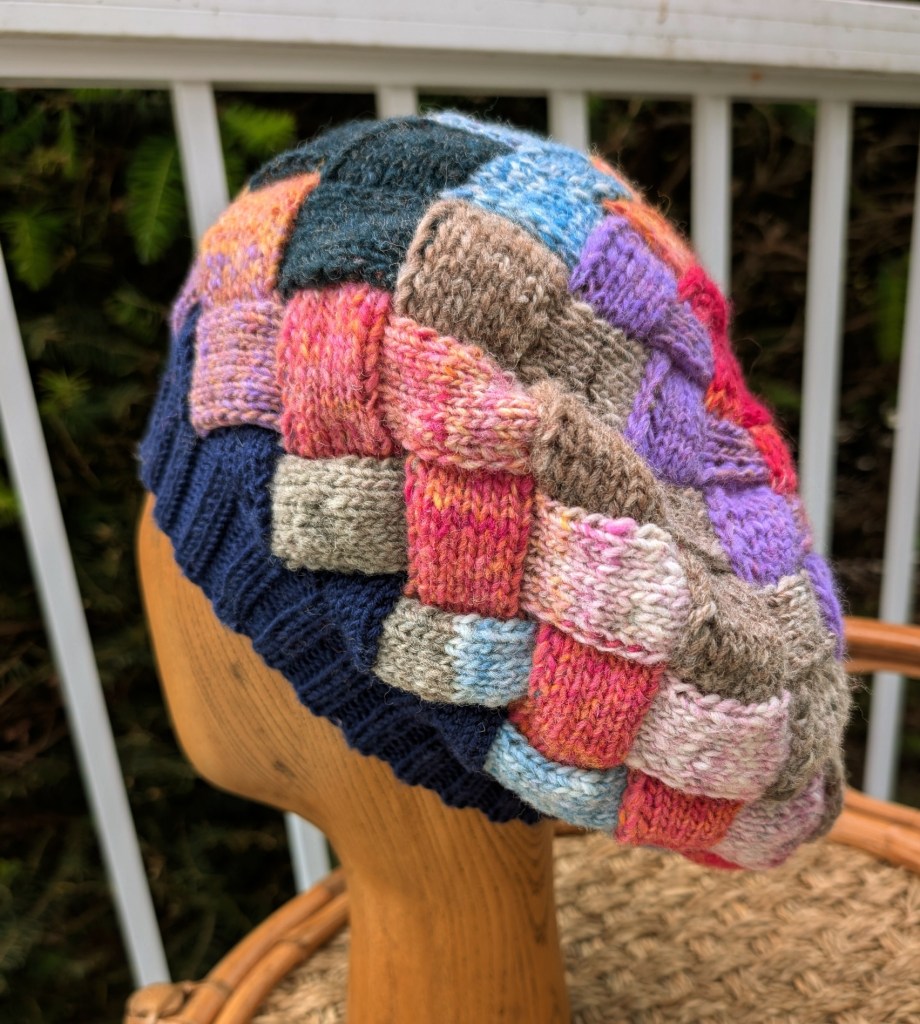
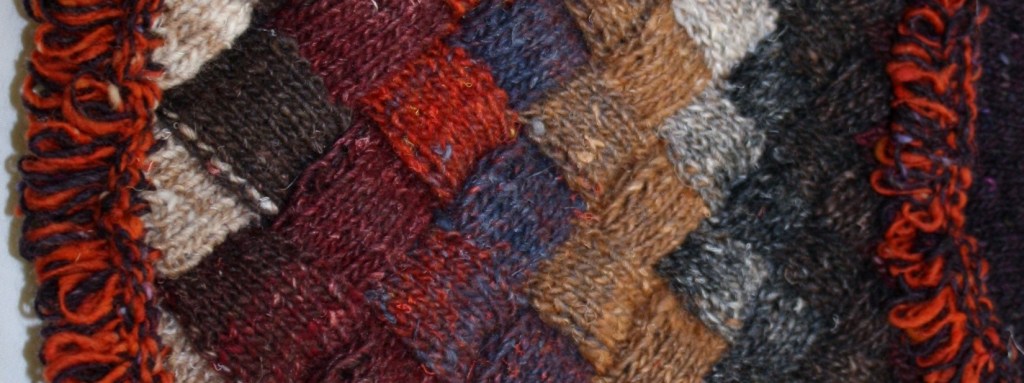
    Entrelac or Swedish basketweave is a style of modular knitting. The tam below is entrelac and the close up of a glove cuff is also entrelac.
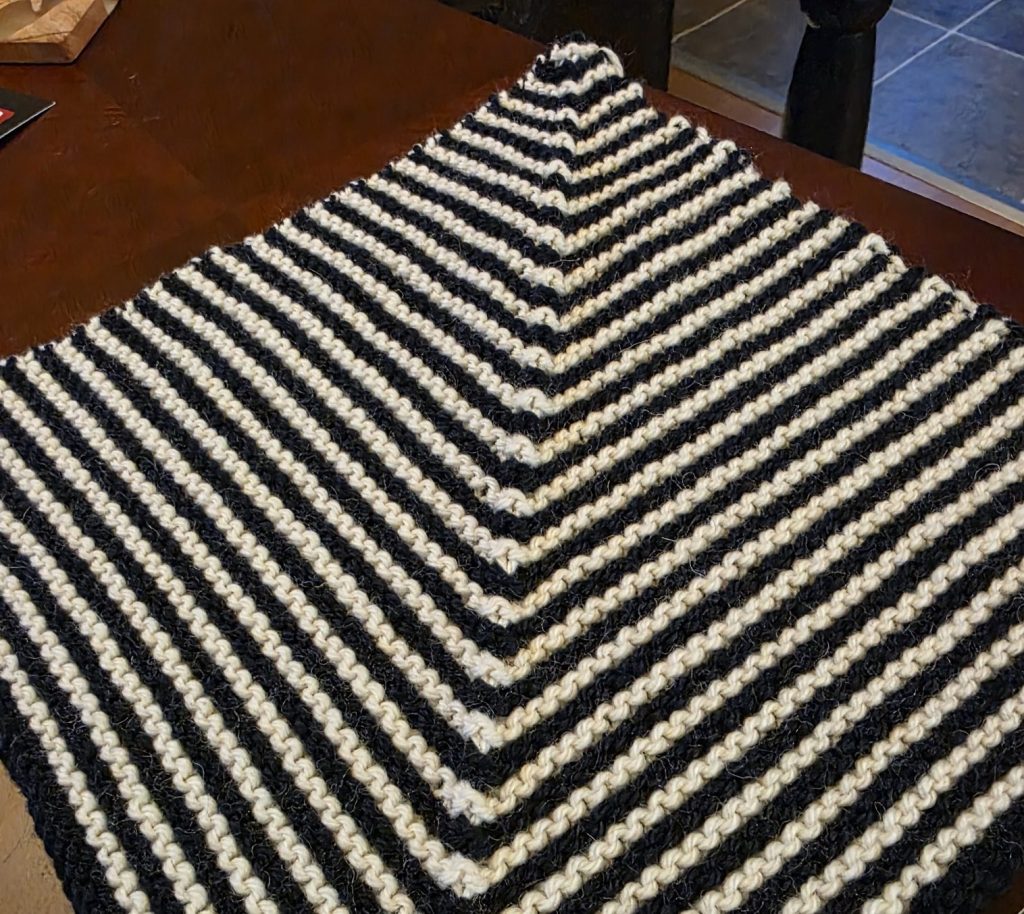
    So, new modular square, what do you think?
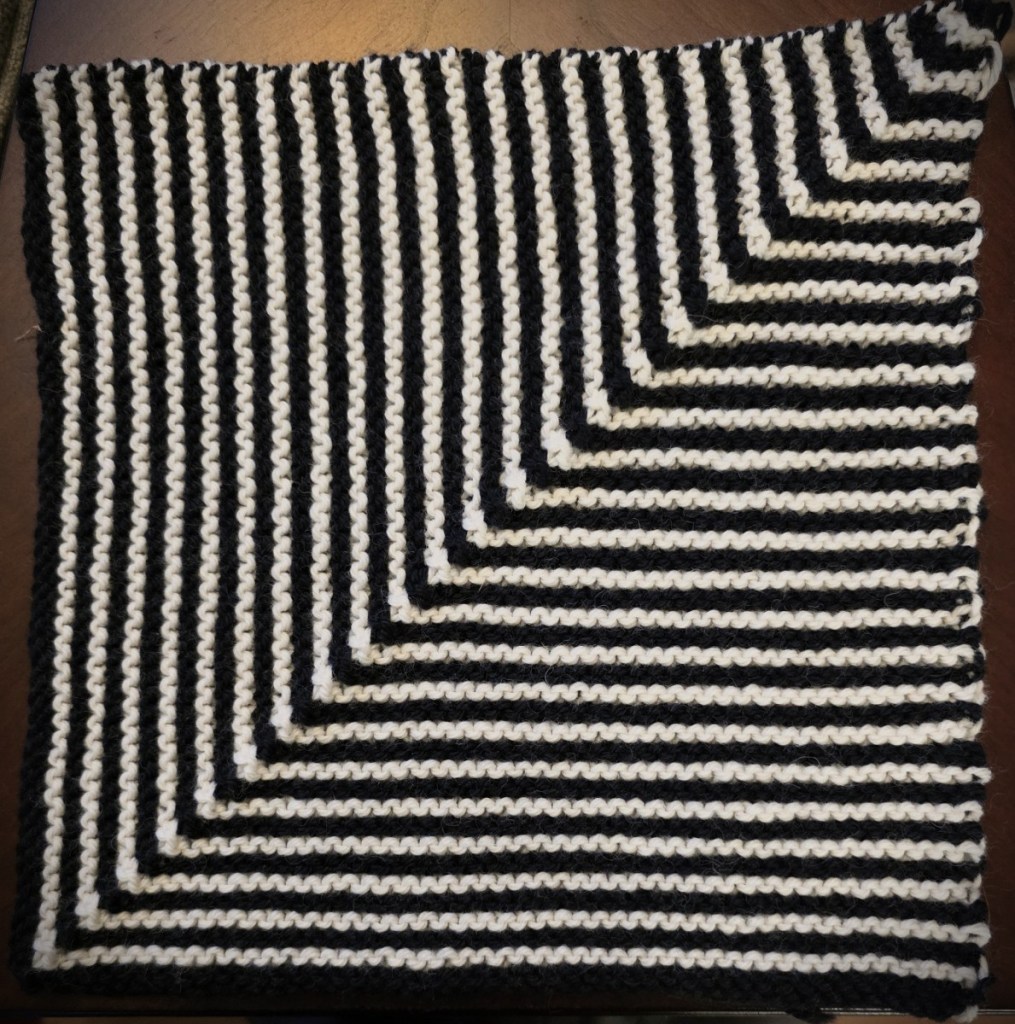
    I think it has a lot of punch. I went with the two most contrasting colours in my blanket, navy and natural. I wonder what it would look like in two close colours? I need to knit a second one anyway. This one is a little on the large size and I made sure to fix that in the pattern below.

    Please note – the actual pattern is four ridges shorter than the square shown (just in case you count the stripes). My first attempt was a little big. The fix is already in the pattern.

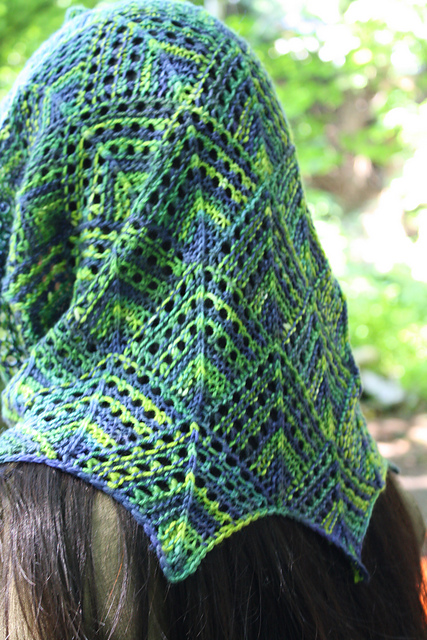
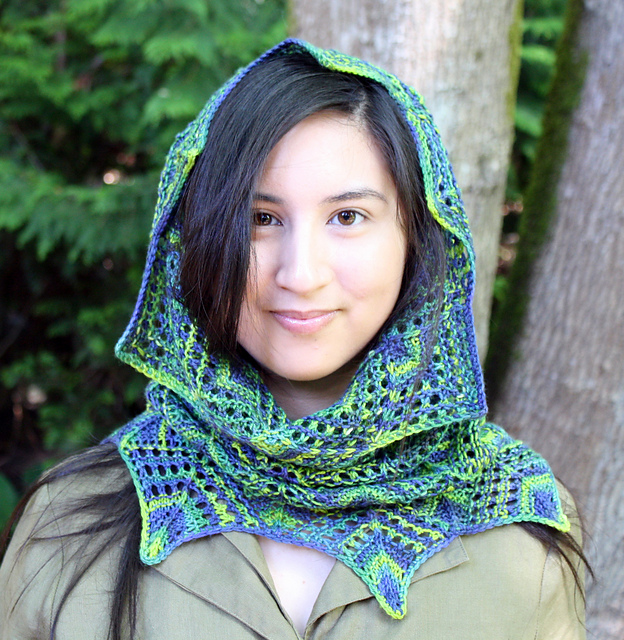
    If you want to try something a little more interesting with modular knitting – The Mitered Modular Cowl is one of my earlier patterns. I was playing with hand-dyed yarns and trying to move colours around differently as I knit. I was really pleased with the effect.

    It is knit flat and then is seamed together. It only takes about 400m.
    Happy Knitting

    Lynette
  • Quickie 3

    Quickie 3

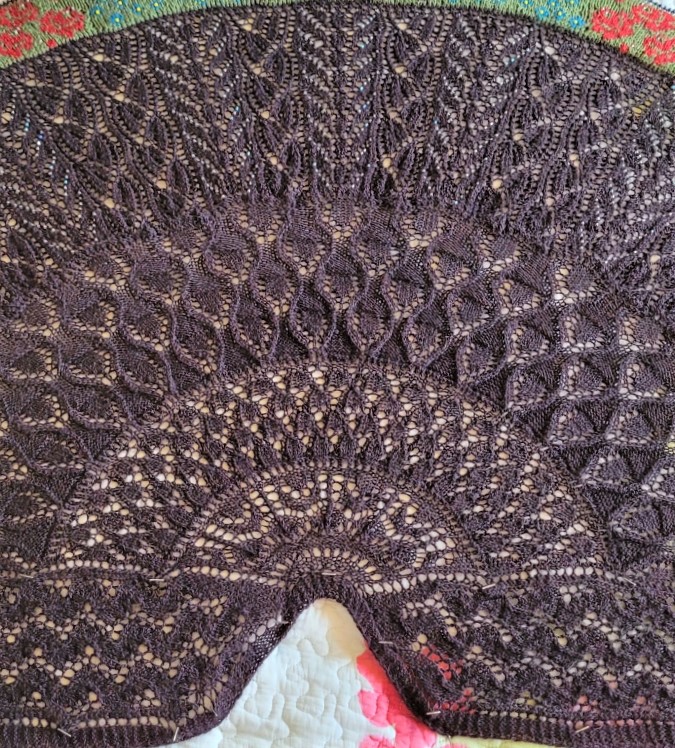
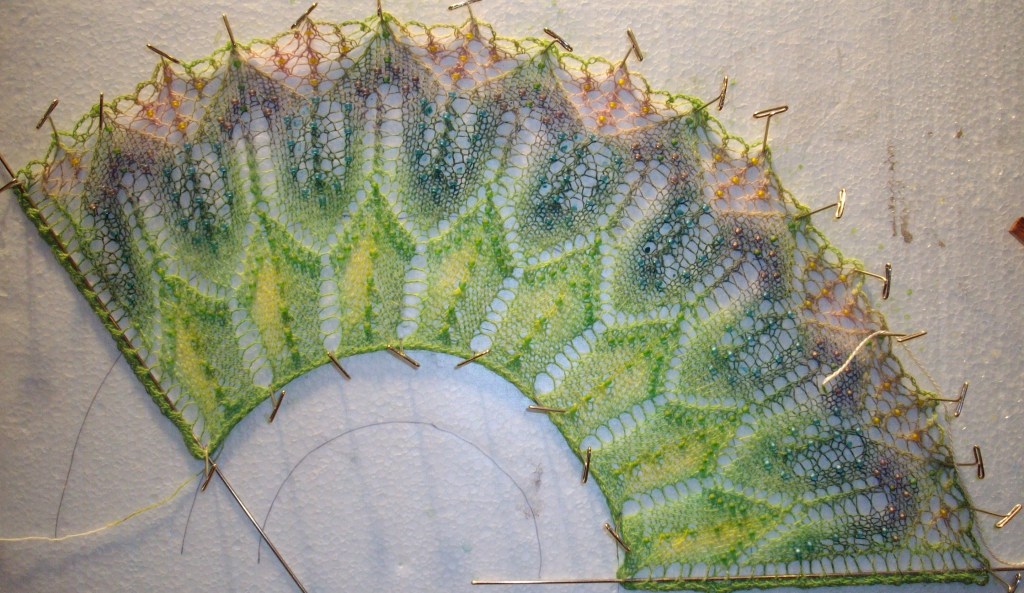
    The painted Fan is my first attempt at hand painting with dyes. It has become the basis of my header for the patterns I create and inspiration to keep on trying new things. Pattern was Nightfall Fan by Deborah Robinson.

    Ok – everything is set up and I am at the knit until I am done stage. The only decision left is do I make a scarf or a shawl – I am thinking a shawl! So I will need another ball!

    I already have a plan for the finishing. But I won’t need that for a while.

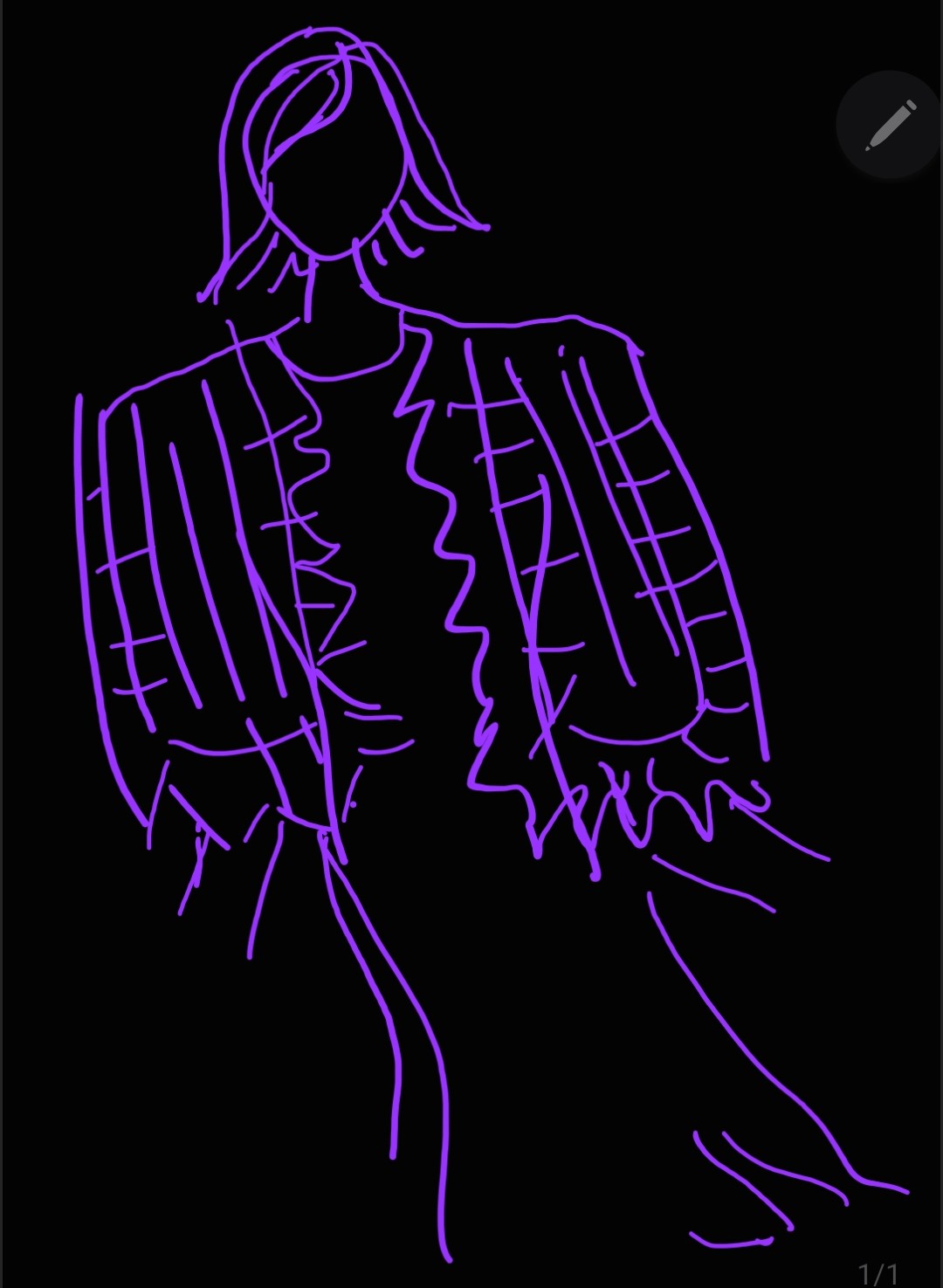
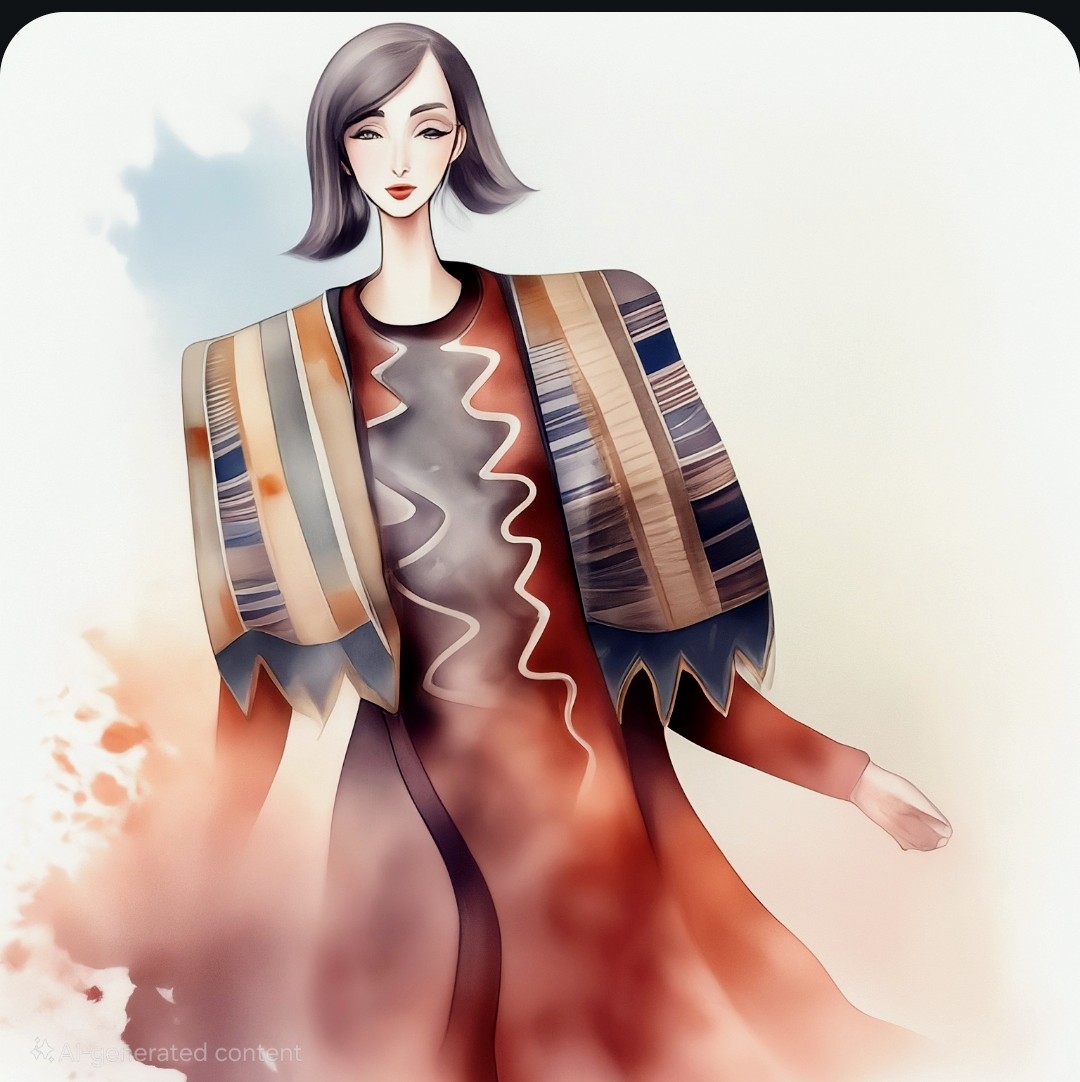
    Isn’t technical stuff fascinating? My phone has an app. It is AI based of course. But it will take my rough sketch and turn it into art. If only I could really illustrate my knitting pattern ideas so well! It has been really fun to play with so I will be trying this out more!

    Use the slider to see my sketch of “Quickie” and compare to the AI finish!

    I have written up Quickie as a PDF. Click HERE to download the pattern for free.

    Happy Knitting

    Lynette

  • A Quickie…

    A Quickie…

    A few months ago I was interviewed by Stitchmastery. Stitchmastery makes the knitting program that I use to create my charts! I was really stoked when this came out!

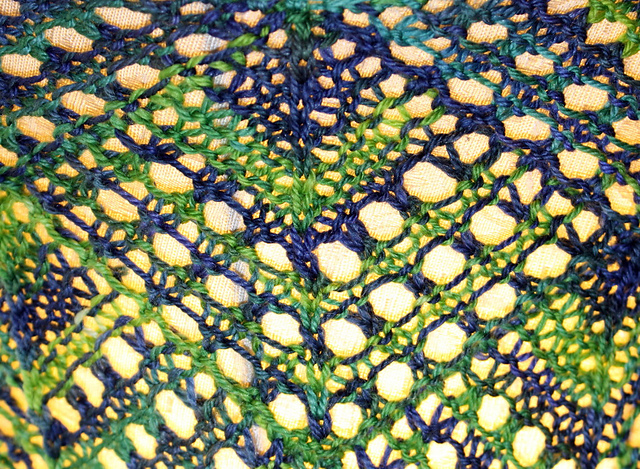
    Look at all those pretty lace patterns, all charts created by Stitchmastery.

    Interview series 51 – Lynette Meek – Stitchmastery

    Pattern is on Ravelry, High Summer KAL.

    I love working with striping yarns. Moving the stripes around in different ways is aways challenging. This technique is a little challenging, but great for the adventurous knitter.

    This striping yarn is Poema Stripes by Laine du Nord

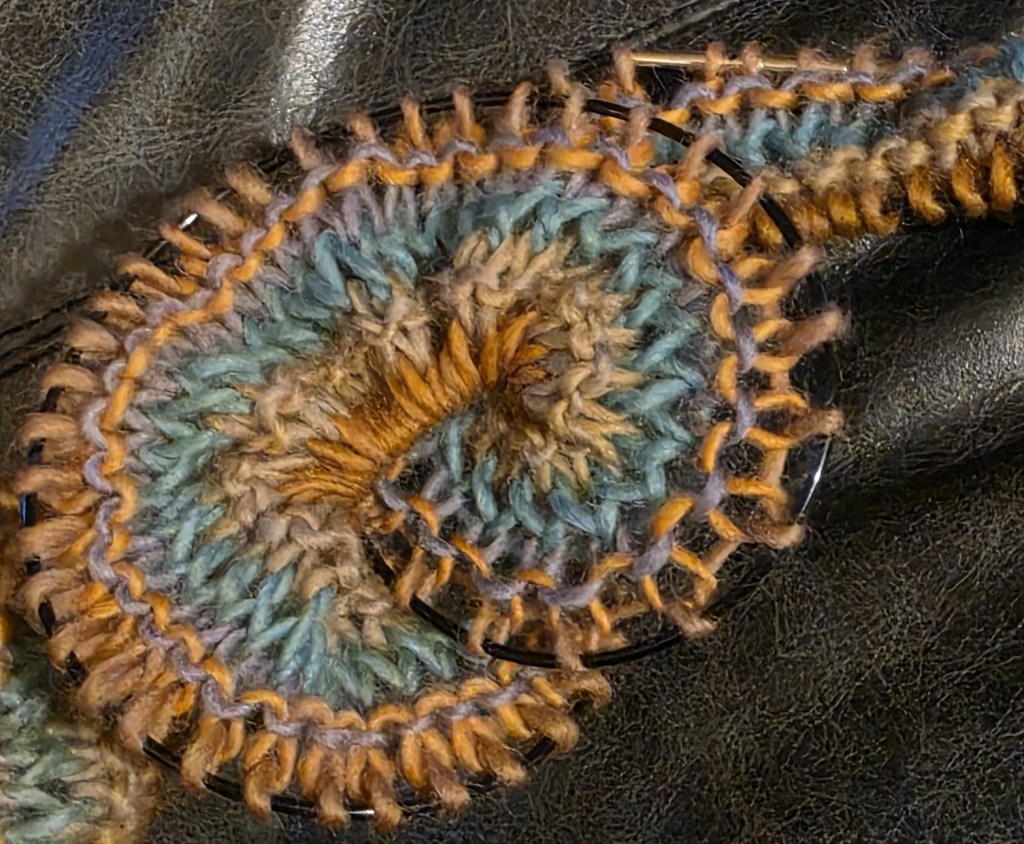
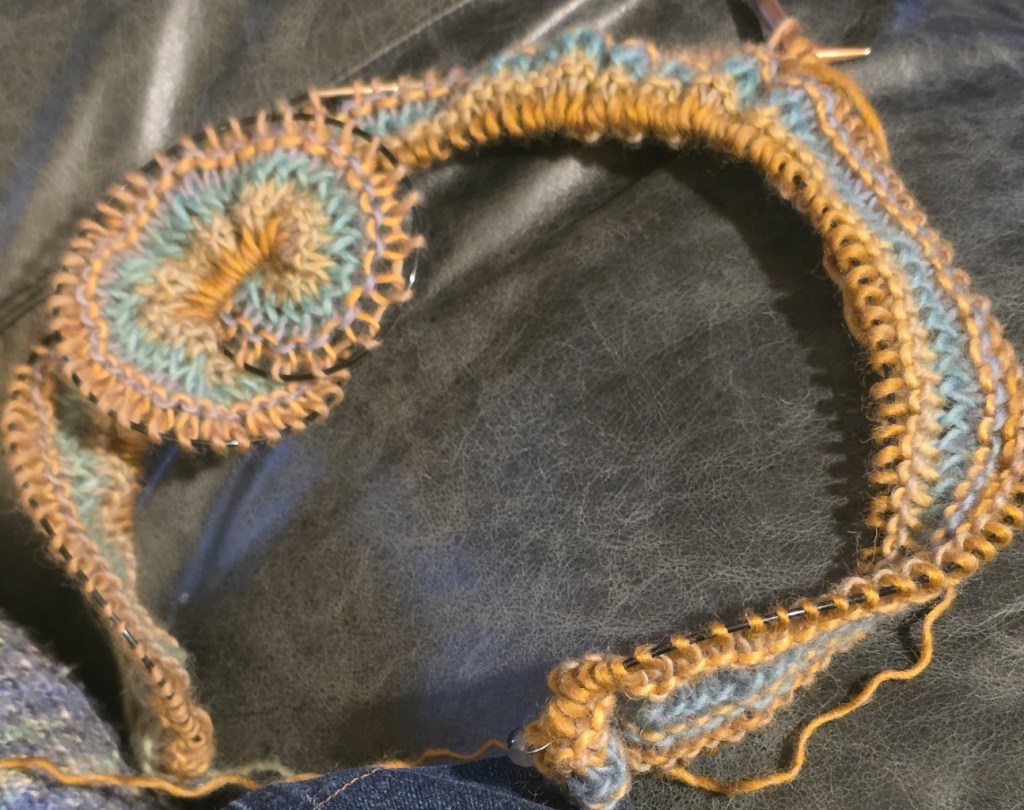
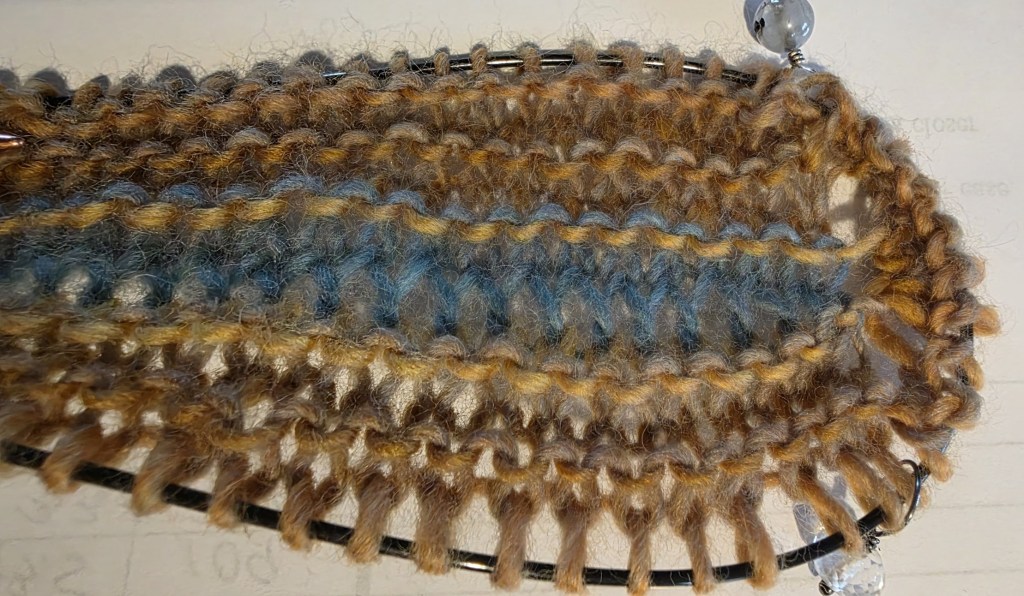
    I have started a new scarf, one with a different style of cast-on. For the knitting nerds outs there – have you every knit a rectangular scarf or shawl in the round? Do you know the magic loop method? Why not give this a try?

    Basic instructions for a worsted start:

    Using a 5.0mm US#8 80cm 32in circ, and using a knitted cast-on (you know, the one with the loopy edge) 170 st. Knit 1 row. With a 150cm 60in needle of the same size, turn work so that the RS is facing with the cast-on edge on the top.

    Pro Tip – one that I forgot until I didn’t need to remember – DUH! – if you have them use a 60 in cord with the short tips – you will be knitting in the round without the rabbit ears a lot sooner (magic loop).

    Pull working yarn up and using the new, longer needle, pick-up and knit 170 sts from the cast-on edge. Pull up enough loop so that the needle can turn the corner, YO, knit 170 sts, YO, place BORM marker – 342 sts.

    I love the way the stitches make “turkey tails” as you move them along the cord.

    You will need to pull out the extra cord at each end to turn the corner for the first 10 rounds or so.

    • Round 1 – purl 170 sts, pm, yo, k1, yo, pm, purl 170 sts, pm, yo, k1, yo, slm – 346 sts.
    • Round 2 – knit 170 sts, slm, yo, k1, yo, k1, yo, k1, yo, slm knit 170 st, slm, yo, k1, yo, k1, yo, k1, yo, slm – 354 sts.
    • Round 3 – purl 170 st, slm, k1, yo, k1, yo, k3, yo, k1, yo, k1, slm, purl 170 sts, slm, k1, yo, k1, yo, k3, yo, k1, yo, k1 – 362 sts.
    • Round 4 – knit 170 sts, slm, k2, yo k1, yo, k5, yo, k1, yo, k2, slm, knit 170 sts, slm, k2, yo, k1, yo k5, yo, k1, yo, k2 – 370 sts.
    • Round 5 – purl all around – no increases.

    From this point increases will be every other round.

    This is as far as I have gotten. I will post more as I go.

    I will post more of the pattern tomorrow, always supposing I get more done today!

    I hope that your knitting is going well! Happy Knitting!

    Lynette

  • Directionality in Knitting

    Directionality in Knitting

    Did you know that knitting only moves in one direction?

    That you can only knit “up” even when you are knitting “down”?!

    When you are knitting you are creating both fabric and garment at the same time and the action of knitting takes “up” the yarn always in one direction. Your knitting will only frog in one direction, will only “run” in one direction and often will only allow you to design in one direction.

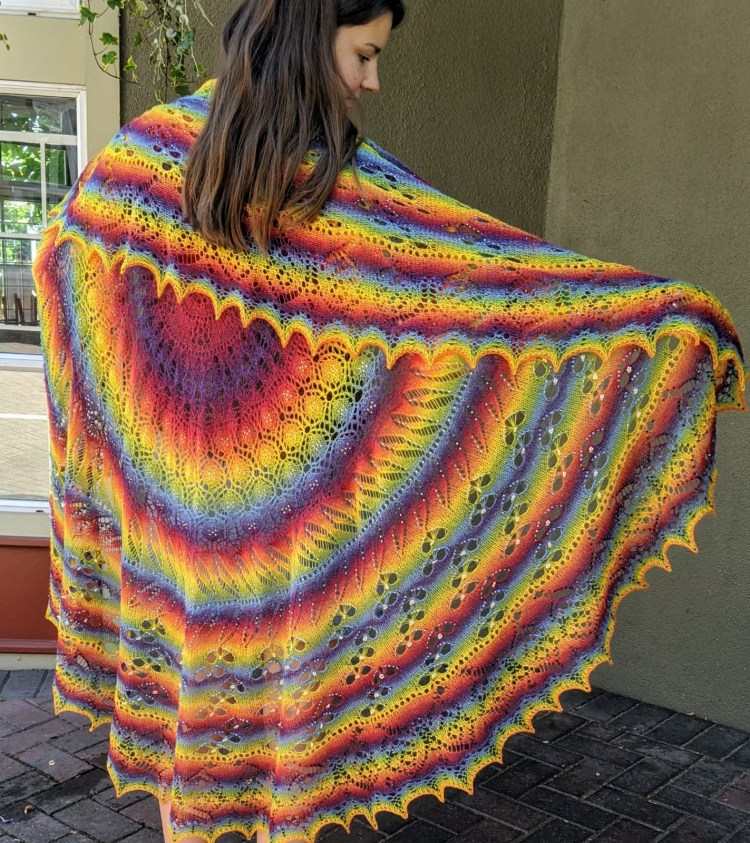
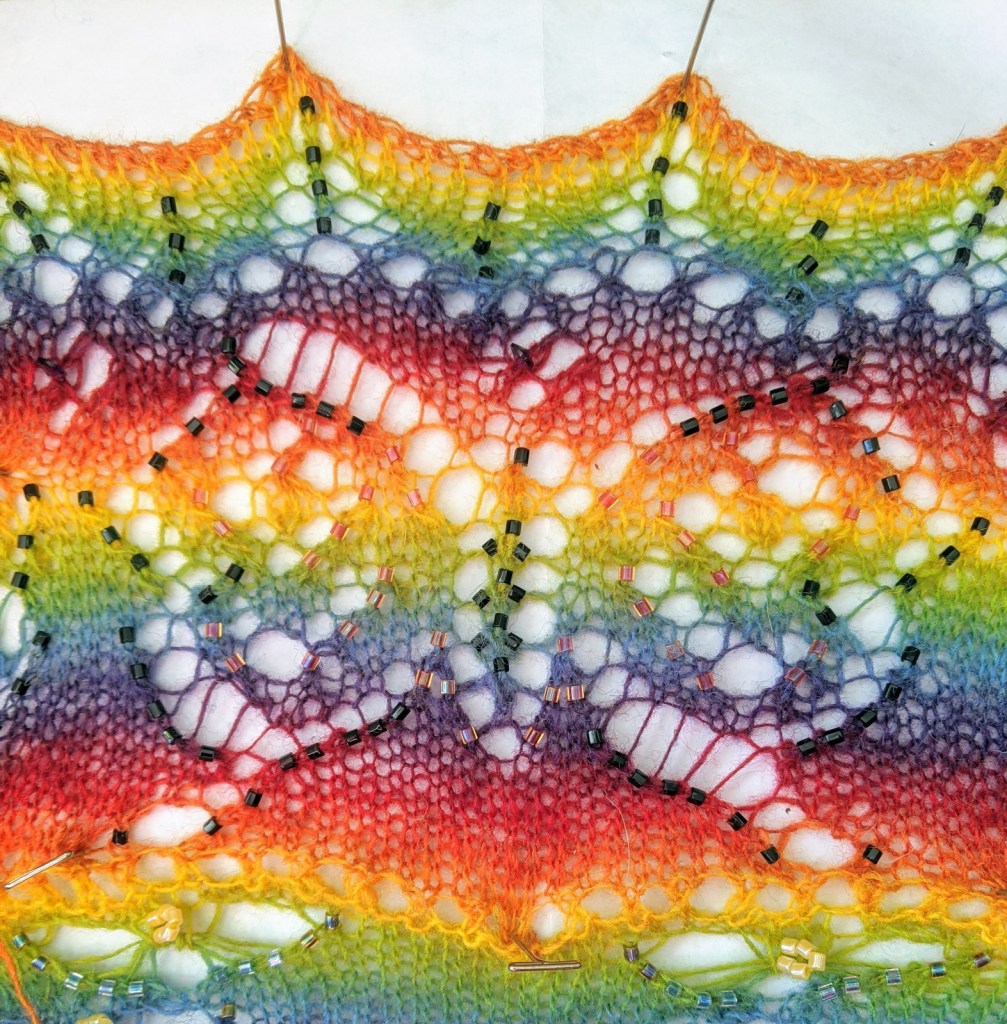
    The other day Greta, a friend of mine, asked why certain patterns were upside down when wearing them as a shawl. For example the butterfly pattern in my Covid be Damned Shawl. Why couldn’t they be the other way around?

    Unfortunately, that particular pattern that cannot be reversed, the lines that make up the shape of the butterfly only move in one direction. To make the butterfly right side up, we could have cast-on the stitches, knit the butterfly and then graft the stitches to the body of the shawl to make the butterfly right side up. This would have been a lot of work with certain drawbacks and not worth the effort. Most of the interesting patterns, especially ones with distinct shapes and line are literally irreversible.

    It can be easier to reverse the simpler patterns, but even they can be stubborn. I remember a young designer trying to make a simple sprig go the opposite way in her knitting as she wanted it to go “right” side up, but in the end she bowed to the knitting.

    I just went through the same kind of process.

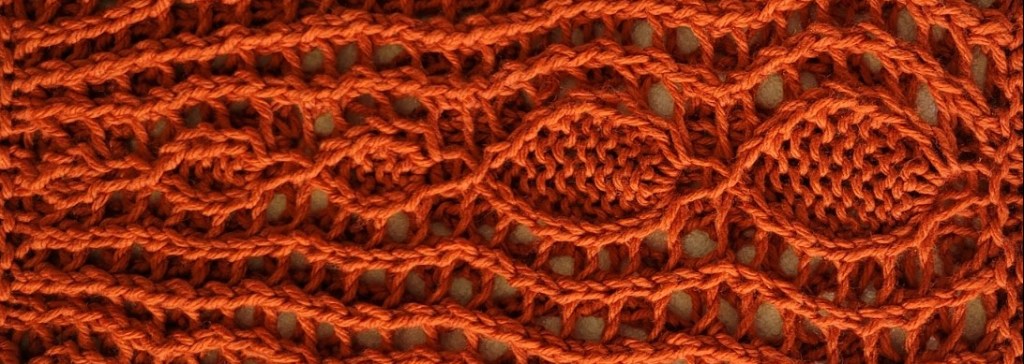
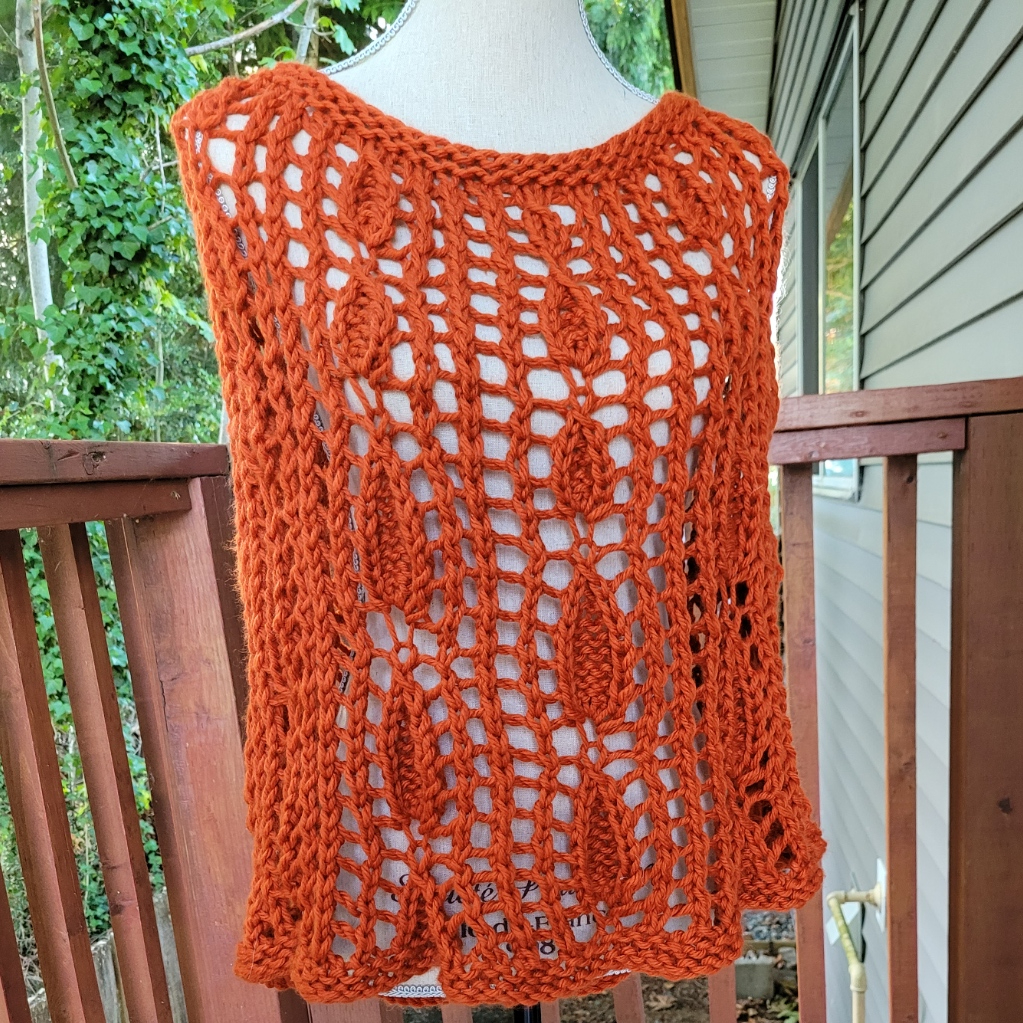
    I wanted to knit a pattern that was representative of my feelings of shock, grief and sadness. The announcements coming out about the residential school properties and the bodies of the children they were finding were hitting me hard and I know that there is more to come. I decided on a top-down poncho, knit with a stitch that always had reminded me of tears. I wanted to knit the poncho top down and still keep the tear drop shape of the motifs, the stitch pattern did not co-operate. This pattern was a pattern that I could not reverse, after a day and a half of trying I gave up and went to a bottom up version of the poncho.

    The pattern immediately started to behave itself and it knit up in no time at all!

    Tears for the Children

    Knitting this pattern was a type of catharsis for me. I felt compelled by my emotions to knit this idea out. I stopped my other project for a moment (Sundial Shawl) and knit this out of my system.

    The announcements about the Residential Schools and the unmarked graves has hit me very hard. I am not a particularly political person or one who has strong opinions on most political topics, but this, this was very different. As a mother and now grandmother, the thought of my children or grandchild being forcibly removed from my care and culture was a gut blow. That this happened in Canada, my Canada, has really caused me to think and feel things that I had never before considered. I am humbled by our past and want our future to be better thought out and more caring of each other.

    Tears for the Children is the name of the pattern. It is free for all. There are links to donate on the Ravelry Page in lieu of payment. It is very little, but it is a start.

    Below are a couple of links if you are interested in learning more about this issue or donating to the funds to support the healing process for all indigenous Canadians. I am sure that there are more.

    Donate here for the Gord Downie and Chanie Wenjack Fund.

    Donate here for the B.C. Residential Schools Survivors Society

    Be well, Be aware, Listen to the stories, hear the grief, help the healing.

    Lynette