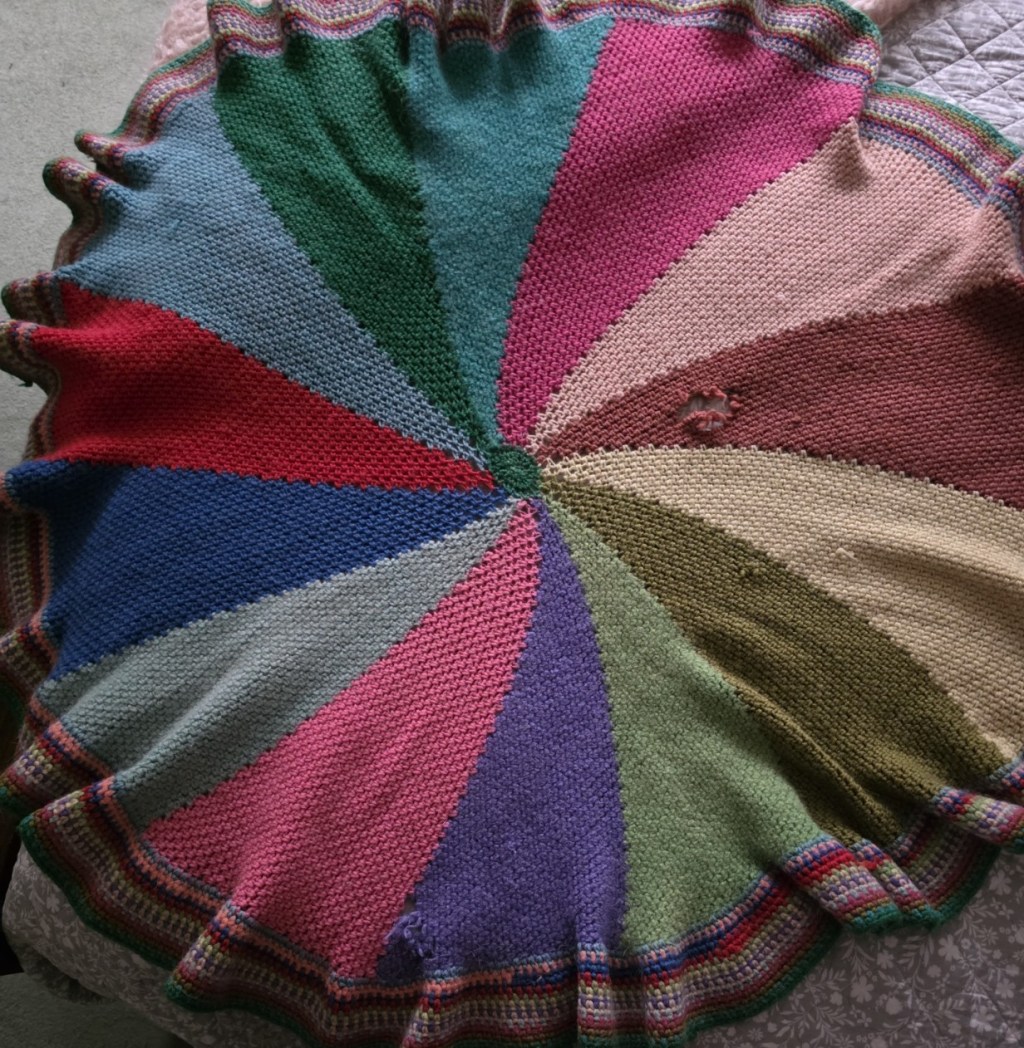
Note – if you think you have read this before – you have! I somehow deleted the original post about this afghan. I am trying to replace the post and the basic start to the blanket that was included! It was truly an epic fail.
Do you find learning a new bit of technology a challenge? I certainly do. Anything I have learned I usually do fine with. New things can cause me grief.
How did this happen? I received a message that said I had two versions of the same post in two different locations. I needed to delete one. I chose “poorly”! And lost the good post! The other post was an incomplete draft! So I am finishing the draft to recreate match the post!
So Here we go Again.
Remember the Granny Afghan? Well, after writing about it, I realized how much it means to me. Surprisingly, I had never made an afghan for my grandson Logan. I haven’t even knitted him a baby blanket (a story for another time). I have knit him quite a few things over the years, but not “keeping” or “memory” things!
I felt that needed to change. I needed to create something that Logan to have to remember his Granny.
I have made copies of the crocheted blanket, a few times, for friends or family. Copying it carefully, counting every stitch and crocheting painfully from start to finish. I am not much of a crocheter, but I can work a chain st and a single crochet. This is not me, I am a knitter, not a crocheter. Crochet has never resonated with me in the same way as knitting has. This project had to come from my love of the craft, but…
I wanted to do something similar for Logan. I aimed for something fun and not the squares. The squares are my other blanket project for this year. I wanted to knit him something fun like the Granny Blanket.
Ray, a co-worker, pointed out to me that I could knit a version of it. In fact, I had already done so. ‘What was I thinking about’! Sometimes it just takes someone else to point out the obvious.
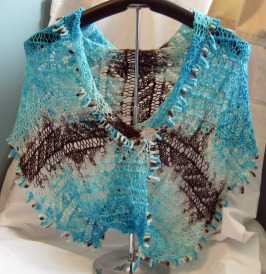
I few years ago I knit the Shetland Wheel. It is a laceweight Shetland style lace shawl, with a center of wedges, just like the Granny Afghan. This shawl is soft and fine and I love it, but it is way to delicate for a growing boy.
I want to make the blanket out of wool. It shouldn’t be too heavy. It needs to be strong enough to endure the “careful” handling of a boy to teenager and then to man. Maybe he will keep this blanket as long as I have kept my Grandmothers.
I am going to full (felt) the blanket so that it will be washable. So my swatch is much larger than average and in all the colours. Why?
Not all wools felt evenly. Sometimes the dyes themselves affect the rate of the fulling process. And I like to use my swatches. In fact many of my hat designs were the product of a swatch. Sometimes the best way to know how a yarn will work is to knit it into something.
So lets have a pillow to go with the blanket.
Sequence of events for this project:
- Pick your colours – I picked blue
- Pick a needle size – in this case 5.0mm – I don’t want a hard felt, just a soft fulling
- Second make a swatch – make a large swatch
- Third felt the swatch
- Fourth figure out how big to make the blanket from the swatch
- Fifth cast on the first wedge for the blanket
- Sixth turn the swatch into a pillow
- Seventh figure how to finish the blanket – right now I am thinking about a knitted fringe
So I have started.
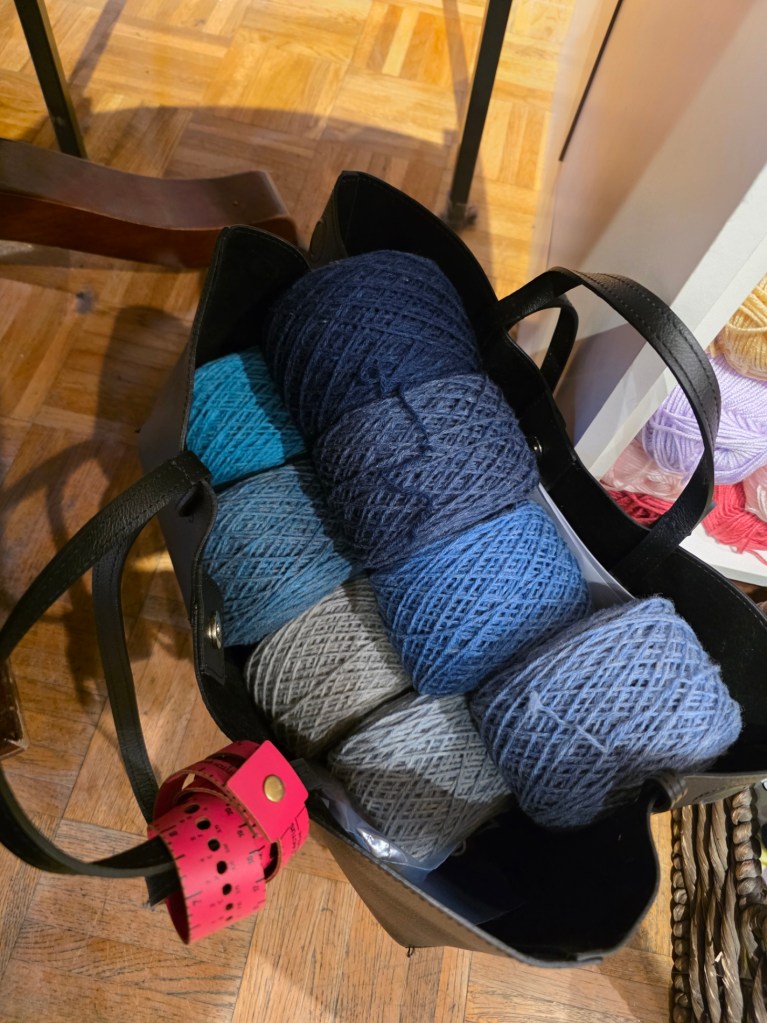
I picked my yarn, Estelle Yarns, Eco Shetland Worsted, in eight colours. Most of them in shades of Blue – Logans current favourite colour. Which has something to do with his favourite teams. The Edmonton Oilers and the Toronto Blue Jays!
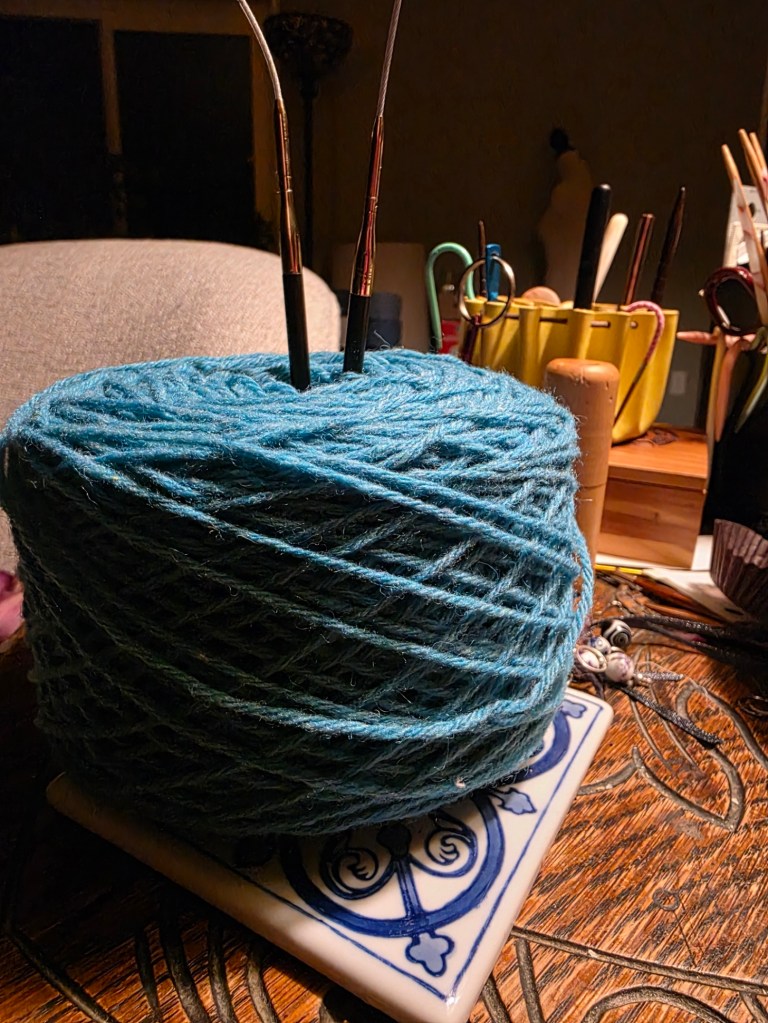
I picked my needles, a 5mm US #8.
And I cast-on. The journey needs to begin with a cast-on. The knitting will take a little time, but we have that. This is easy knitting, all garter st, with rows that shrink down and then start all over.
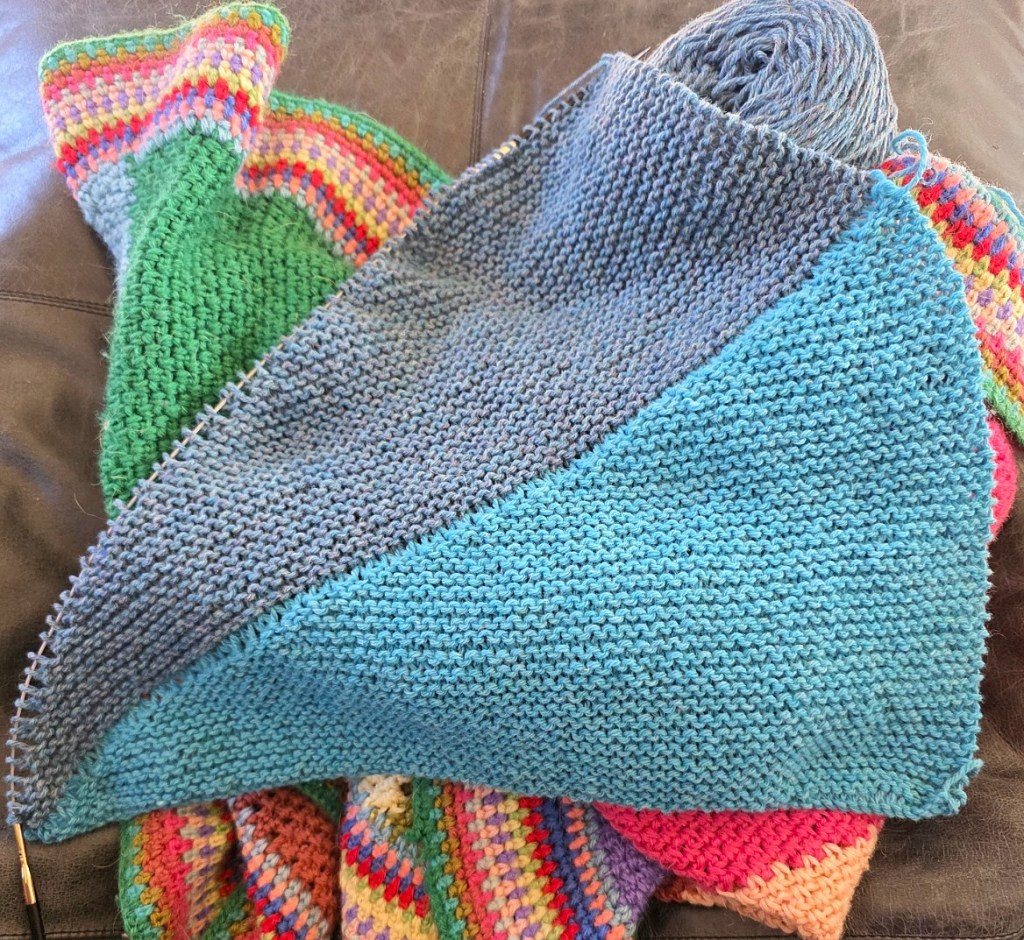
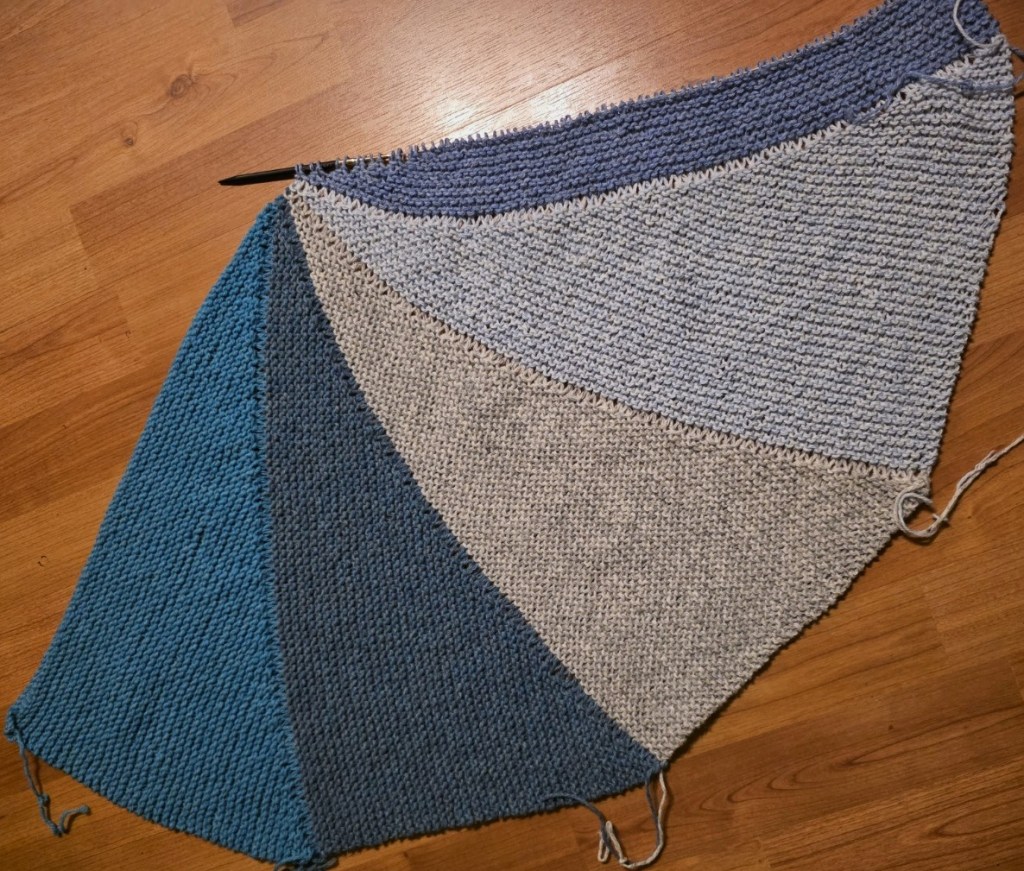
So what is the difference between felting and fulling.
1.) Felting traditionally is worked from the fibre itself
2.) Fulling is created when you take a fabric, woven or knitted, and felt it.
Felting is what happens when you take hot water, soap and agitation and ruin your favourite sweater. That is our usual experience, but when you felt with intent, different things can happen.
Fulling occurs when wool has been worked into a woven or knitted fabric. You achieve this when you take hot water, soap, and agitation, and you felt with intent. The resulting fabric is denser, and is often softer and easier to work with. It can be cut without unravelling and will keep its shape much longer.
If you want to join me on the journey, download the instructions below. They provide some “pithy” guidance to work from.
This year is turning into the Year of Blankets, not just the Year of Blanket Squares. These are big projects so nothing is happening in a hurry. There will lots of time for experimentation. These are fun projects, nothing is heavy lifting. So lets just have fun and play a little.
Happy Knitting
Lynette