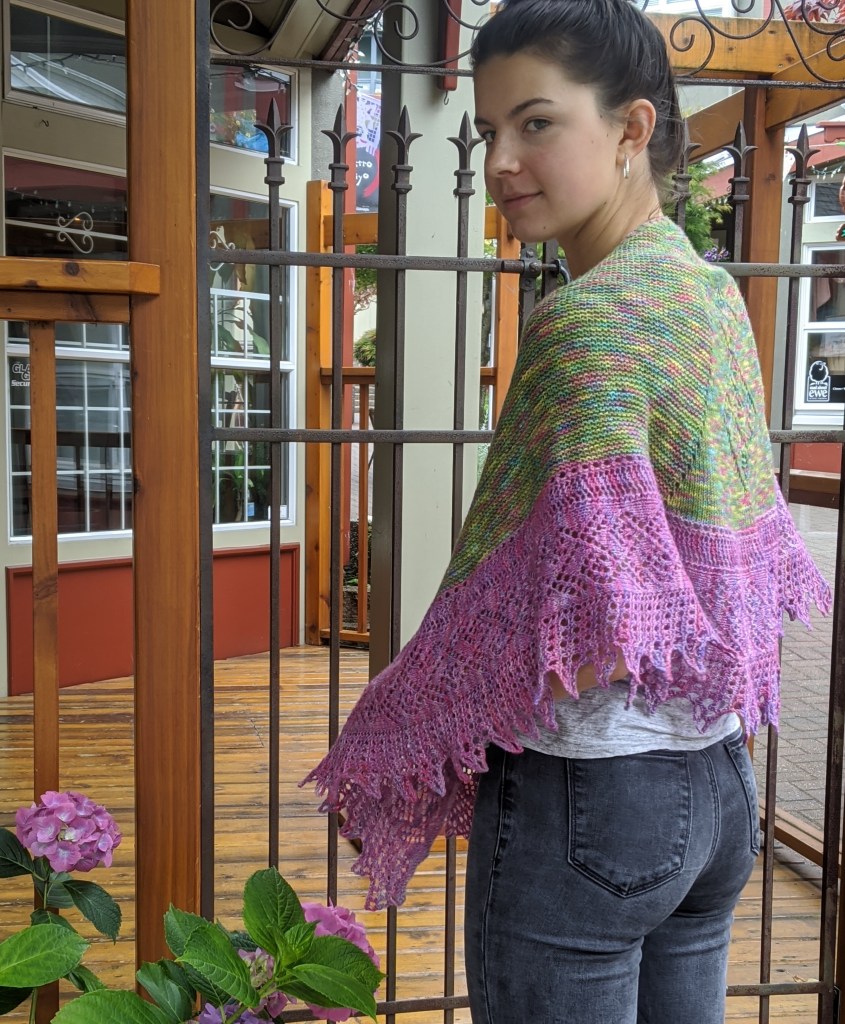
I haven’t dyed any yarn in a while. And I have had a particular project in mind for a while. I am thinking of teaching the moebius cast-on again, but I want to keep the knitting simple, a textured yarn with great coloures seemed to be the best way to go! So I am going to while away the day preparing for and then starting the project. First to dye the yarn.
The Yarn
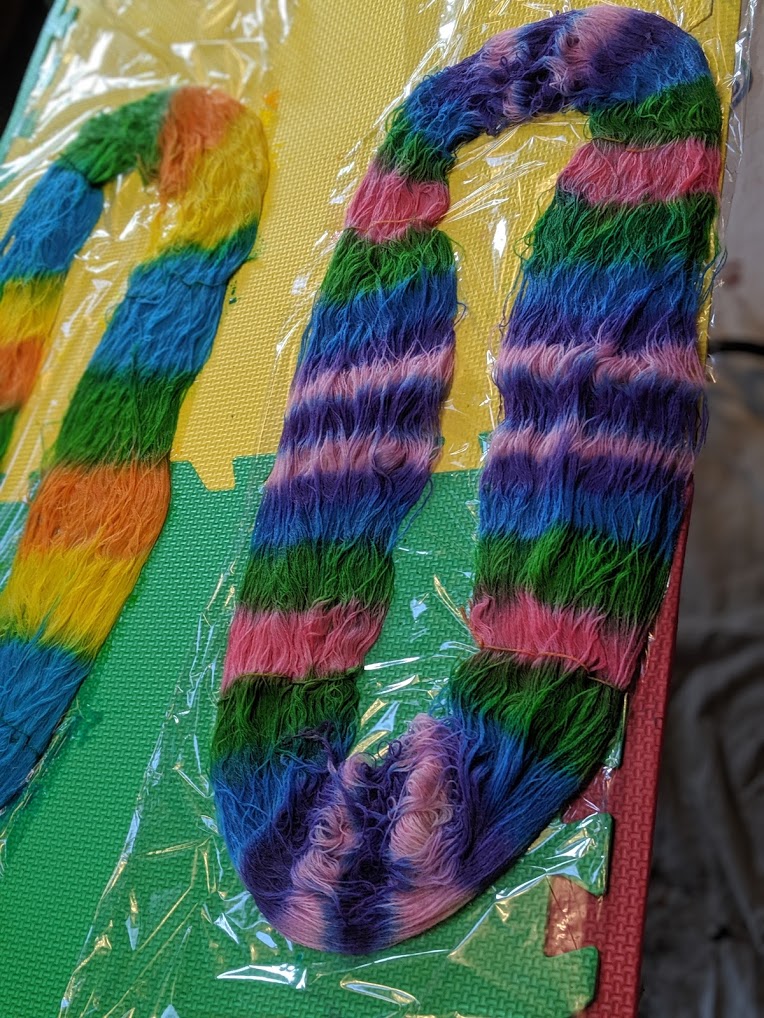
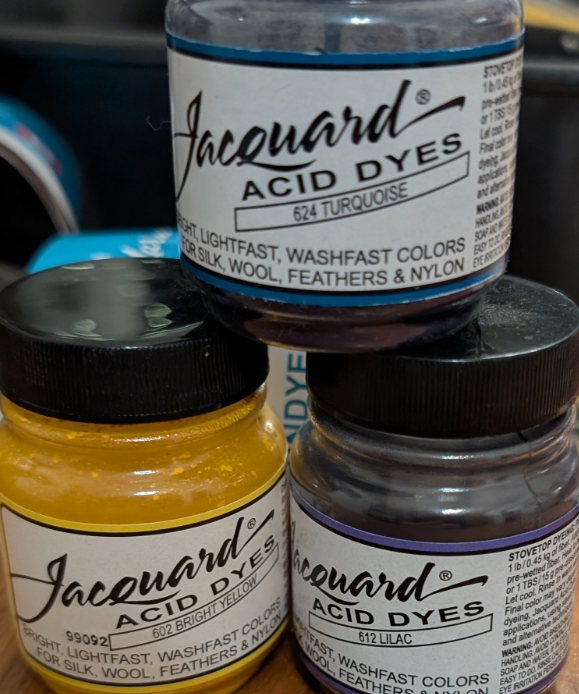
I got the yarn prepped and dyed before breakfast. Right now it is drying. The yarn is Popcorn by Gathering Yarn. It is a 93% merino, 7% nylon blend chunky yarn – 100m per 100grs, highly textured and very soft. My dyeing tools are pretty rudimentary, a heavy steel pan, not to big – I generally don’t try to dye more than 2 or 3 skeins at a time, stainless steel tongs and bowl for presoaking the yarn and basic white vinegar to help set the colours. The dyes are Jacquard in bright yellow, lilac and turquoise.
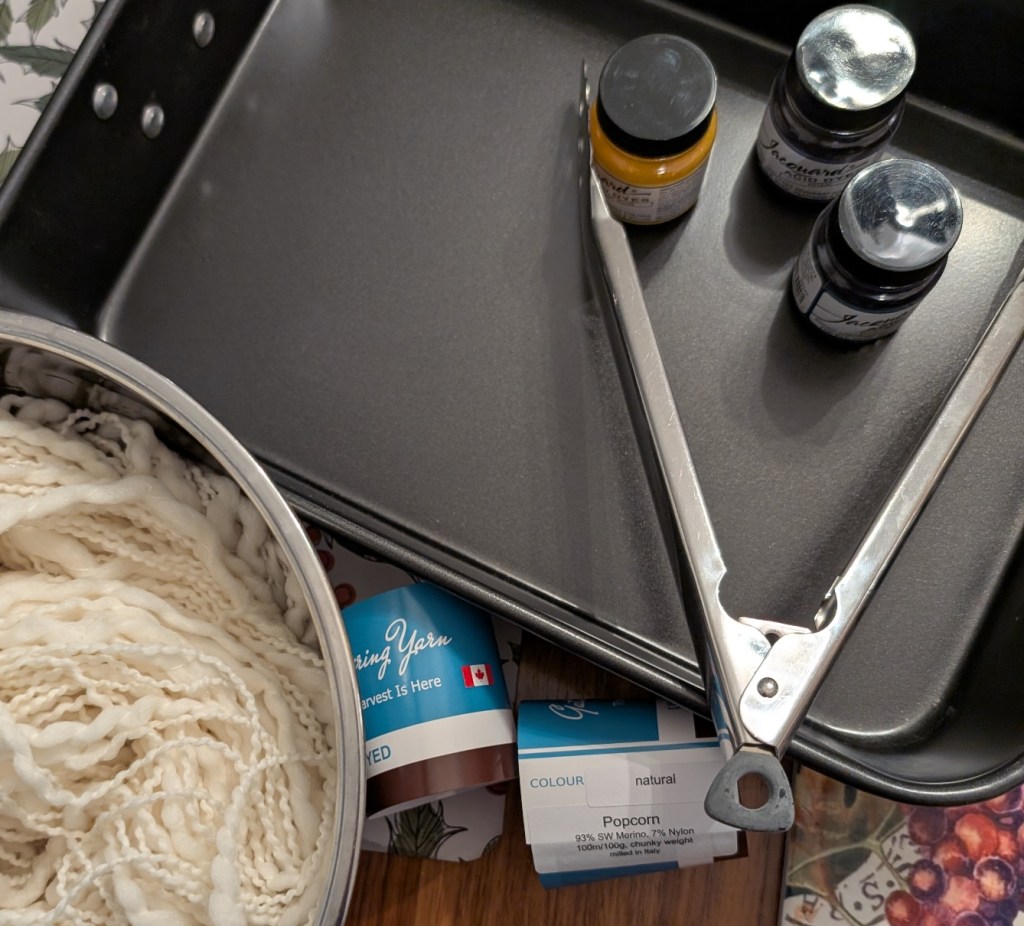
I love to watch the yarn change as the dyes are absorbed into the yarn. My stove has the perfect center element, long and narrow, it works perfectly as a low heat source for the dyepan.
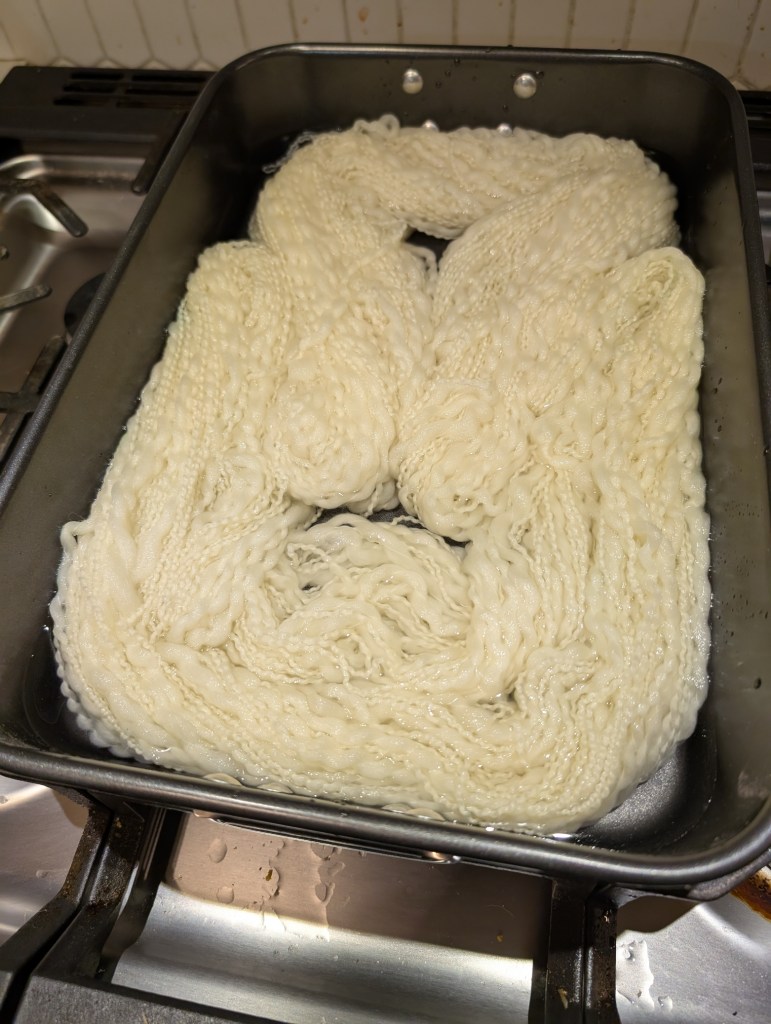
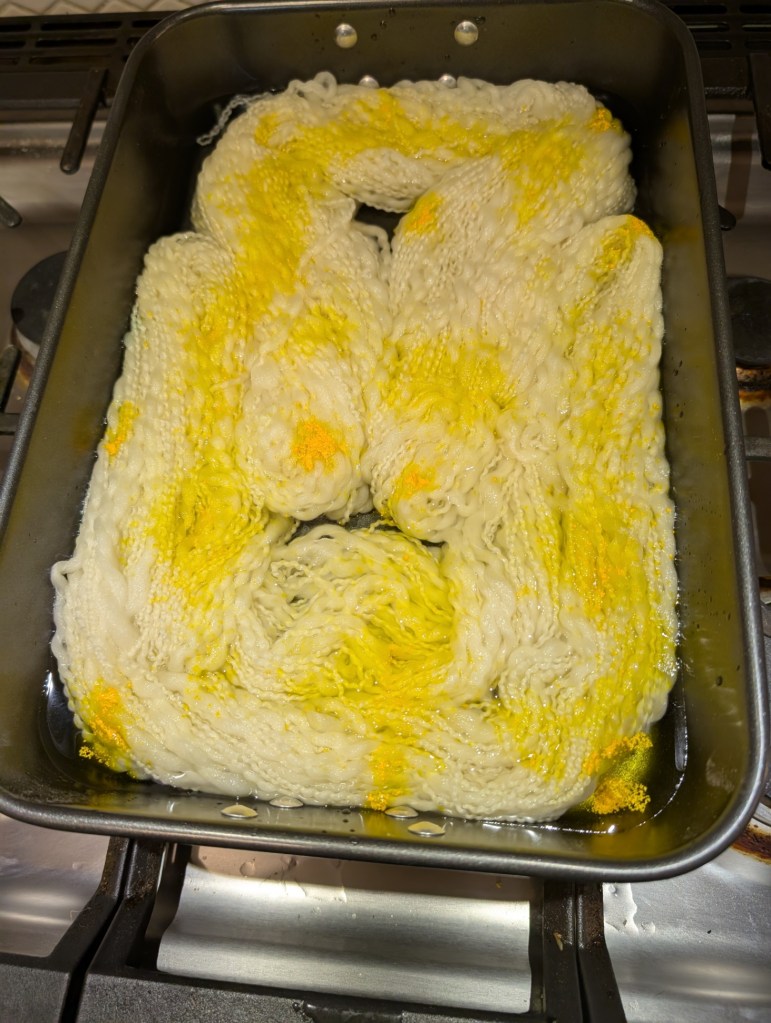
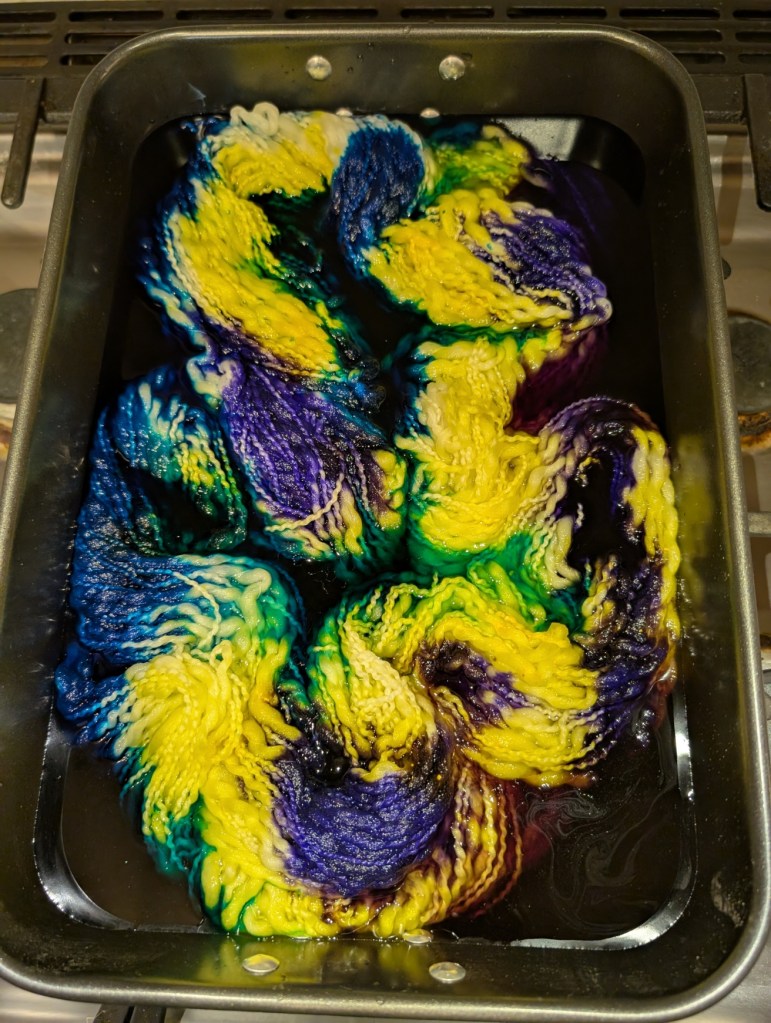
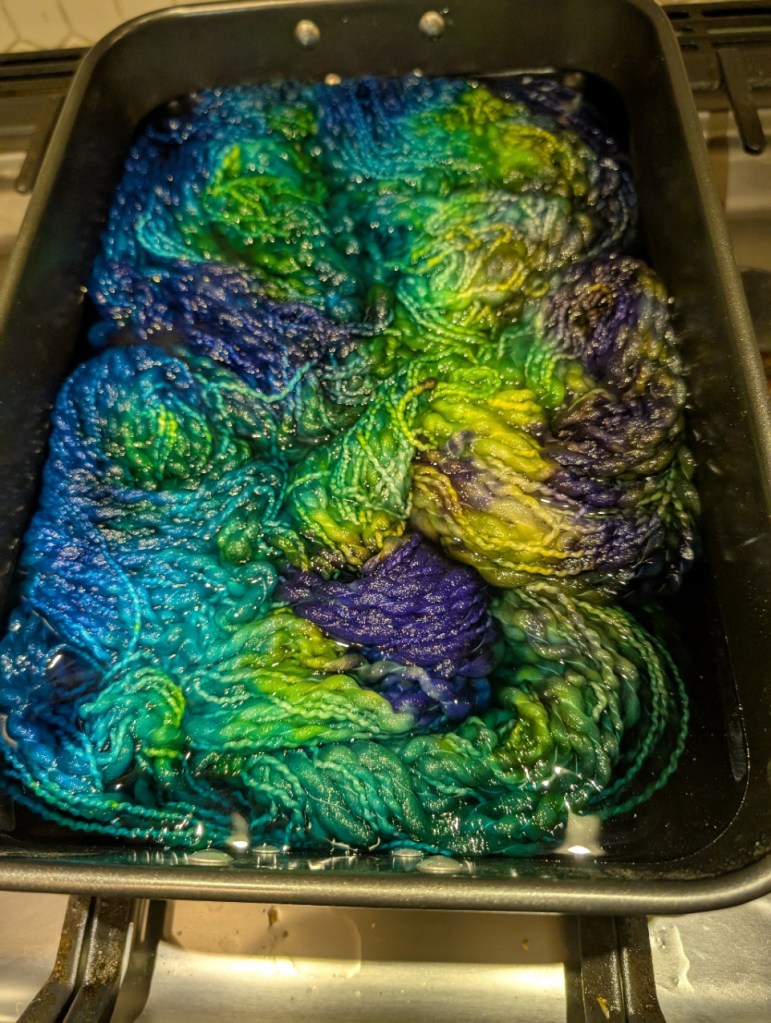
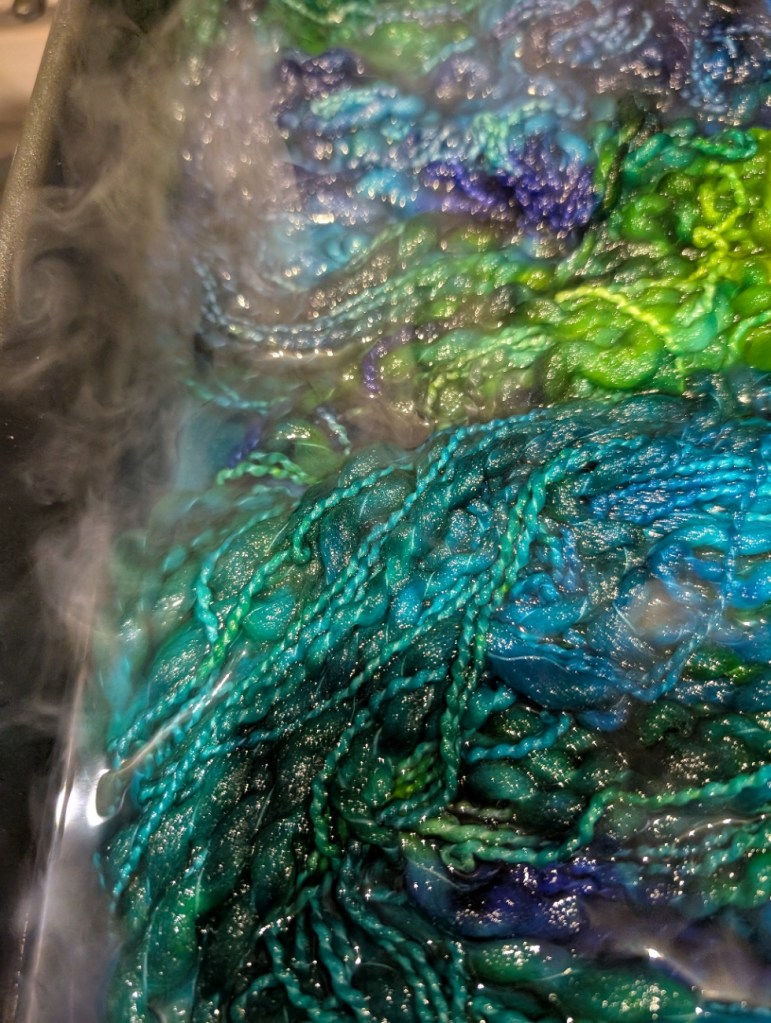
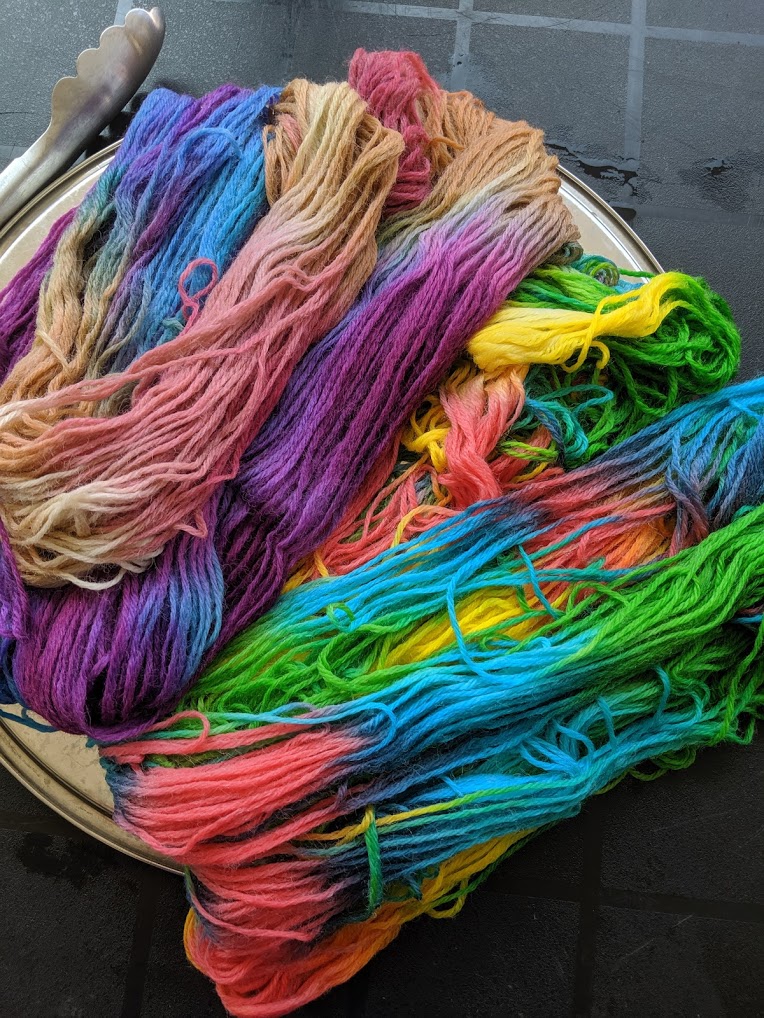
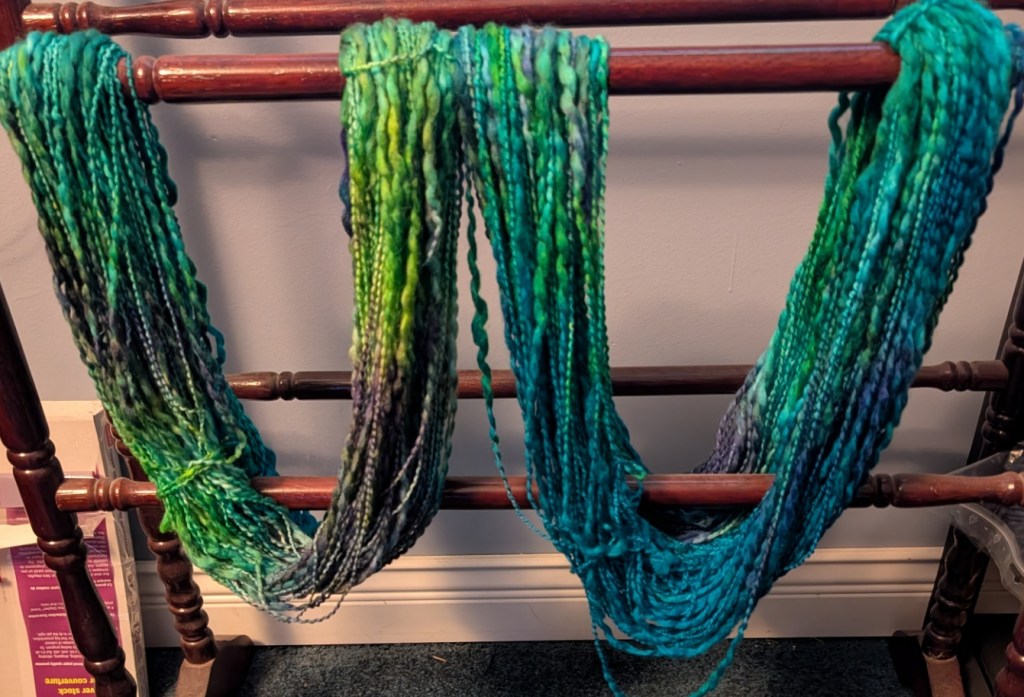
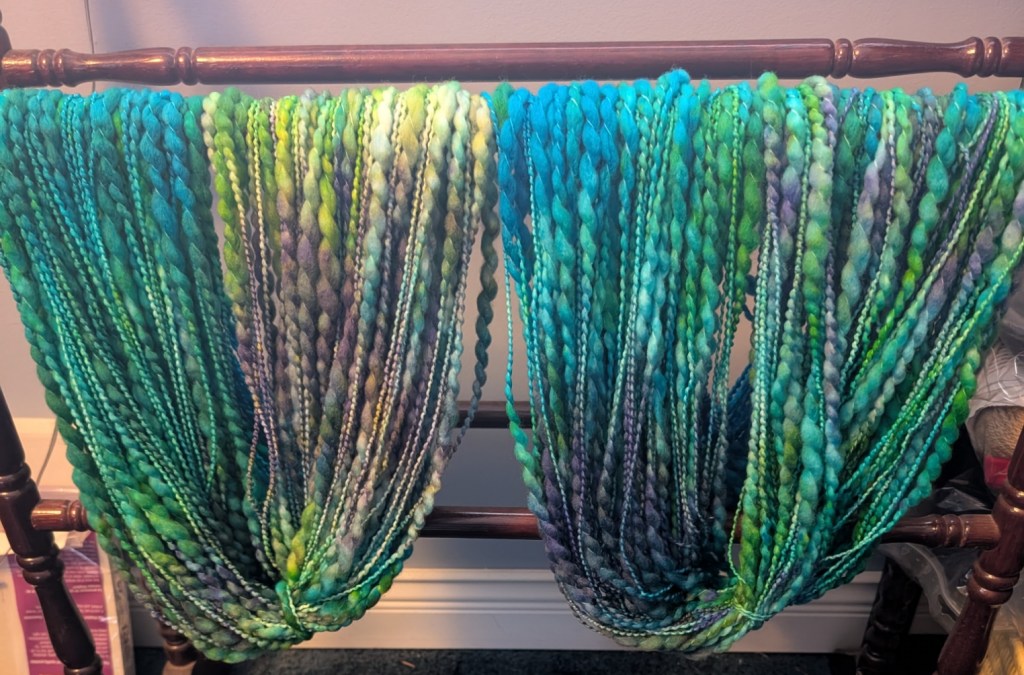
As you can see there are a lot of changes as the dyeing progresses! I am quite pleased with the final effect. It is easy to see that I am not a professional dyer, but I still get results that I can work with. These two skeins are a little different, but if I alternate the rows – which I will most definitely do – I should get a good result.
The first picture is the yarn when wet. The second is the yarn when almost dry. You can see how different the skeins are.
The Project
I haven’t knit a moebius in a while. You know that a moebius one of those never ending circles that mathematicians and scientists just love. It is a mathematical concept discovered in the late 1800’s by two scientists working independently of each other. Like the wheel, like knitting, it was it’s time to be discovered.
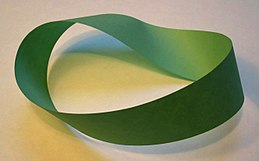
Beside the text, is a Möbius strip made with a piece of paper and tape. If an ant were to crawl along the length of this strip, it would return to its starting point having traversed the entire length of the strip (on both sides of the original paper) without ever crossing an edge. Wikipedia
Knitters love them too, especially Cat Bordi, her moebius cast-on has really added something to the knitting lexicon.
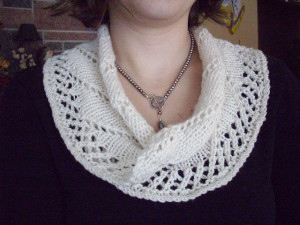
The first project I knit using the moebius cast-on was the free pattern Grace Cowl. I was hooked. Since then I have designed a few moebius patterns. And I think it is time to create another pattern, something simple, something for teaching the technique to knitters who love to play and learn a new cast-on.
The moebius cast-on is a center line cast-on. This means that once the cast-on and first round are knit you will then be knitting in two directions.
The Moebius cast-on resembles a modified provisional cast-on; but is not provisional and becomes the two center rounds of your garment. Like some cast-on’s, provisional or otherwise this cast-on is “un-tensioned” and requires patience for the first half of the round of knitting – the second half of the round is easy. From the Moebius cast-on, like any other cast-on, a knitter can knit almost any kind of stitch and create a unique garment.
Be prepared – each half of the curve is the mirror image of the other half. For example; if every round after the cast-on is knit, one half of the moebius will appear as stockinet and the other half as reverse stockinet. Because of this a reversible stitch is recommended for those knitters who want both sides to be visually the same.
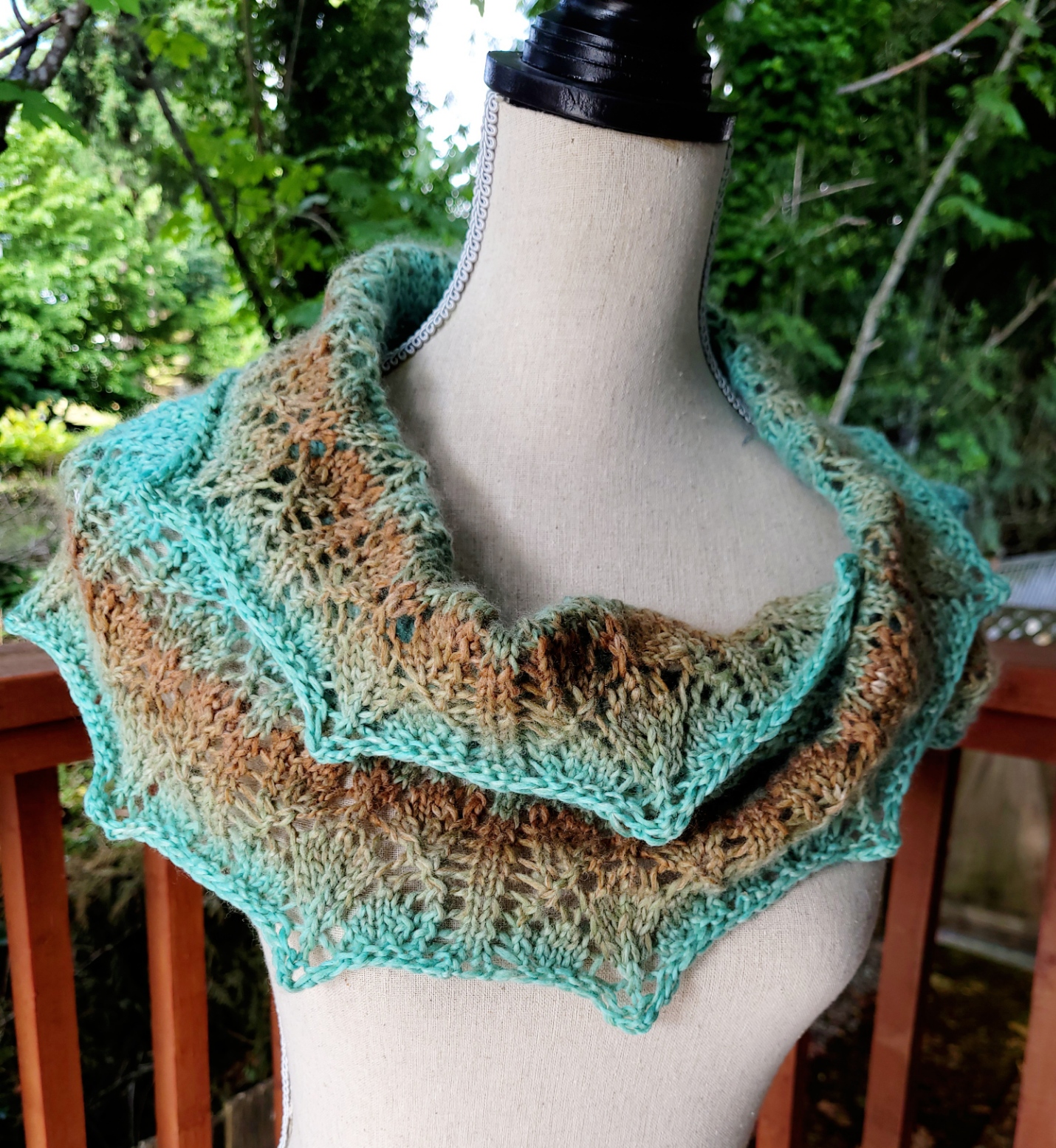
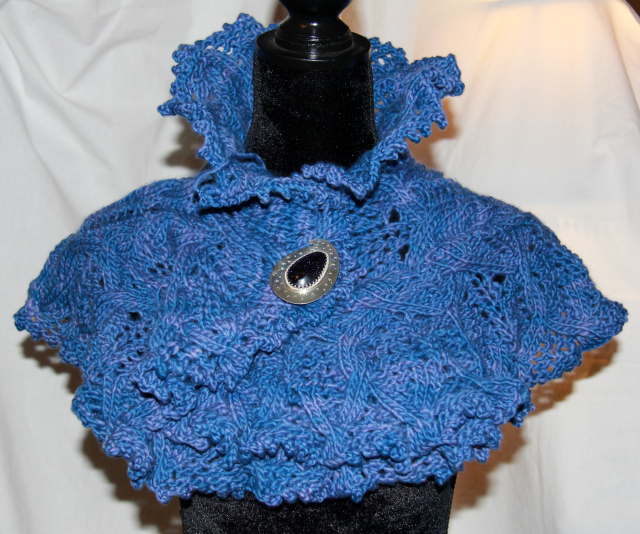
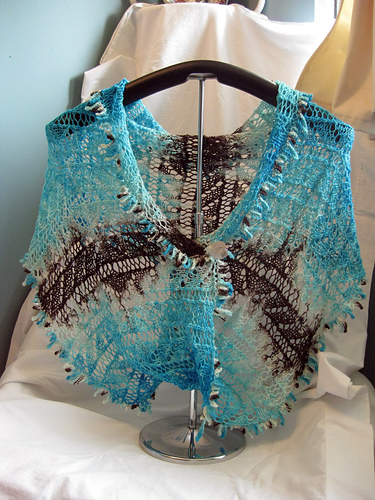
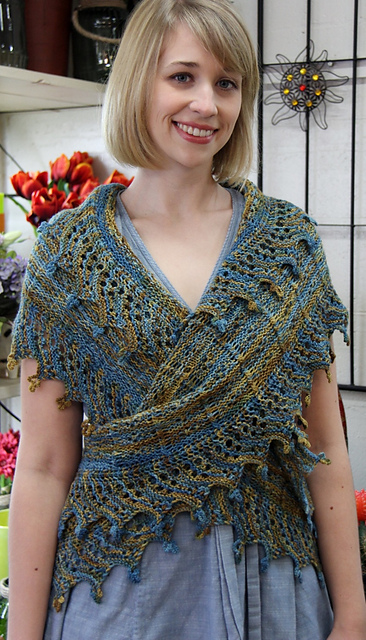
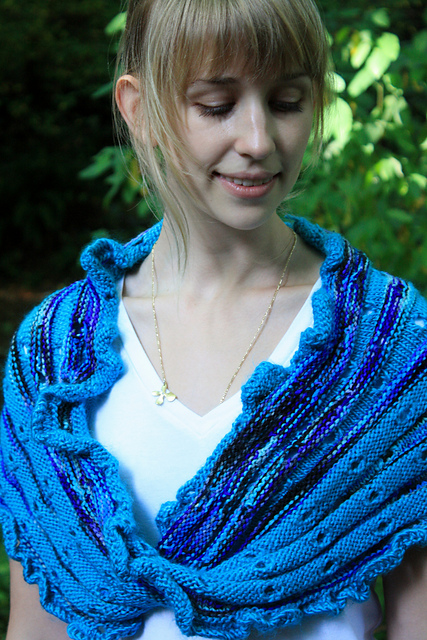
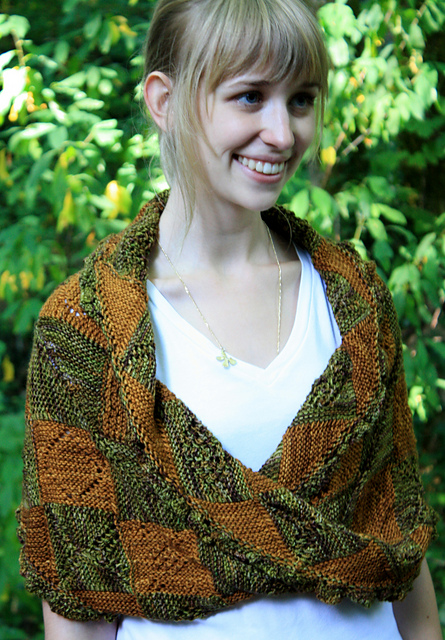
Popcorn is a lovely textured yarn and with being hand-dyed will knit up in a wonderful moebius without to much effort beyond knit and purl textures. I am thinking of a simple seed stitch alternating with some garter st bands. Time to try the cast-on with the dyed yarns.
The skeins definitely will need to be alternated! But aren’t they pretty! It was hard to find some natural light to really show you the colours, today is definitely grey. The dining room window sill did the job!
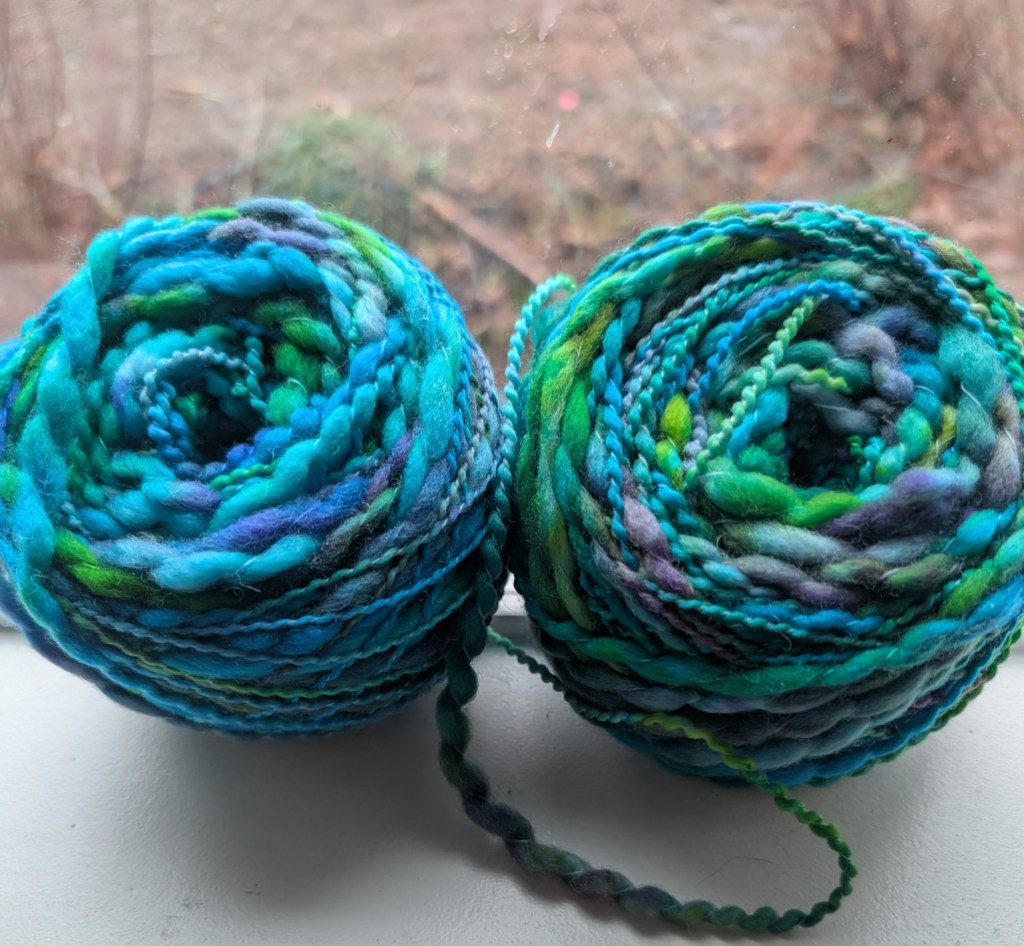
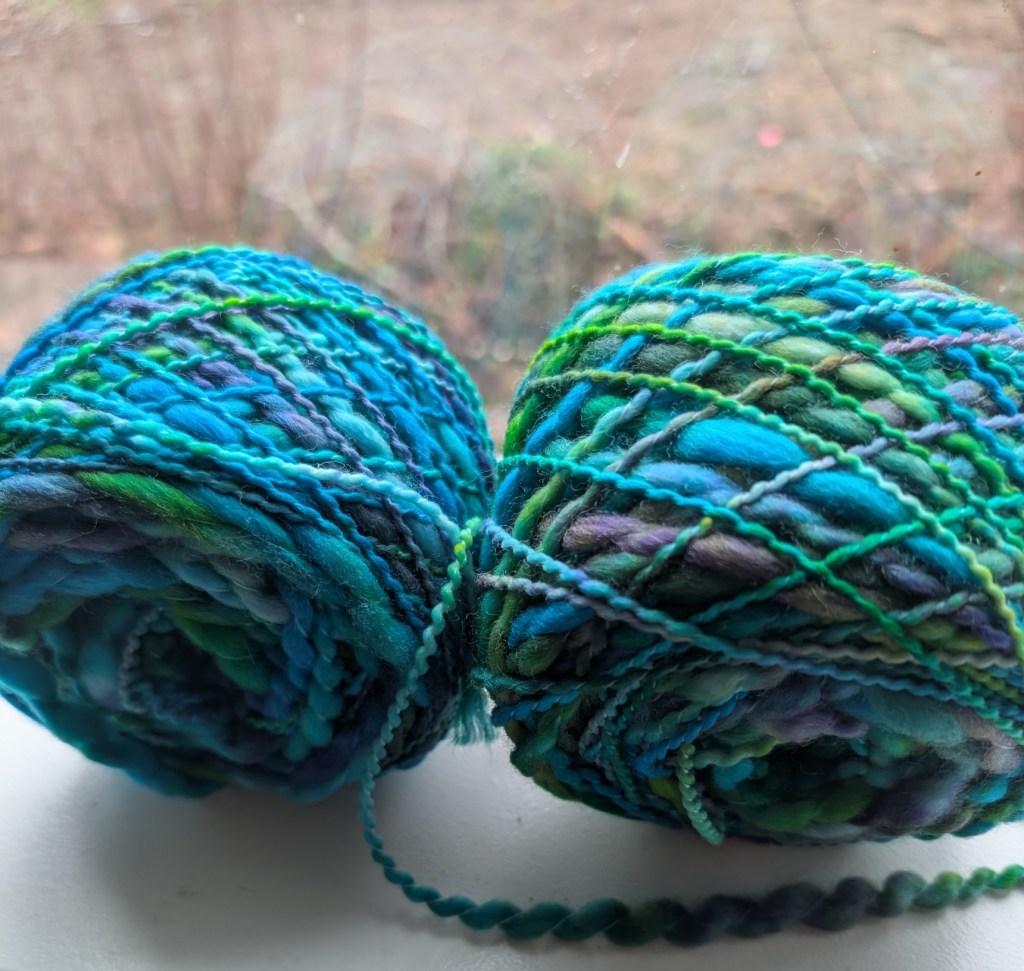
I couldn’t find my Addi circ needle, 8mm, US 11, 120cm or 47 in long, my preferred needles for this technique, so I am using an old Crystal Palace bamboo circ, 55 inches long. The cord is a little stiffer than I like to use. But everything else is buried behind other stuff until the Christmas Decorations are taken down and everything put away!
The Knitting
Supplies – 8.0mm circ needle, 55 inches long, 200m chunky yarn, BORM and halfway point marker
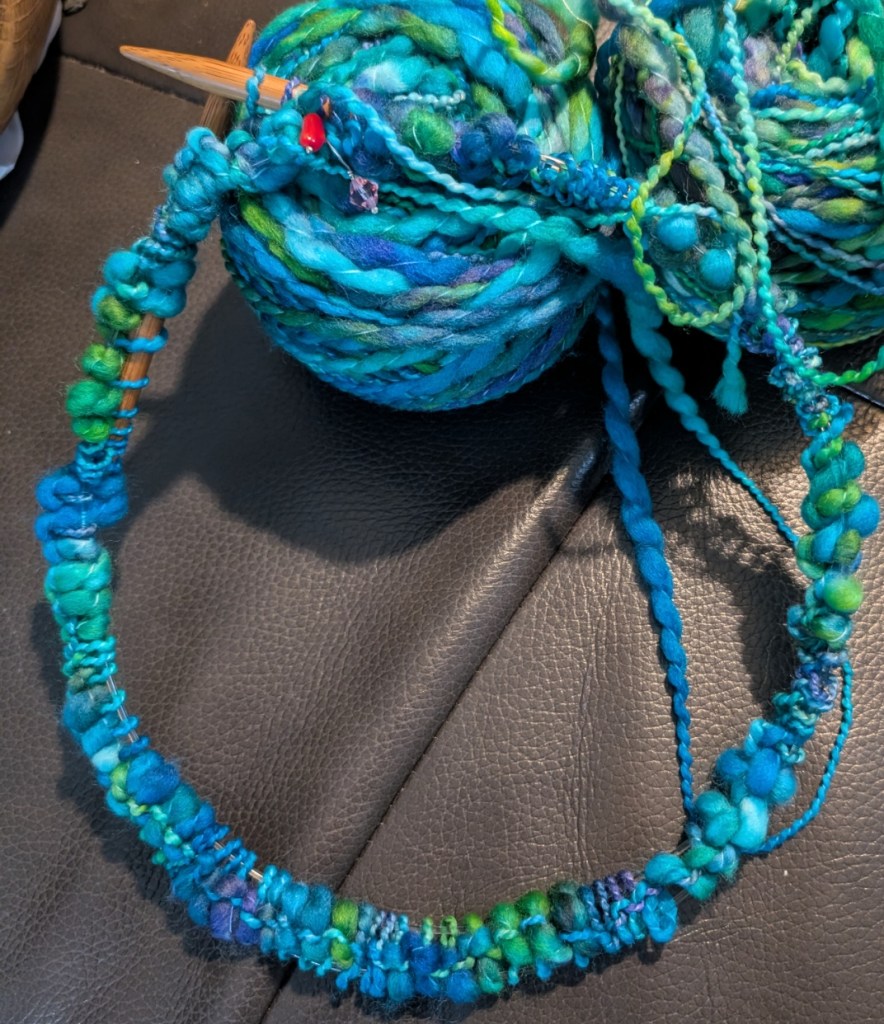
The most difficult part of moebius knitting is the cast-on and the first half round of the knitting. The cast-on is a unique one, almost provisional, one that creates an upper and lower row of stitches.
This cast-on has no tension and the stitches love to leapfrog over each other for the first half of the round. After the first half is knit the stitches will behave themselves.
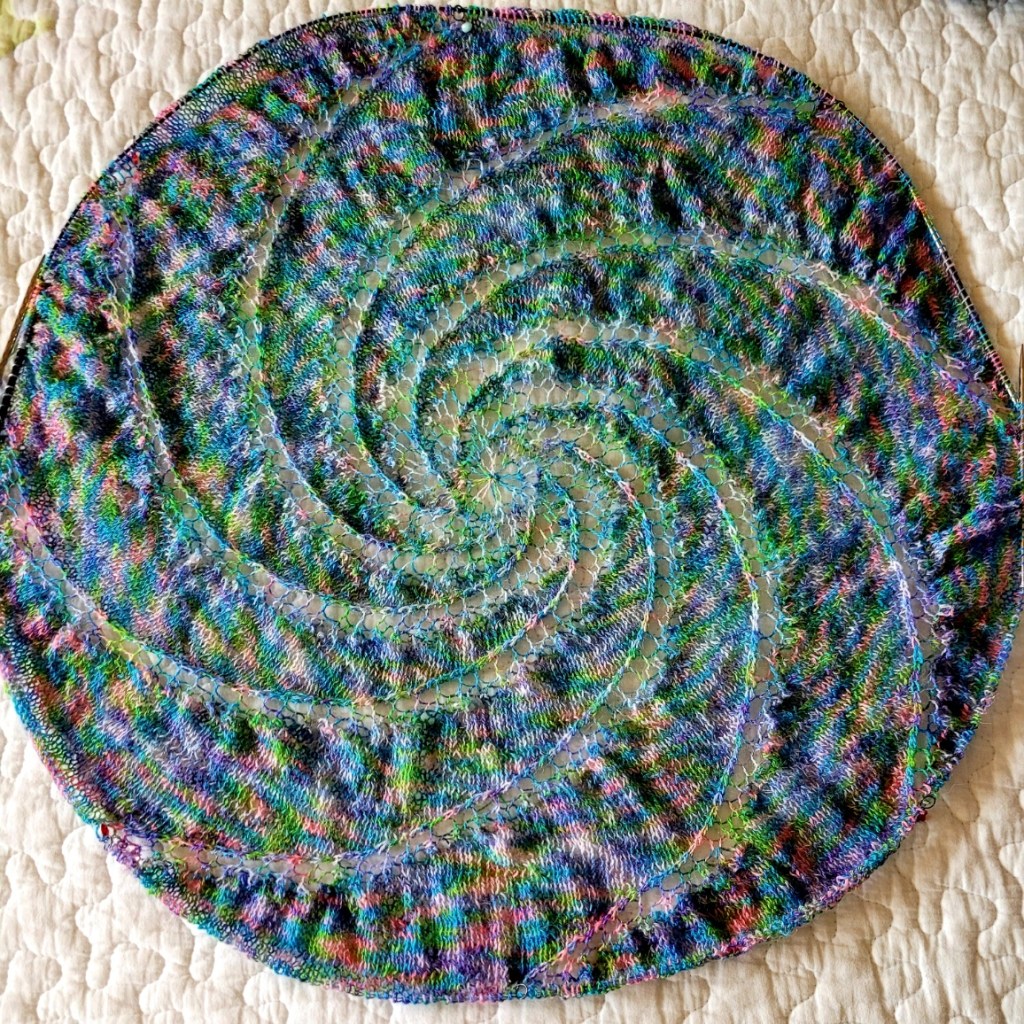
Picture – cast-on and first half round complete
Once the first half is knit everything knits as normal except for the fact that you are knitting away from the center. As you get further and further from the center you can see the cords separating and the knitting getting wider. It is so magical!
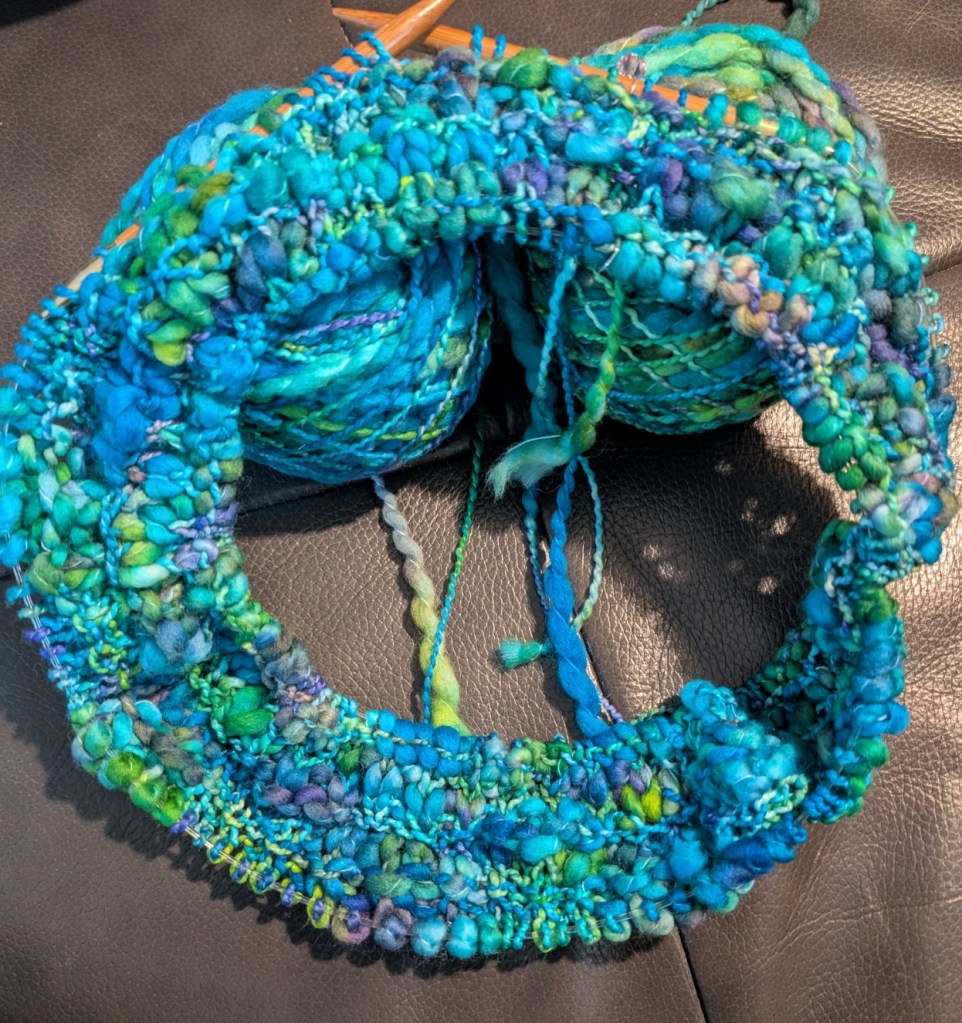
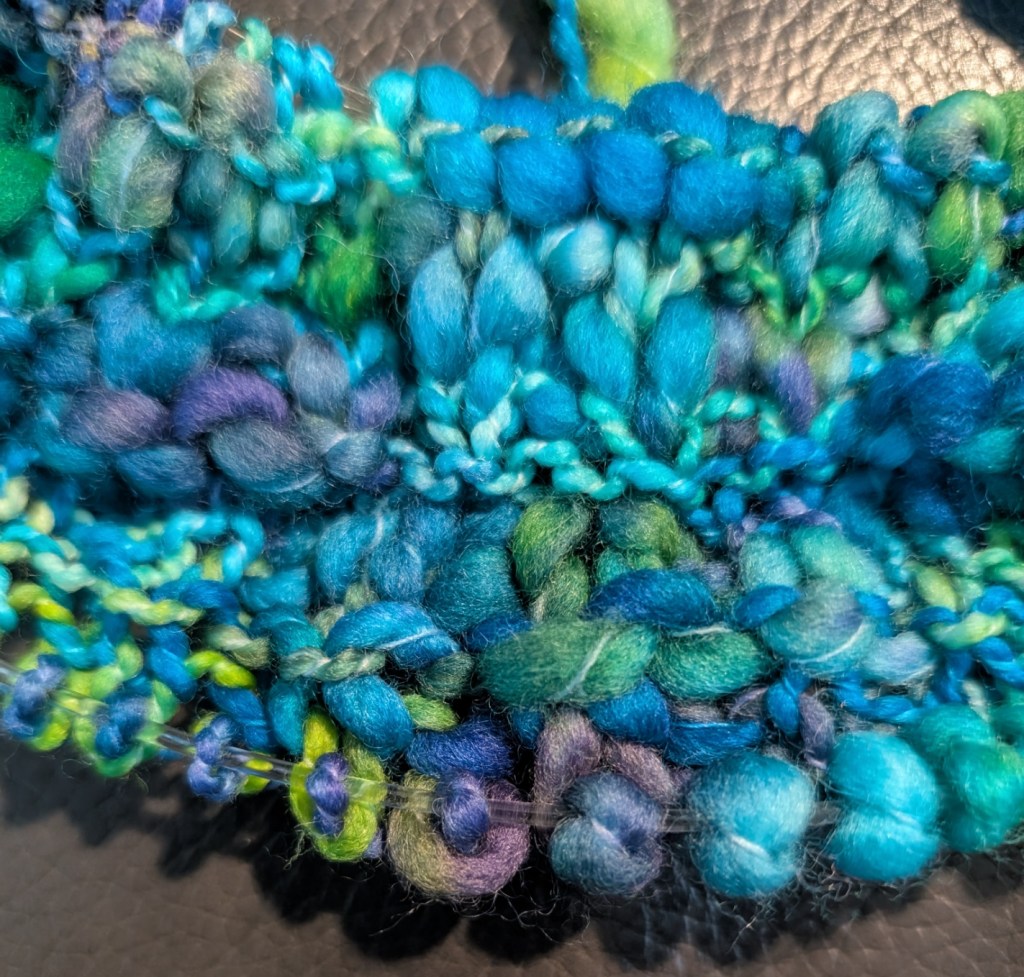
Time to give my hands a break and do something different! But not for long! This is building up fast and I really want to see it complete!
Happy Knitting
Lynette