Le Tissier Designs

Of Larks and Linnets and Flying Fingers

Category: knitting a dress

  • Knit a Dress with Me – Part 3

    Knit a Dress with Me – Part 3

    Why a Dress?

    Why not?

    Is the glib answer. But for me it is a statement about what I am starting to discover about myself and my relationship with the world right now. Now that was the weighty answer. Reality is always somewhere in the middle.

    Over the years I have seen several dresses knit by customers, often with my help interpreting instructions and working out gauge issues. These dresses often looked and felt heavy to me. On-line I have seen the most stunning knitted wedding dresses. Made with love from lace stitches and many hours of knitting.

    Many knitted dresses are simply a long sweater worn as a dress with leggings. The concept of knitting a dress like this for myself was kind of ludicrous. I am short, quite rounded and I have always thought that a knitted dress, especially a sweater styled dress usually clings, making it look its best on on tall willowy types. I believed that I could never put a sweater dress on and not look foolish.

    I am usually an optimist at heart, but not on this topic! I needed to rethink how I looked at my clothing choices.

    I had already started to rethink my wardrobe in light of todays challenges with sustainability, examining the concept of slow clothes and the making and mending movements. Then I looked at my wardrobe for what I really wore the most often and what I had been putting my money into. I saw a huge difference between my Summer and Winter wardrobes.

    In the summer I wear dresses. Longer, fuller dresses with cotton slips and lots of movement, quite often with vintage details. Several of which I had recently made for myself. I used to sew, in the past, and i am now refreshing my skills.

    My winter wardrobe suffered by comparison. Most of my work pants were old except for the two pairs I had made myself. They don’t fit as well as I would like, but they are easy to wear and are made of wool or wool blend fabrics. My sweater and shawl collection really was what my winter wardrobe was all about. I didn’t wear dresses because they were never warm enough. I hate to be cold.

    So why not knit a wool dress?

    Boredom! The thought of all that plain knitting would drive me crazy. There is a reason why most of the things I knit are colourful, or textured with cables and patterns, or covered in lace patterns, or all three! I am often defeated by large swathes of stockinette fabric.

    It only dawned on me recently that my dress didn’t need to be plain and it didn’t need to be heavy and I could wear it everyday in different ways. Sort of like the 100 day merino dress. Though I don’t think I could wear it 100 days in a row.

    So I took some time to examine my summer dresses . What was working and why it was working. Every dress was shaped to the waist or an A-line shape. I wanted a shaped dress, not tight at the waist, but shaped and comfortable. I may look at A-line for my next dress.
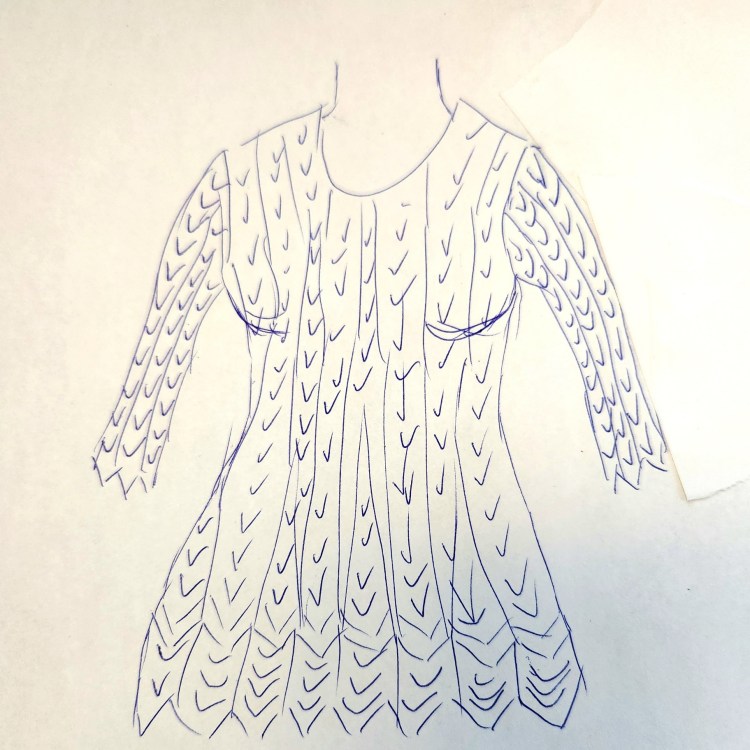
    How to create the shape? I thought about reversing a pi style shawl shaping for the skirt, but I think that might have been too full. I most definitely didn’t want to make a tube and then gather it to the waist, even with a lace weight yarn that is too much fabric sitting at the waistline.

    I have knit myself a couple of sweaters that employed shaping around panels and thought that should also work for a skirt. Once decided, it was the matter of researching patterns and panel patterns in particular to create the way I wanted to go.

    I am making a couple of adjustments. After 1 more 10-round repeat I moving my needle size down to 3.75mm from the 4.0mm. I have decided to combine physical shaping of the skirt with decreasing panels and the tightening of the gauge. This will make a smoother shape – I think. Everything is a bit of an adventure through this. I am lucky to have knit as much as I have and tried as many types of knitting as I have, it does allow me to make decisions based on experiences in the past. They may not all translate to this project, but they do help form a starting point.

    Progress Report

    I have knit up to the end of the chart and started my next 10-round repeat. After this repeat I will be changing my needle size. It is looking like each 10 round repeat adds approx 1.5 inches to the skirt when dry blocked. It may add a little more when wet blocked.
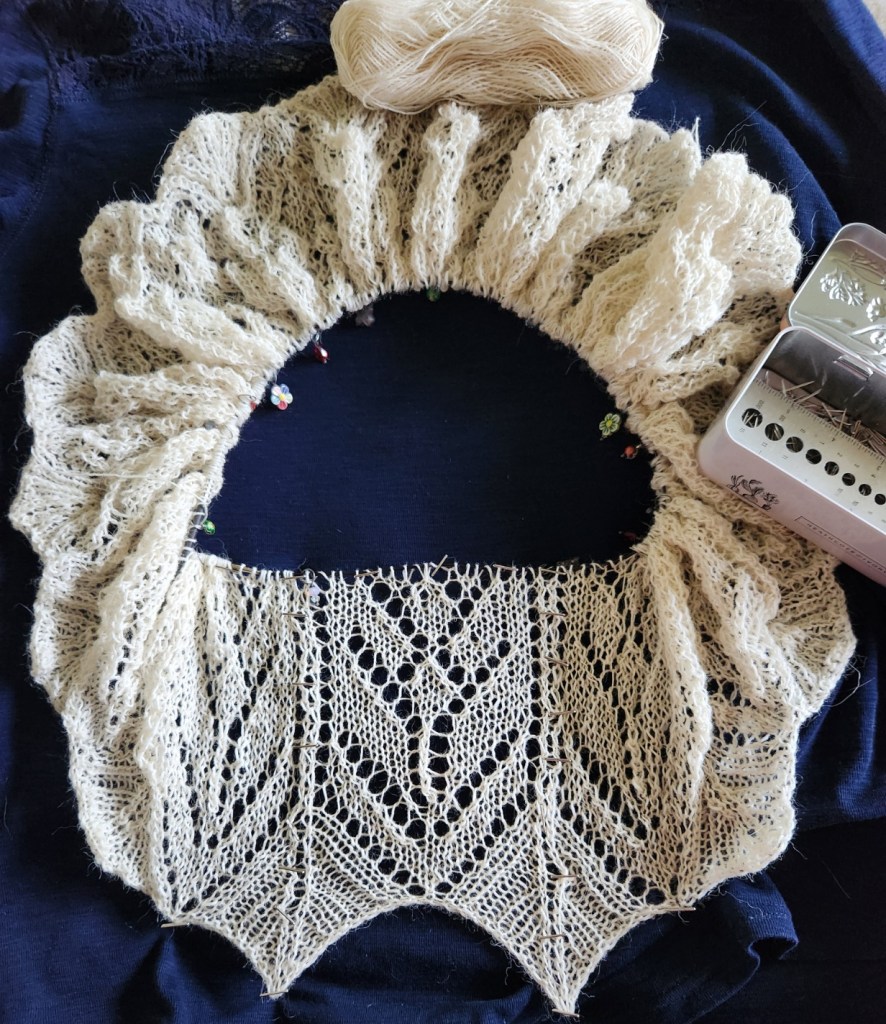
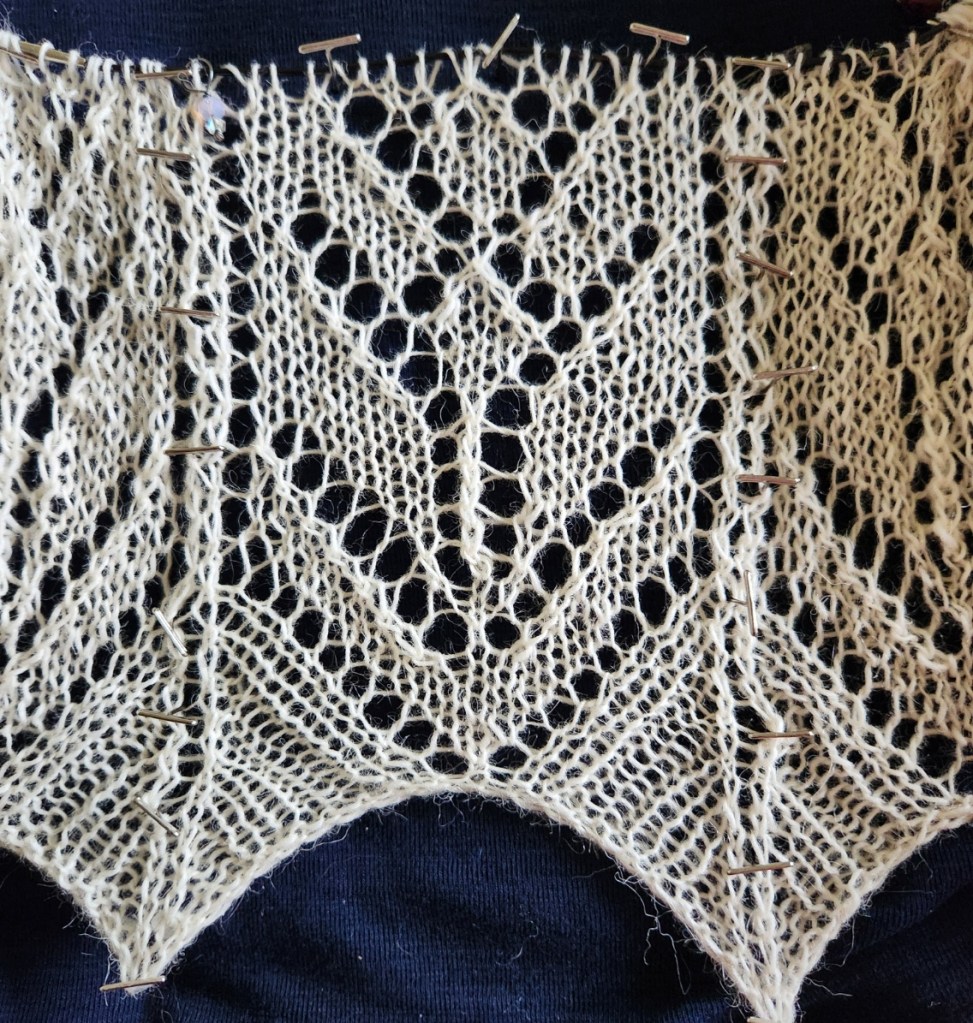
    I am going to start designing the chart for the shaping panels this week (I have this week off from work and so have extra time). I am thinking that I will start by shaping out 1 panel out of every 3. And shape each of those panels over 40 rounds. I am hoping that this will be a slow enough to keep the shape from “belling out” and just be a smooth progressive line.

    Belling out – the decreases are too quick and the dress suddenly looks like it has a line across the skirt where it has been gathered up. If it does bell – the knitting will need to be ripped back and the decreasing will have to be slowed down.

    I have had a couple of people ask me why I choose Einband for my dress. They think of it as itchy. I chose it because I have used Einband before, for the Spring into Summer KAL, The Garden Gate Shawl. I was very pleased with the results from that project.
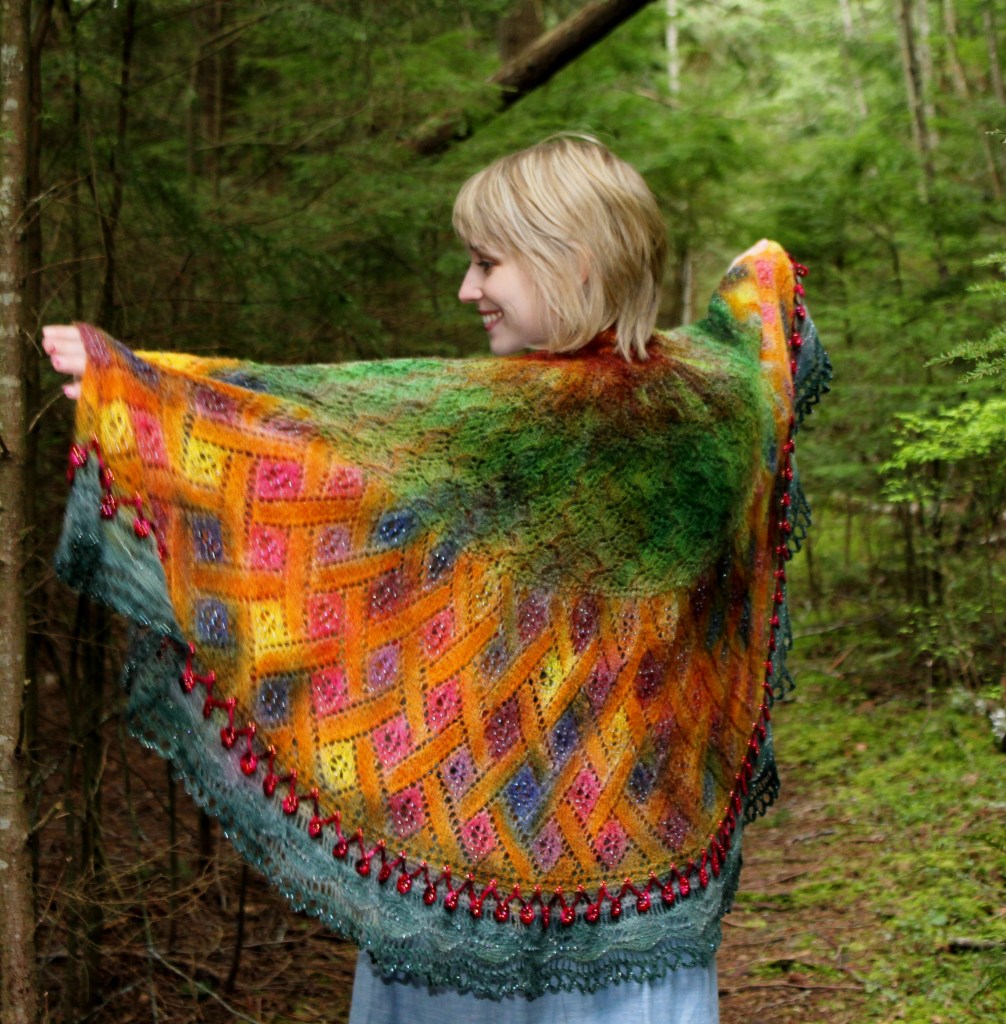
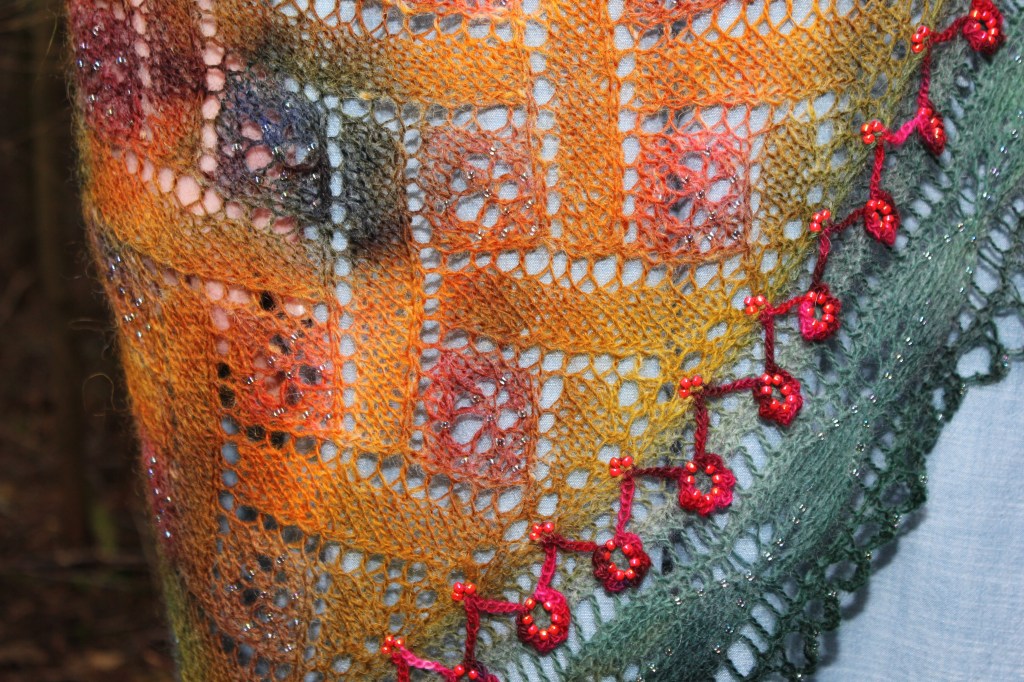
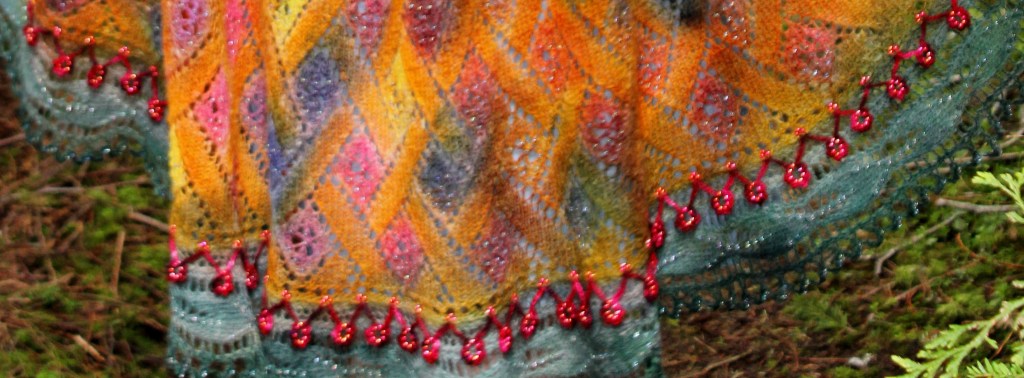
    I had knit a shawl and then hand painted it with dyes. Once blocked the I found that the yarn holds the shape well. Something that I felt was important for this project. It also takes dyes beautifully and since I couldn’t decide on a colour before hand I am hoping to be able to decide after the knitting is complete! Maybe I will even paint the fabric with dyes and not immerse dye it. We shall see.

    Happy Knitting

    Lynette
  • Knit a Dress with Me – Part Two

    Knit a Dress with Me – Part Two

    What is in a hem?

    Thank-you to everyone who has expressed interest in my journey to knit myself a dress. And for those of you who wish to join me – here is a discussion of your first consideration – I have already worked out these questions for myself!

    In the pattern that you downloaded I offered up three different hem widths. These were just arbitrary numbers based on what I thought my ideal hem would be. It can and should be changed to create the hem that you want. Every other aspect of the dress is created from your hem.

    My only caveat is to not make too narrow a hem, unless your skirt is quite short. Remember a comfortable stride is part of a comfortable garment.

    How do you decide what might be best for you?

    Start out with your favourite dress. The one you love to wear, the one that fits just right. Lay the dress out and take some measurements.

    • How wide/long is the hem?
    • How long is the skirt to the waist?
    • What are the measurements of waist, bust, shoulders, length of arm?
    • How wide or deep is the neckline?

    With this basic information we ask ourselves some questions? Do you want to keep to the dimensions of the original? Is there something about it you would like to change?

    For the moment your hem is only decision. My hem of choice is fairly full. Basically about 8 feet, 240 cm around. I like a full skirt. You may not. So look at your dresses and judge from there. I have started a forum thread on Ravelry. Feel free to ask me questions at any point in your journey.

    To figure your cast-on for your hem you will need to employ some pithy math.

    Pithy Math – My pattern panel repeat is approx 5 inches wide x I have 18 repeats. 5 x 18 = 90 inches. Since I know that this number will be a little wider/longer once properly blocked I feel pretty confident that my hem will be around 96 to 100 inches long 8 to 8.5 feet. Each panel is 21 sts wide, so my math for my cast-on was 18 x 21 = 378 sts. It will create a hem close to what I am expecting. 

    I do not and you should not expect exact measurements. We are creating a fabric and garment from a string. So many things will affect our final results. What the string is made from. The weight of your string versus the weight of my string. Your tension/gauge as different from my tension/gauge as different from every other knitters tension/gauge!

    My Dress

    My dress will be an amalgamation of my current dresses and a favourite dress from memory. So it will be all its own. The colour will be whatever my favourite colour is once the dress is complete. Right now it would be a very bright pink. Probably not by the time this dress is finished. It will most likely be a jewel tone though, probably not a subdued colour. I do love the deep jewel tones.

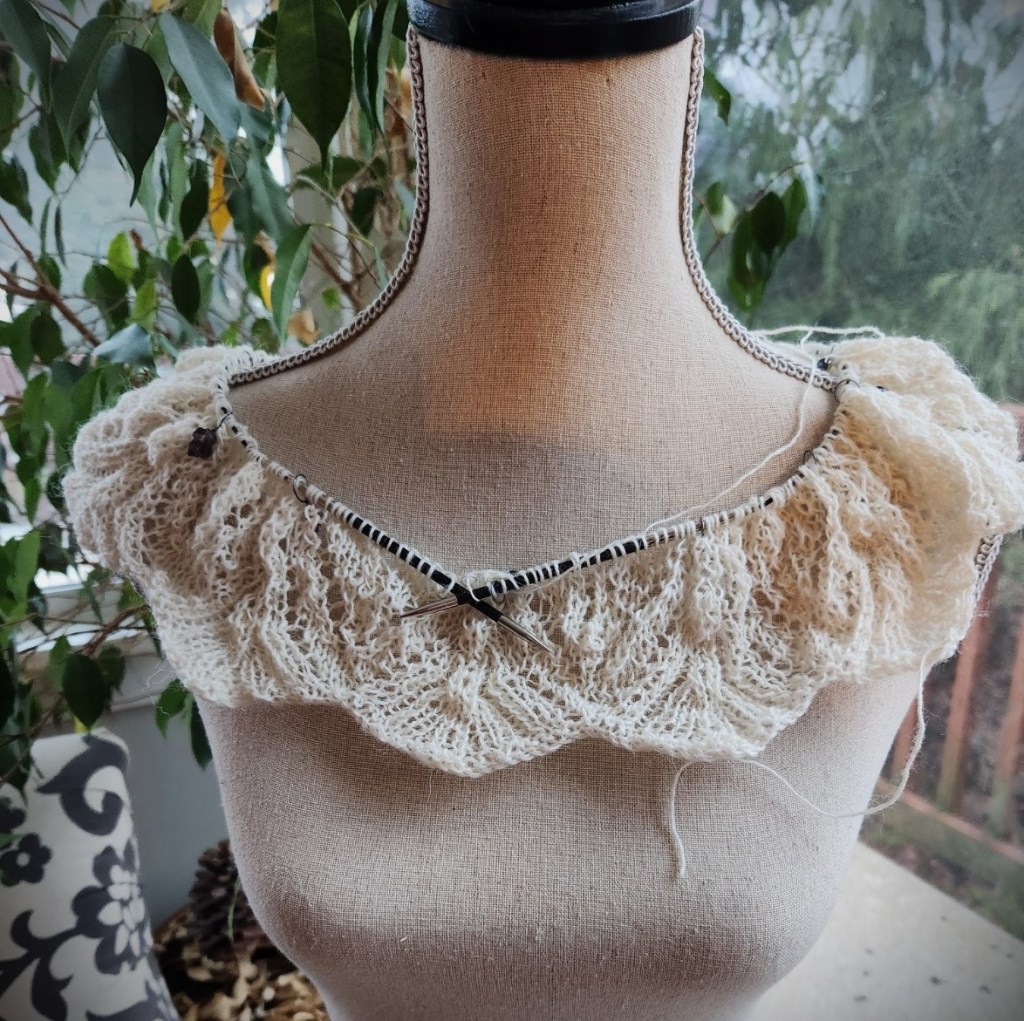
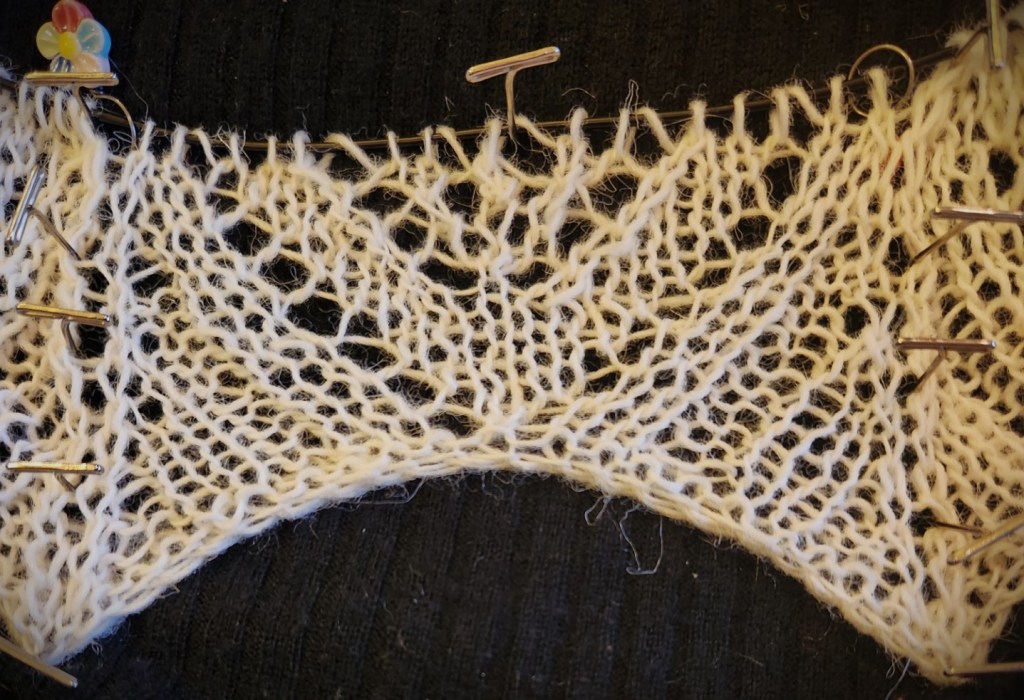
    Here is the hem on Francine. Wouldn’t a variation of this make a great collar. And it would need beads of course!

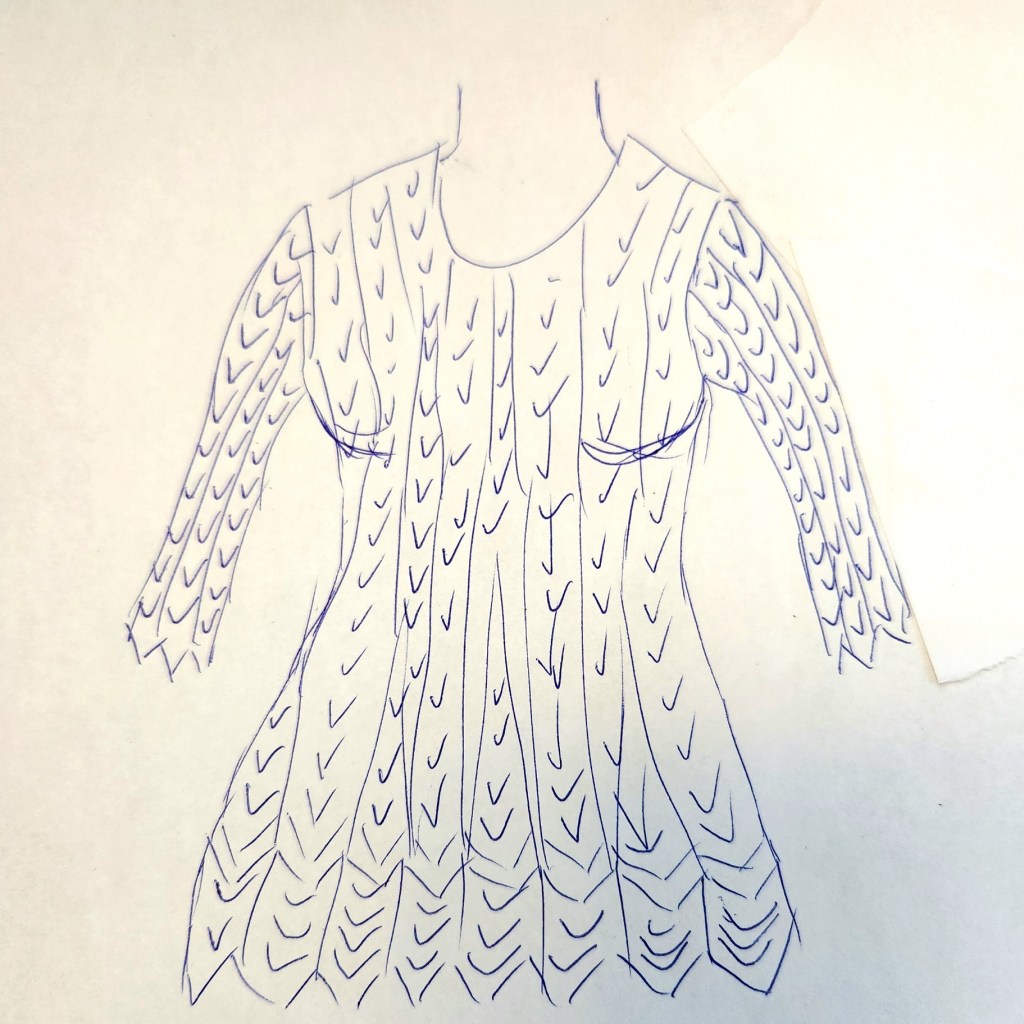
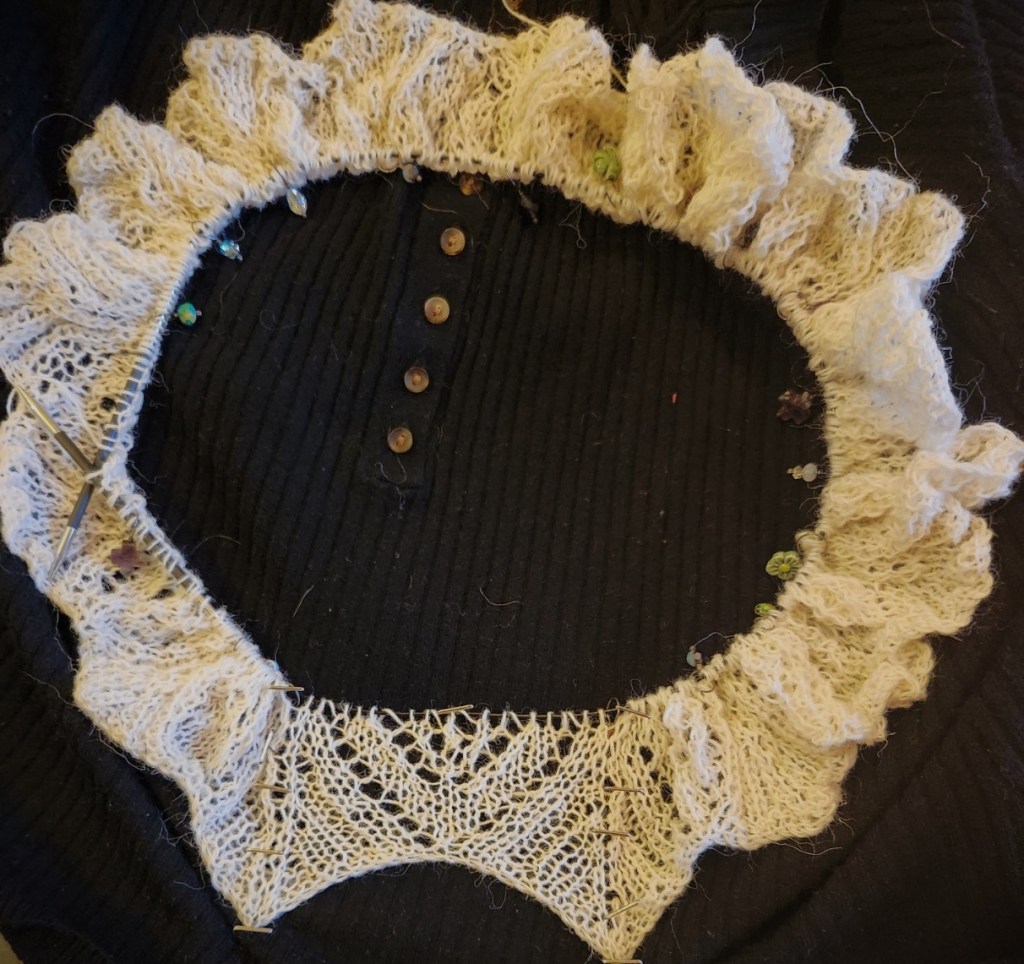
    I am hoping that my dress will be fairly close to the sketch. I will be adding a collar. It will be a gathered collar and it will be beaded. 

    That is the only known fact about my bodice. And I am thinking that there may be beads on the bodice and sleeves, that could change. I am also thinking that I may sew a simple slip to wear under my dress, maybe with a knitted lace edging, that could change.

    A big part of process, once your hem is decided and you have started knitting is dreaming about all the parts that will come next. Knitting the skirt will be the longest part of the process. There will be lots of time to think. I am already thinking ahead and keeping and discarding my ideas. You can too!

    Happy Knitting

    Lynette

  • Knit a Dress with Me

    Knit a Dress with Me

    A little over a year ago I decided to knit a dress for myself. I bought the yarn, did some swatching and started to knit.

    My father’s illness and subsequent passing sort of put everything on hold.

    Yesterday I pulled out my knitting and decided it was time to start it again.

    Would you like to knit a dress for yourself? Come and knit one with me. It is free. It is “pithy”, to quote Elizabeth Zimmerman and it (the pattern) will be very flexible. This will be a creative recipe, a guideline, not a hard and fast pattern that you can only knit one way!

    This pattern is designed for intermediate knitters with some experience with lace knitting. The lace patterning will not be difficult, in fact knitting the skirt could be a little repetitive and boring. Shaping, and fitting the top of the dress could be a little challenging. But by then you may be a professional lace knitter.

    Dress pattern will be written and charted. You can find the link to the pattern in my Ravelry Store and on a post in my forum, also on Ravelry.

    knit a dress with me

    The dress is knit in panels. The dress starts at the hem and will be shaped to fit loosely at the waist and darted to fit a bust line. There will be sleeves, but as they will be fitted they could be omitted to turn the dress into a sleeveless dress or jumper. I am sort of putting in three sizes. Right now those sizes refer to the hem. How wide do you want your hem? These sizes were created from my gauge.

    There are two panels to choose from. One (titled Skirt) will give you a lace panel at the hem and a solid skirt (the shaping will still work in the panels, these panels will also be solid knit)(no picture available). This was my first idea. Then I decided I wanted more lace and less plain knitting. I suffer from boredom without patterning.

    The other panel (titled Dress Panel), the one I will be working, will create linear lines of lace up the skirt, through the shaping and into the bodice. Work the first 29 rounds as written and then repeat rounds 30 – 39 for the rest of the skirt.

    Please note – the shaping panels have not been written as yet. They will be added when I get there, maybe in about 4 months. So don’t hurry your knitting along. I will not be.

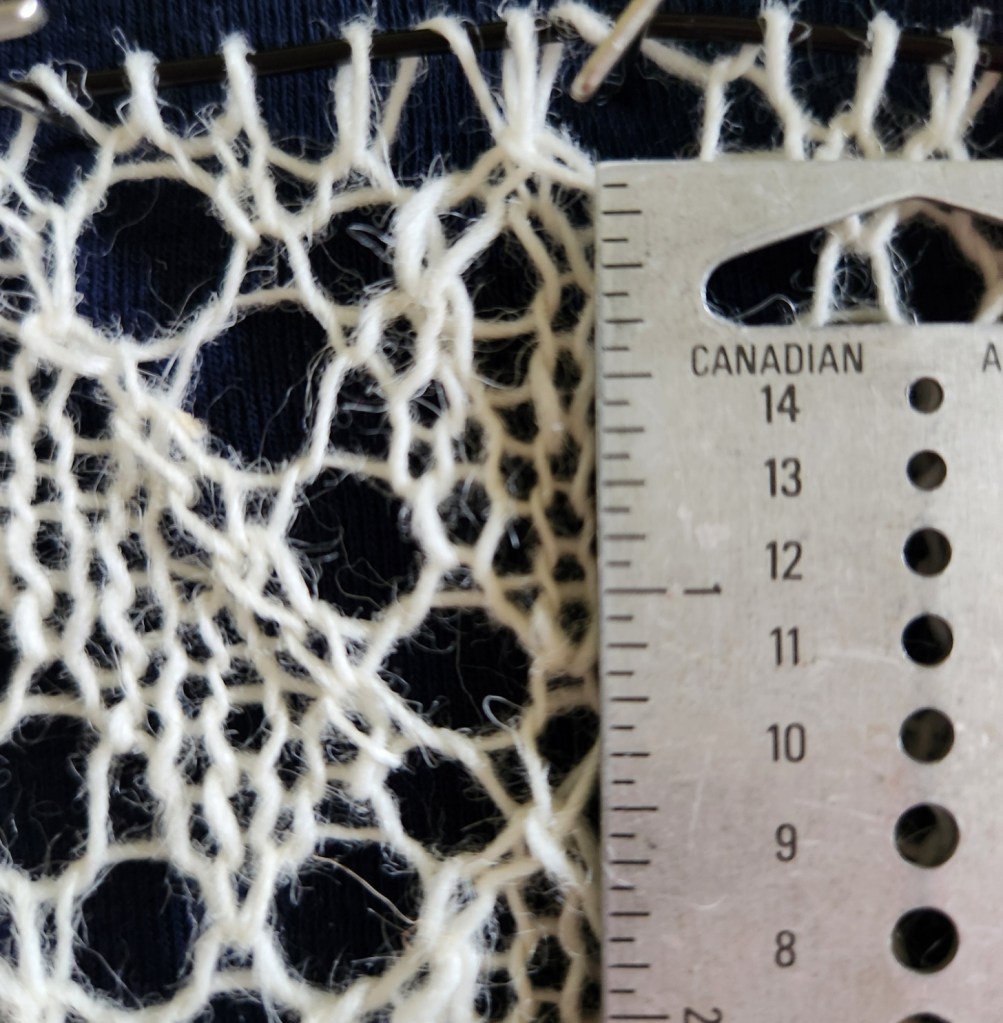
    My gauge is roughly 5 inches per panel (dry stretched, and pinned) I am expecting that the actual hem may be a bit larger.

    Why Panels?
    Panels will allow the knitter to easily add or take away panels to the cast-on (how full do you want your hem to be?) and then remove them when I start adding the reducing panels. I recommend adding repeats in either, twos or threes – to make the later shaping easier. So you can take away the stitches evenly around your skirt.

    Each Panel is 21 sts – 5 inches.

    I am working with Lopi Einband – a heavy laceweight (or light fingering). I have approx. 2500m in my stash. I am working with undyed yarn so that I can dye it later. For a longer or fuller skirt up to 3000m of yarn might be required.

    You can work with any yarn from light fingering to sport/light DK. The needle size is 4.0mm US #6 circular.

    You will need to work a circular swatch to check your gauge. Or not, a swatch is just for your information.

    By the way – my size is 50 inch hips, 42 inch waist and 43 inch bust. I am planning my skirt to come to just below my knees, so approx. 22 or 23 inches long. I will start the skirt shaping at about 15 inches in length. I have just over 2 inches (16 rounds) knit so far. This will not be fast. I am thinking the dress will be a year or two in the making.

    Happy Knitting

    Lynette