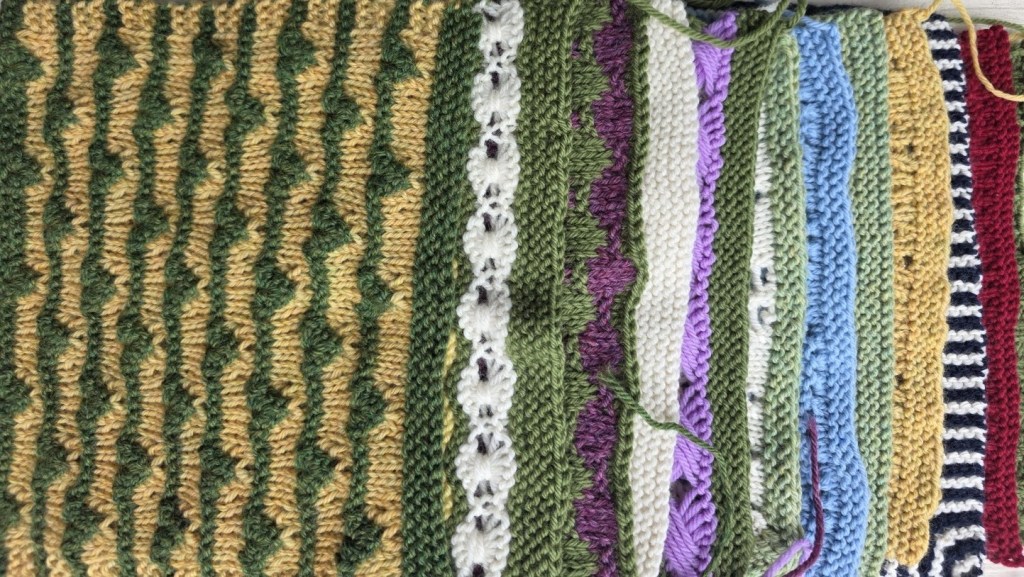
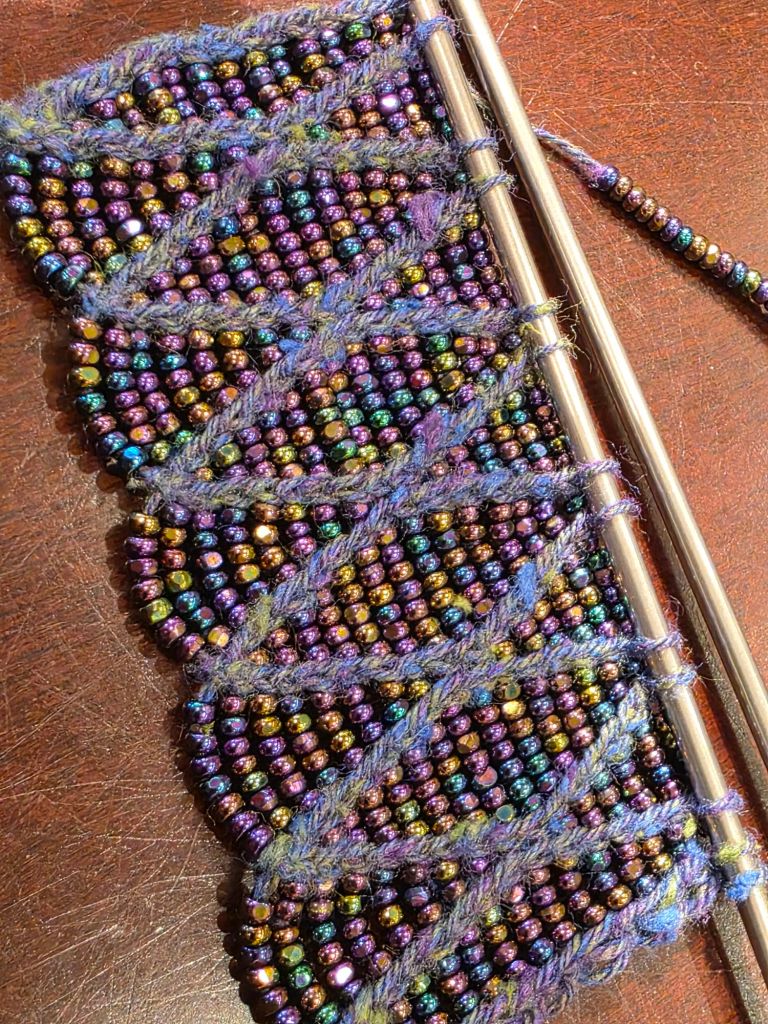
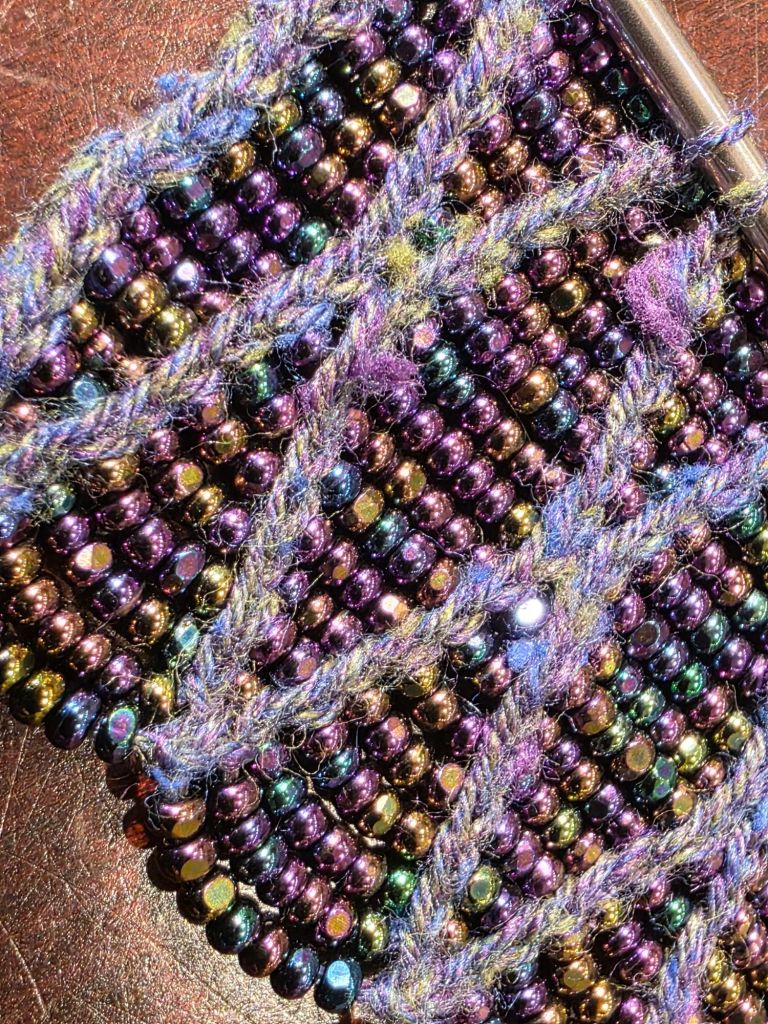
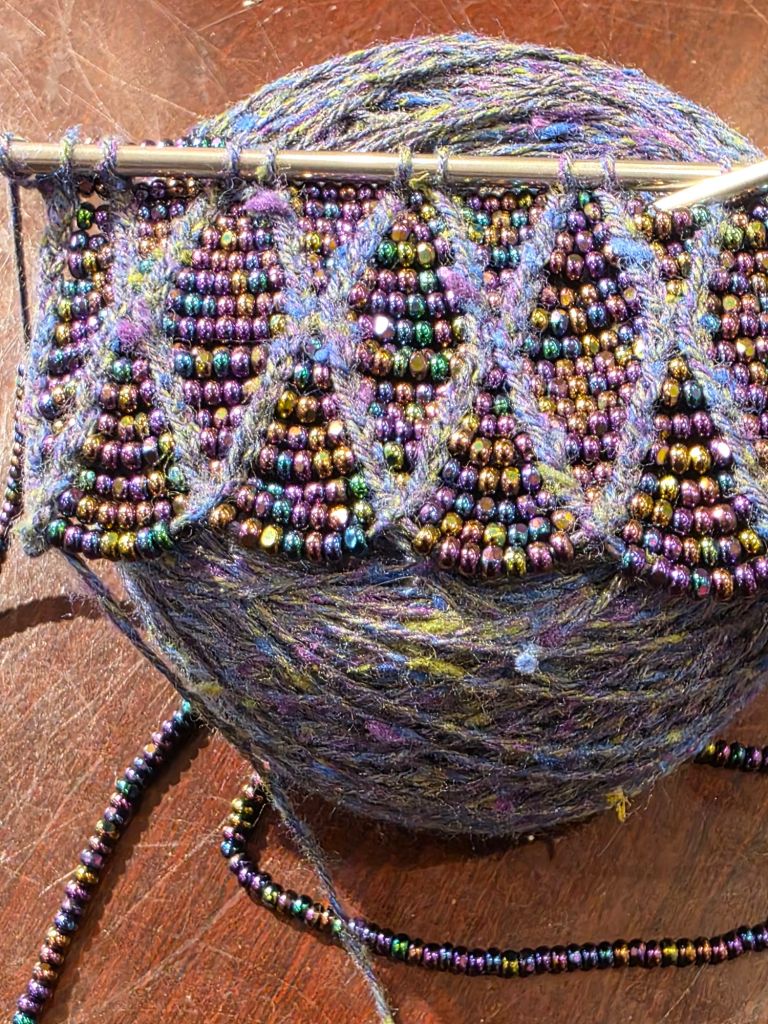
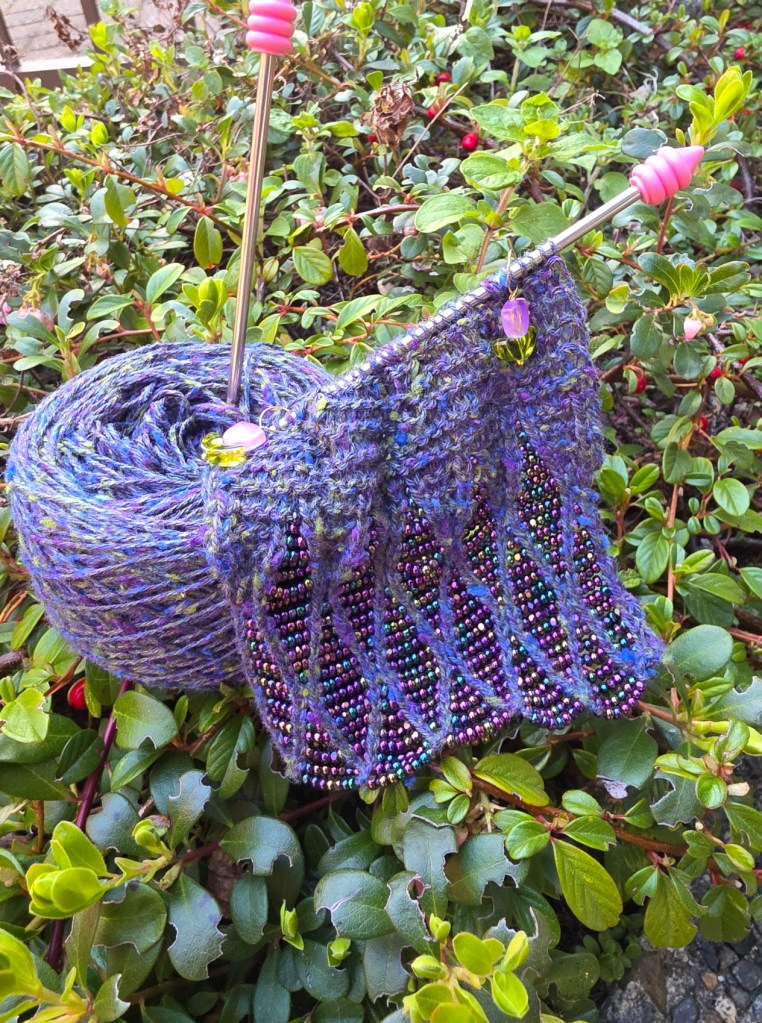
This is the last bonus square of the blanket project. After this post there are only two squares and two fancies remaining! It is hard to believe that we are so close to the end of the project.
I had a lot of fun with this square!
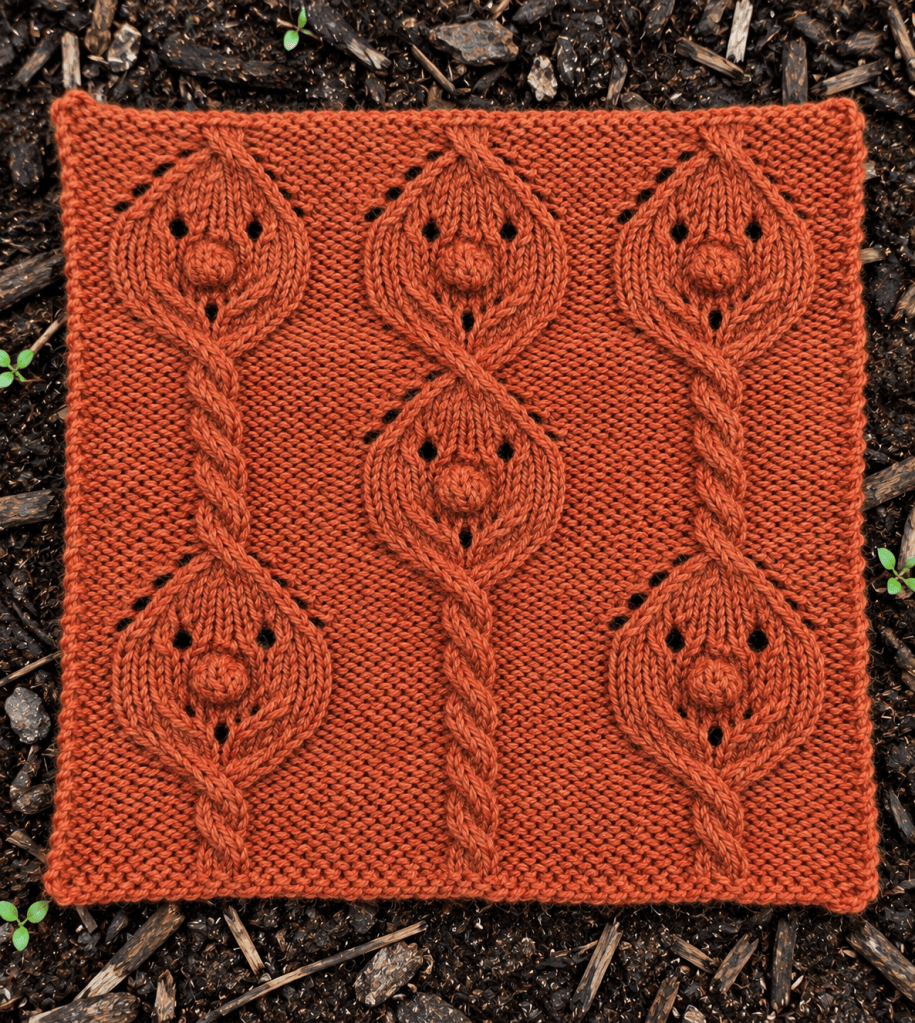
My grandmother is from Belfast. She came to Canada in 1921 or 1922. She came over with her young son (my father’s big brother) and her sister, to start a new life in Canada. Less than 2 months later she married my Grandfather and her family continued to grow. She also came with superstitions like Stingy Jack, and Angel Mistakes.
Her sister, my Great Aunt Peggy, spent one memorable visit teaching me how to knit when I was 15. She also taught me about Angel Mistakes. Whereby only the Angels were perfect and only they could create perfection, so us lowly knitters, were allowed, nay encouraged to make the odd mistake. I try to teach that to my knitting students… it doesn’t always take, some are perfectionists.
My father was particularly fond of carving pumpkins! He wasn’t artistic, but he was enthusiastic. As we got older we were encouraged to draw the faces, and then take on the carving!
Jack’s My Name, Halloween Is My Game! 🎃
Long before pumpkins became the grinning faces of Halloween, people in Ireland and Scotland were carving lanterns from turnips and other root vegetables.
The tradition is often linked to the Irish legend of Stingy Jack, a clever trickster who managed to outwit the Devil but ultimately found himself unwelcome in both Heaven and Hell. Condemned to wander the darkness, Jack carried a glowing ember inside a hollowed-out turnip to light his way.
And so the legend of Jack of the Lantern — or jack-o’-lantern — was born.
When Irish immigrants brought their traditions to North America, they discovered pumpkins. Larger, softer, and considerably easier to carve than turnips, pumpkins quickly became the lantern of choice.
Over time, the eerie lanterns became the cheerful, mischievous, and sometimes downright wicked faces we associate with Halloween today.
Which brings us to my own little collection of Jacks.
These fellows may be knitted rather than carved, but they have plenty of personality. And judging by those grins, I suspect they’re up to no good!
This square will require a little more patience than some of the others. There are several techniques to juggle, and the stitches change frequently as those mischievous faces begin to emerge.
Knitting Jack is rather like carving Jack. A little challenging at times, occasionally surprising, but immensely satisfying when those grinning faces finally appear.
And should an Angel Mistake creep into your knitting, Great Aunt Peggy would certainly approve.
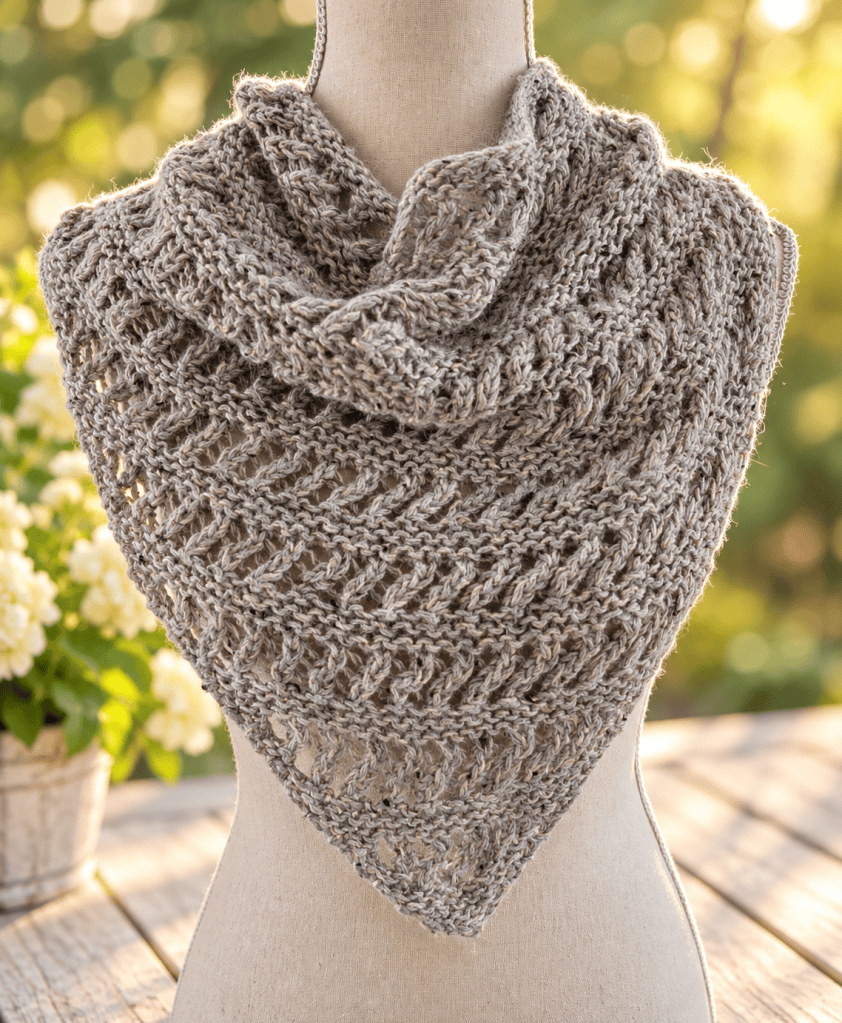
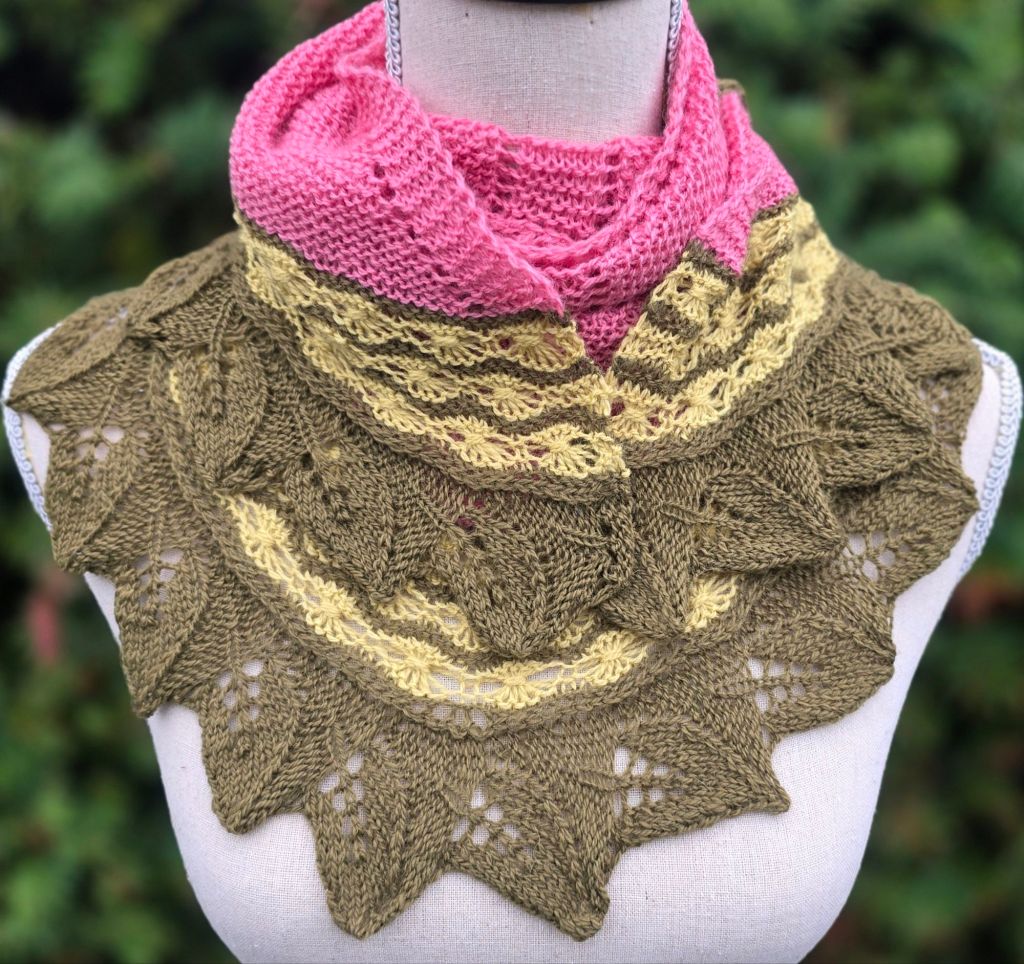
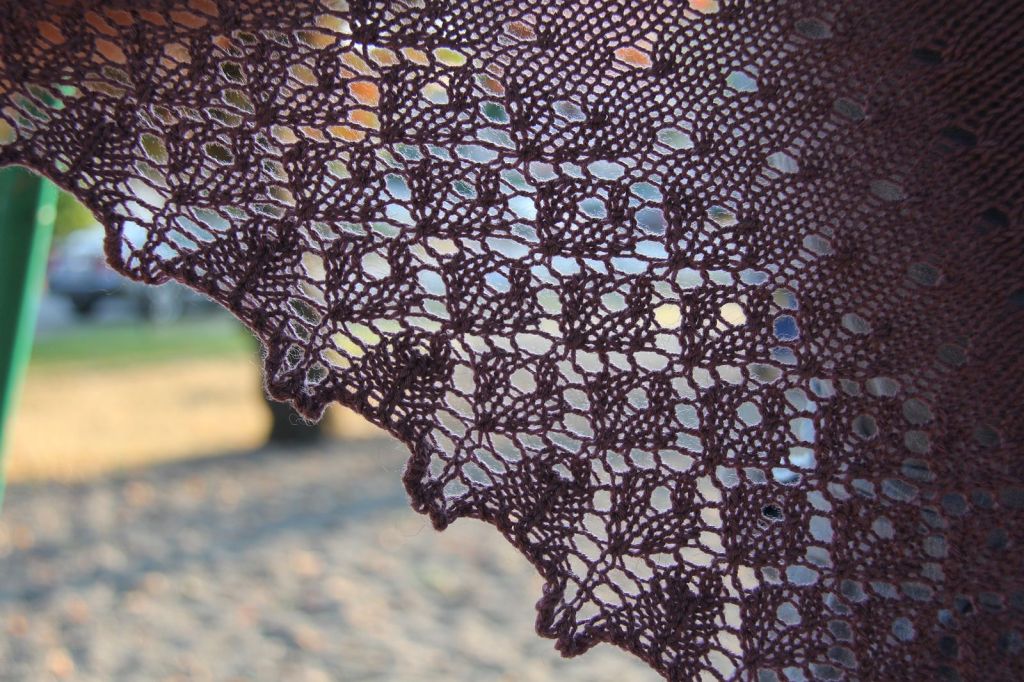
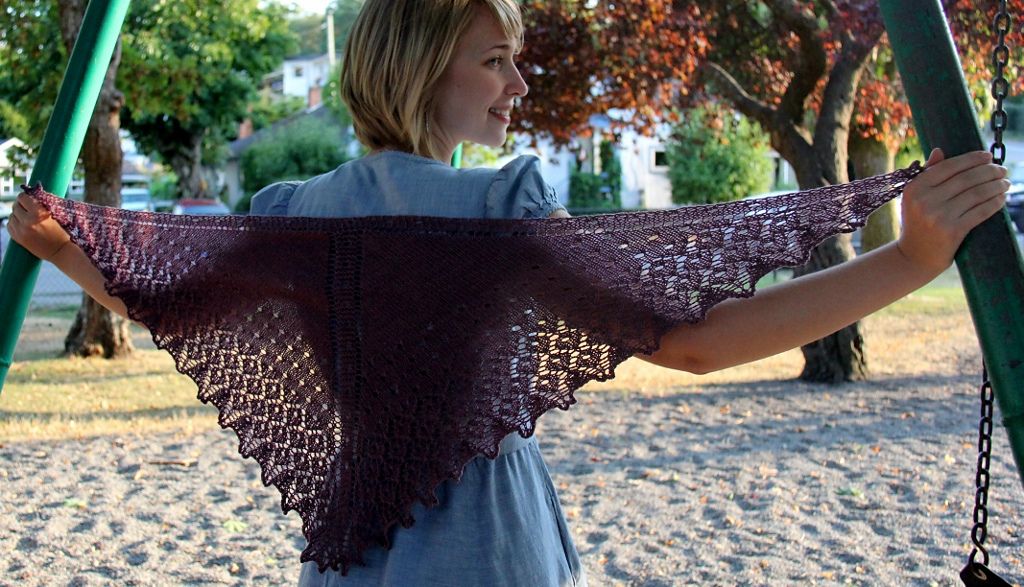
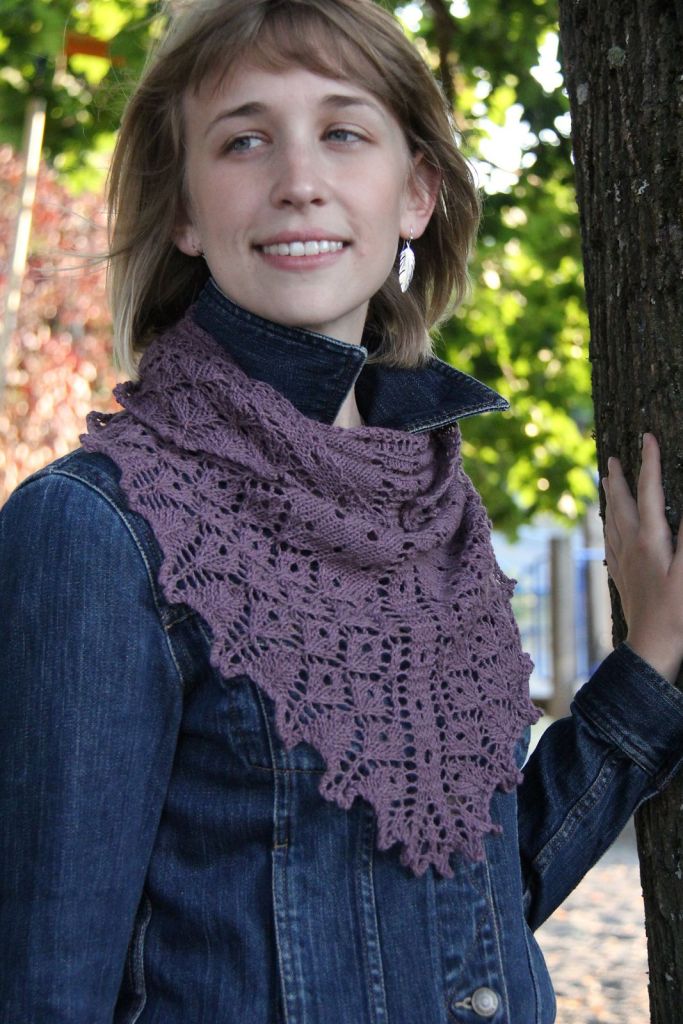
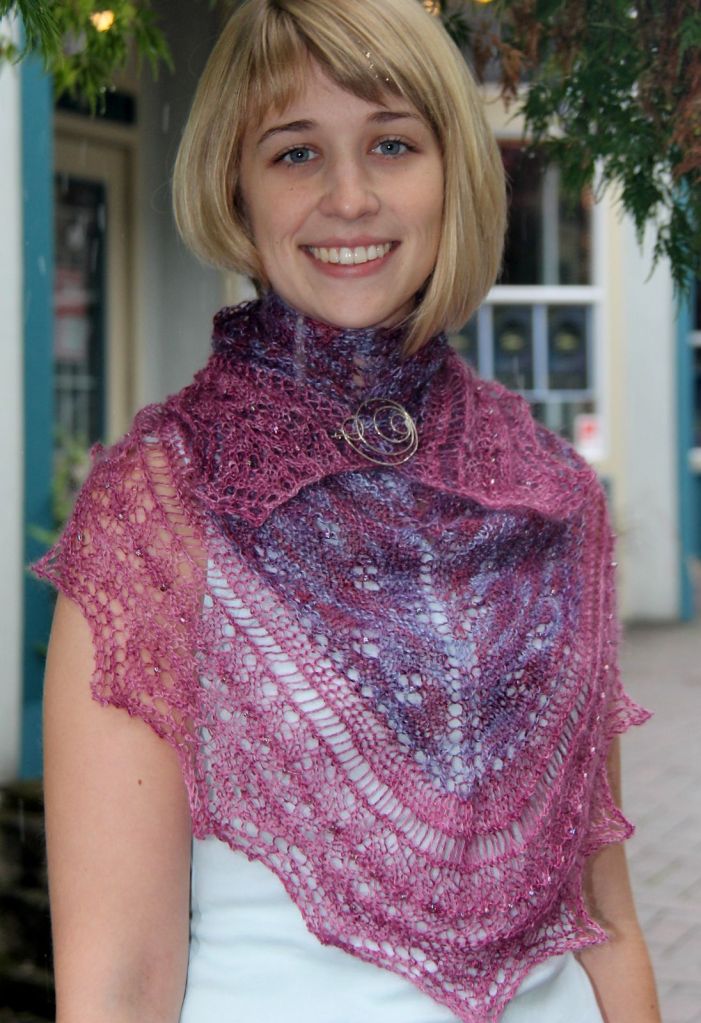
What do you get when you combine a chance comment on an old piece of knitting. Once a swatch, now a small kerchief (swatches, especially lace one, used to be quite large).
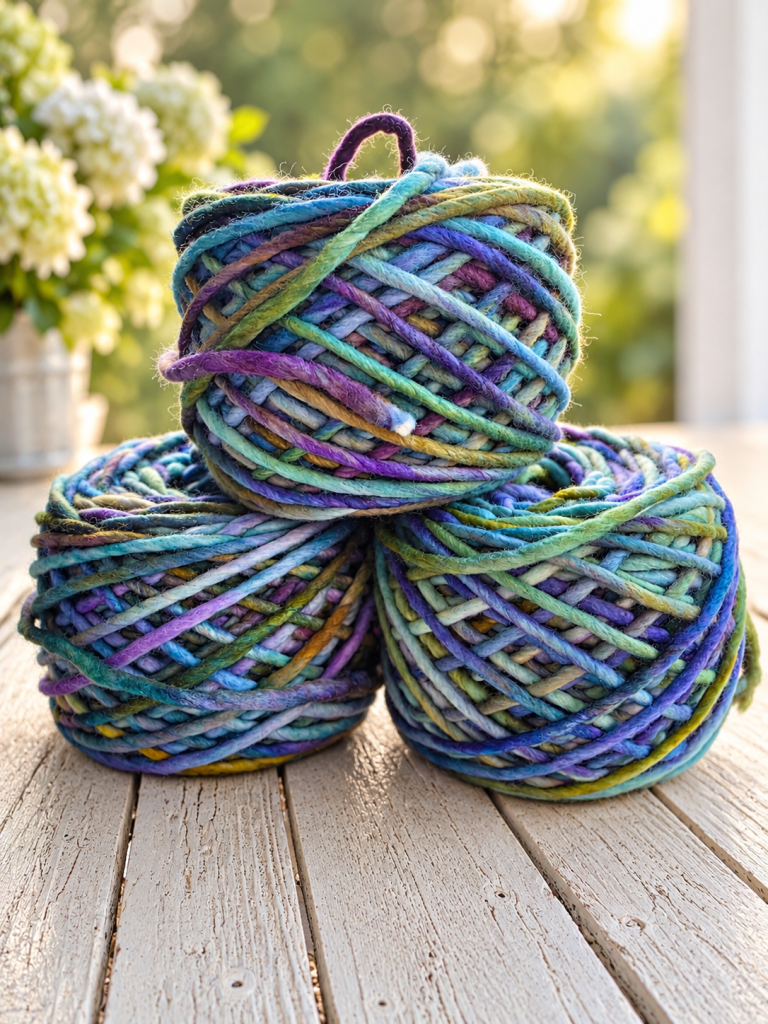
Plus an unexpected find – later that same day – of three skeins of Rasta…
You get an opportunity to play hooky!
I wear this little kerchief quite a bit. It is one of the few neutral things in my wardrobe, as I have a fondness for colour.
I get more than a few positive comments on this. And that Friday was no different. What was different was when I got home I did a little work on my new yarn room.
And I found the Rasta.
And inspriration struck.
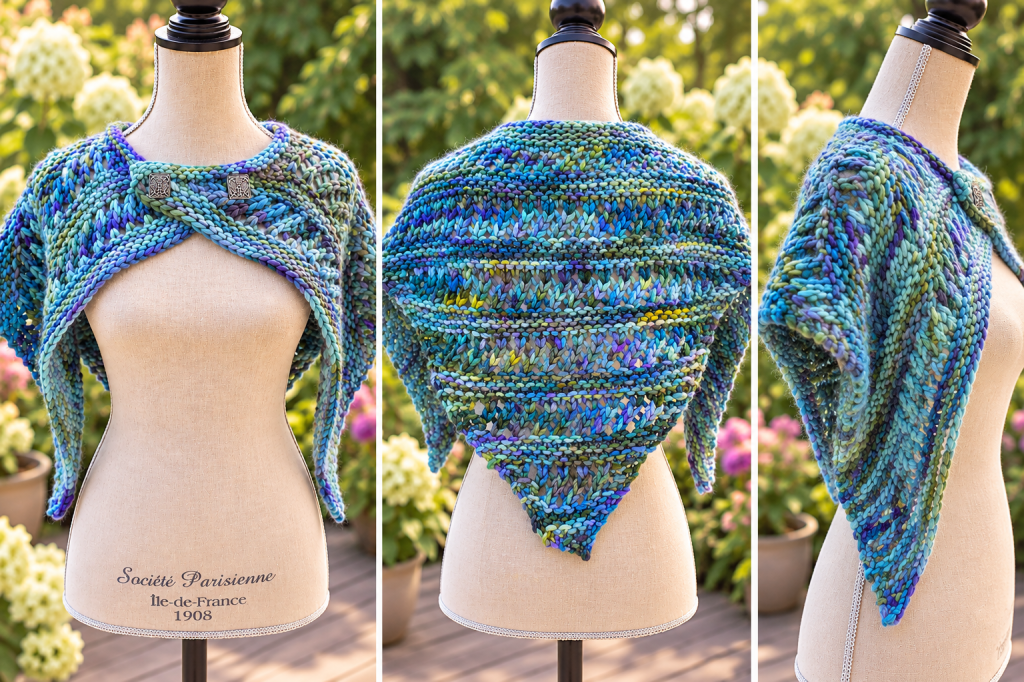
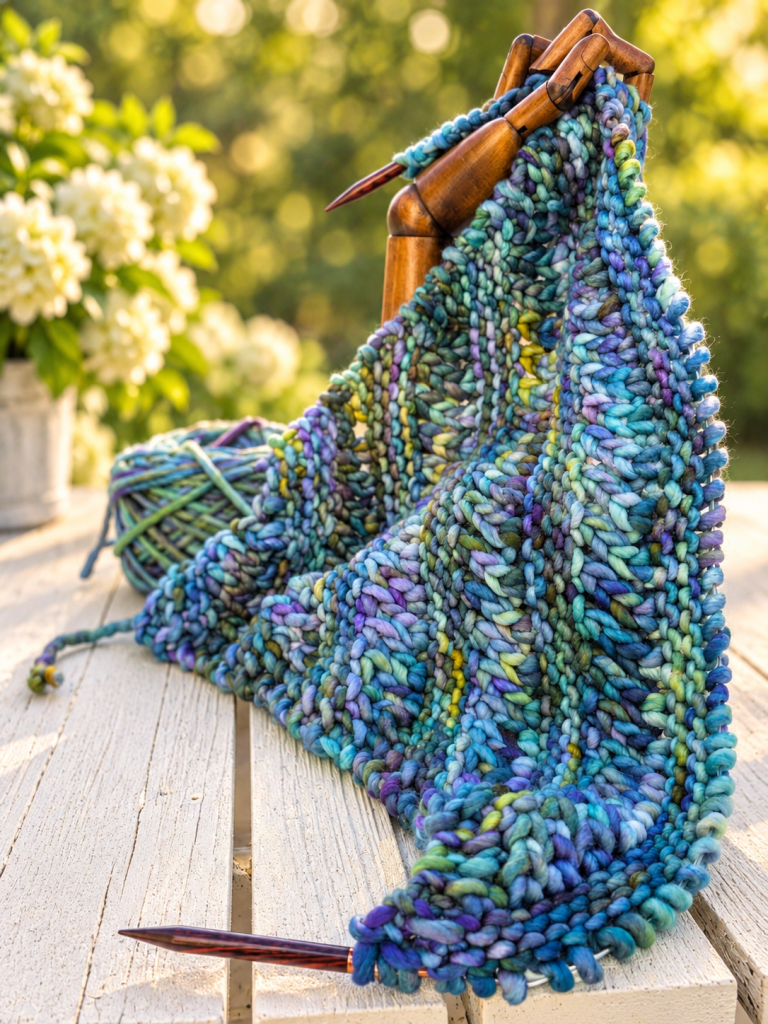
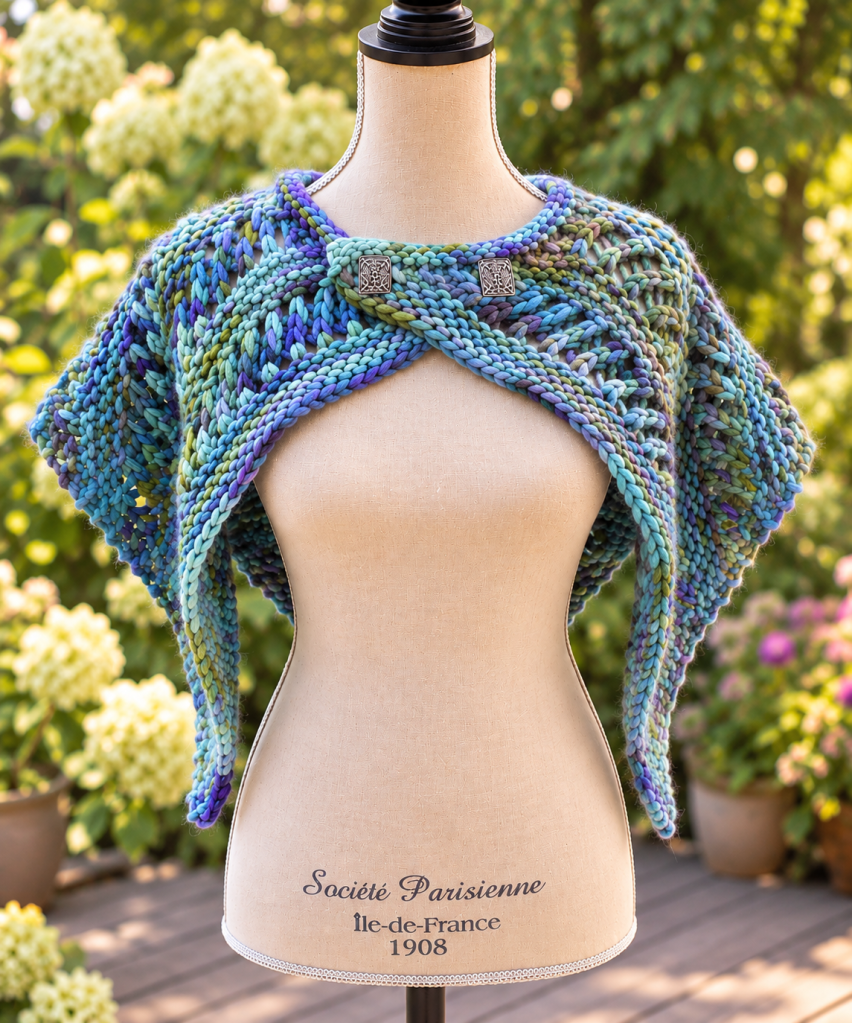
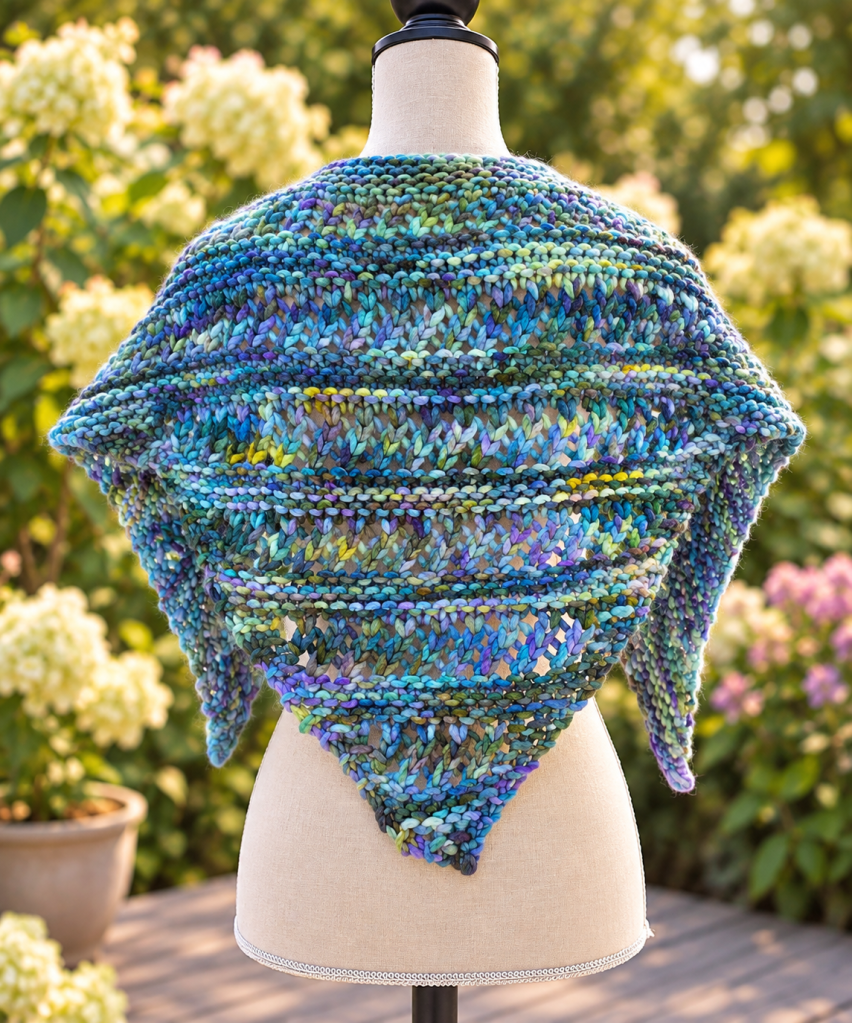
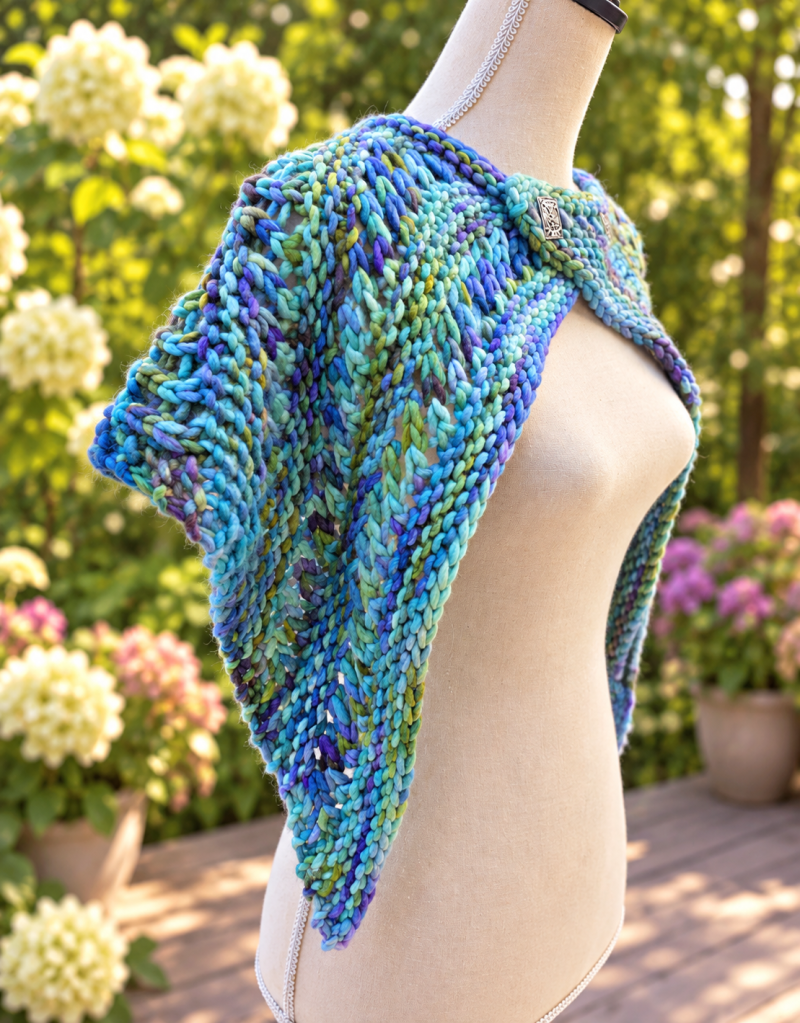
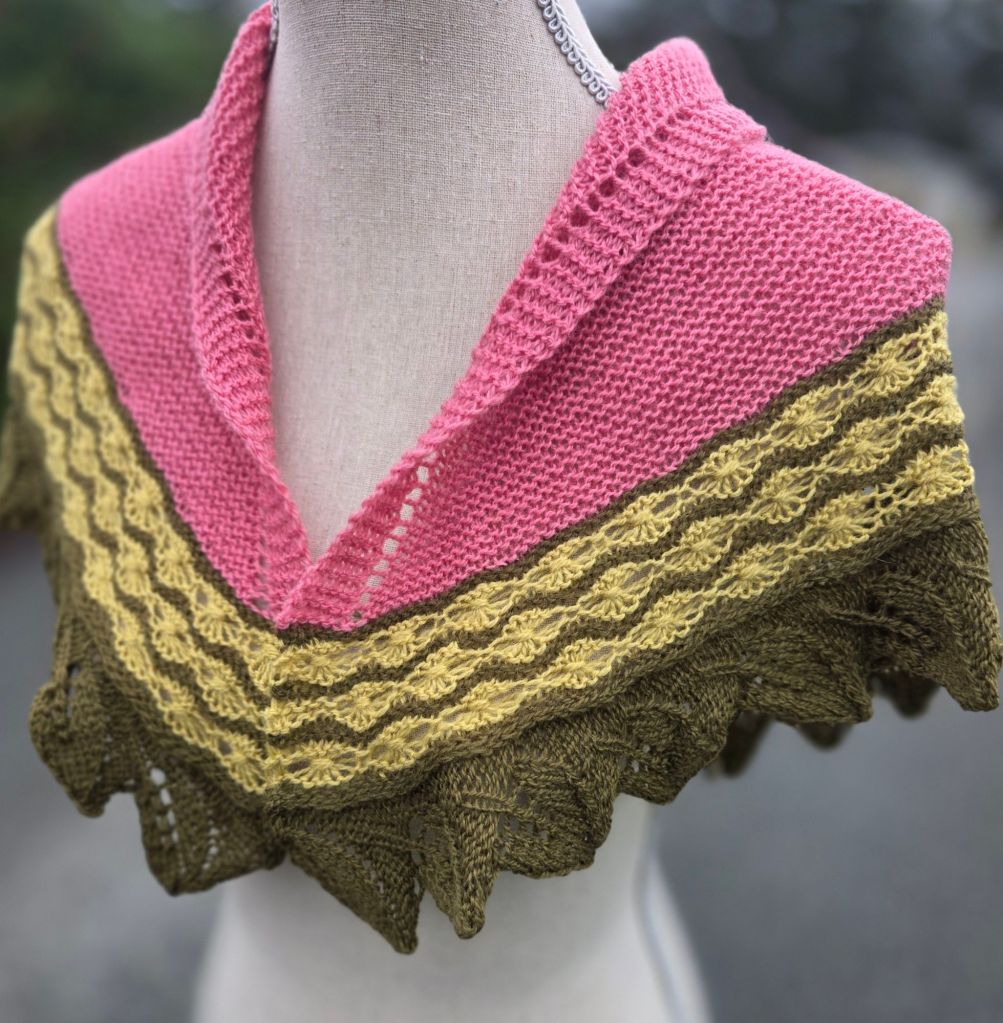
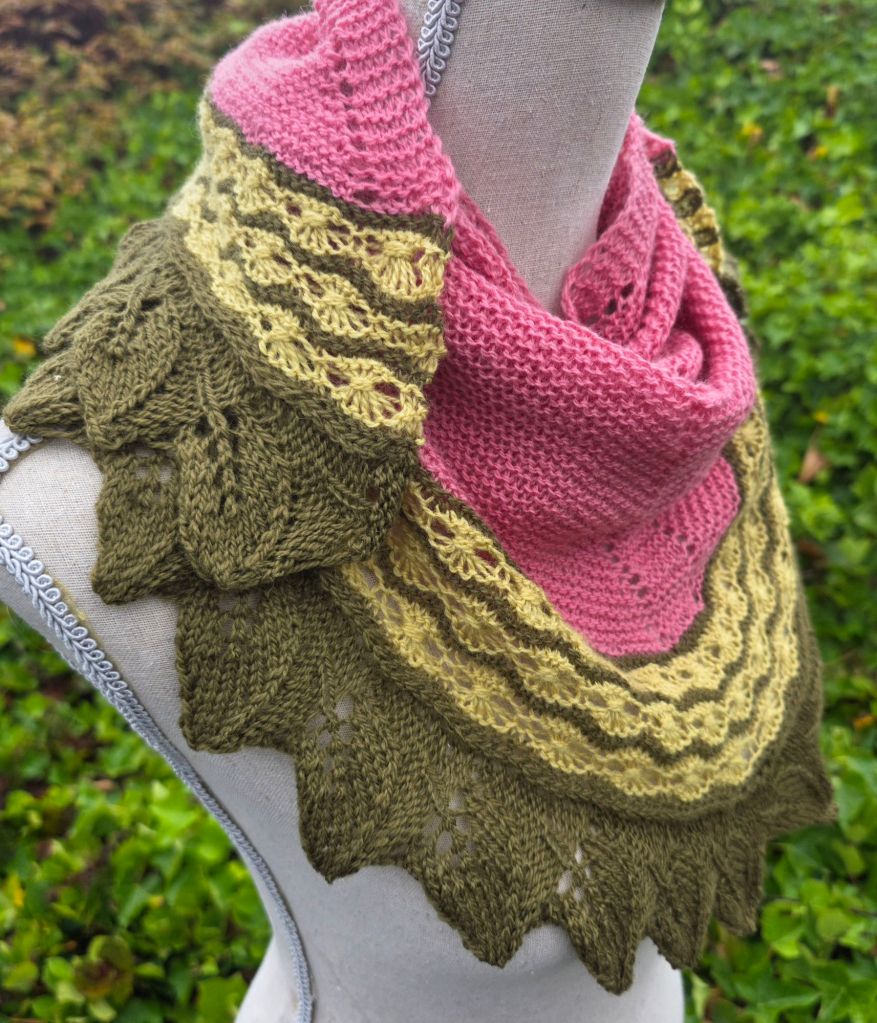
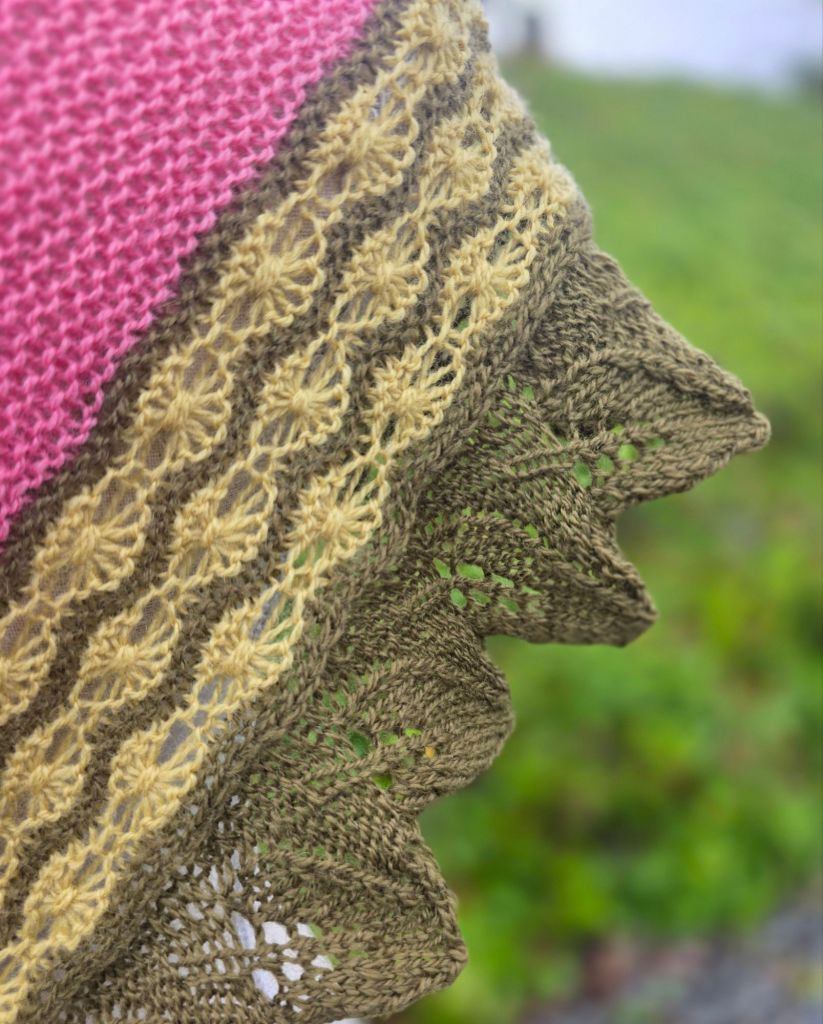
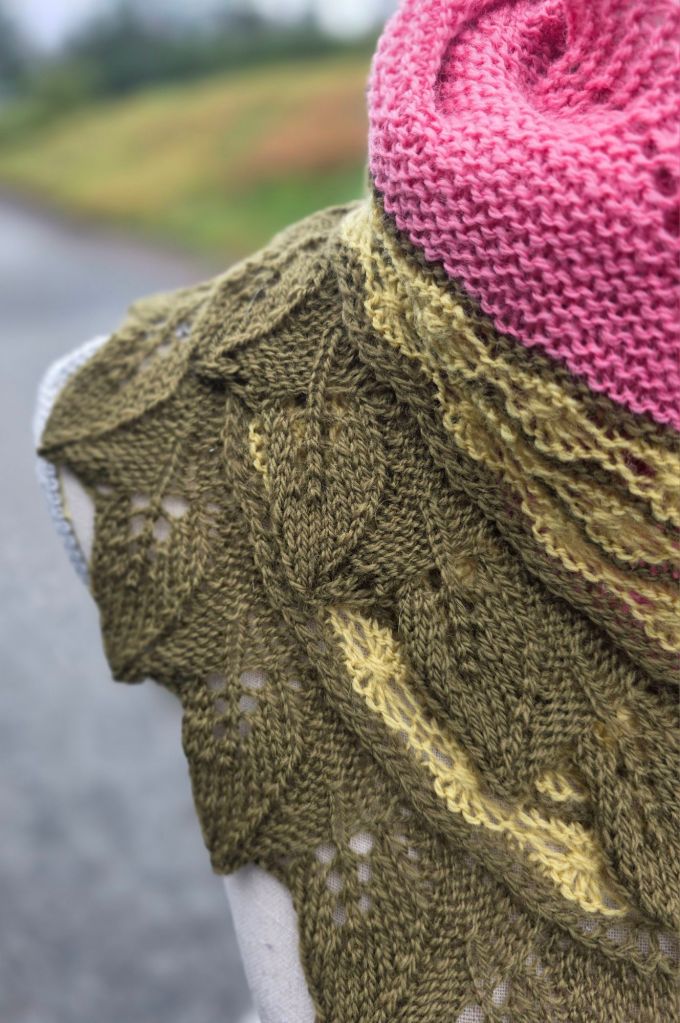
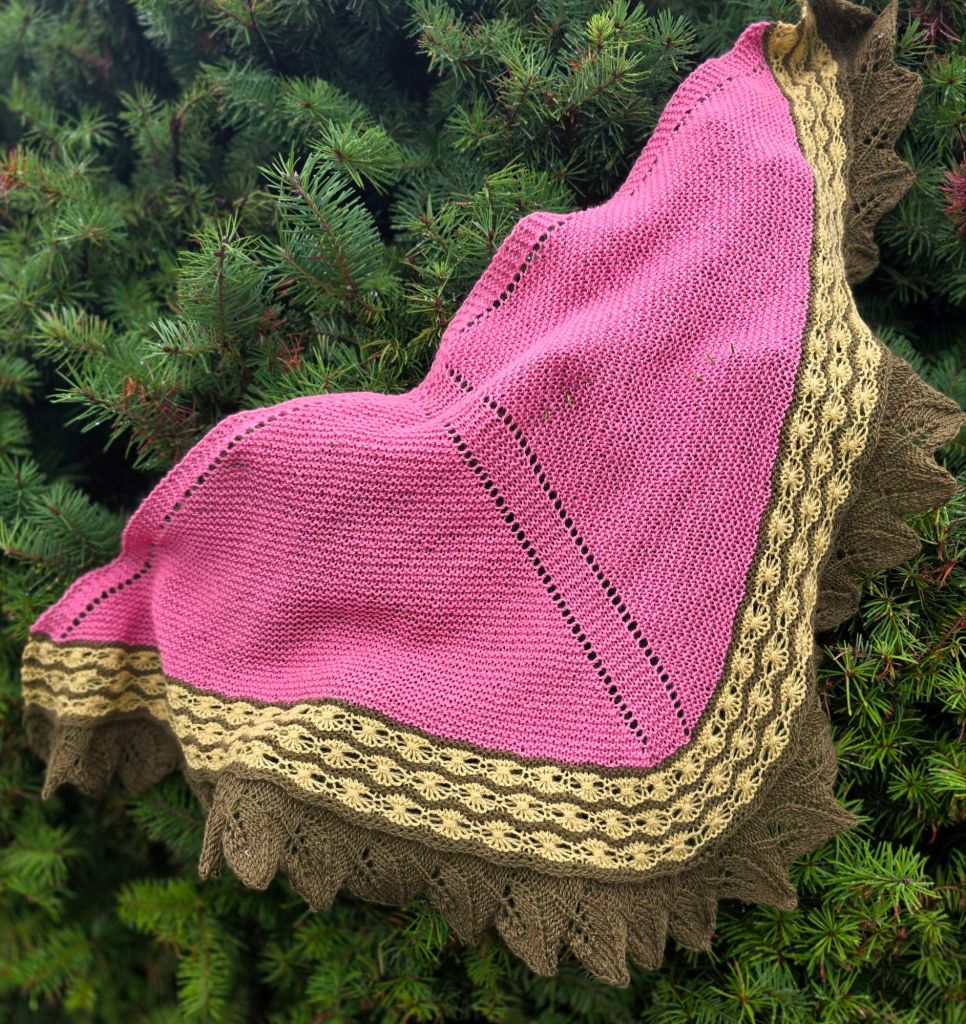
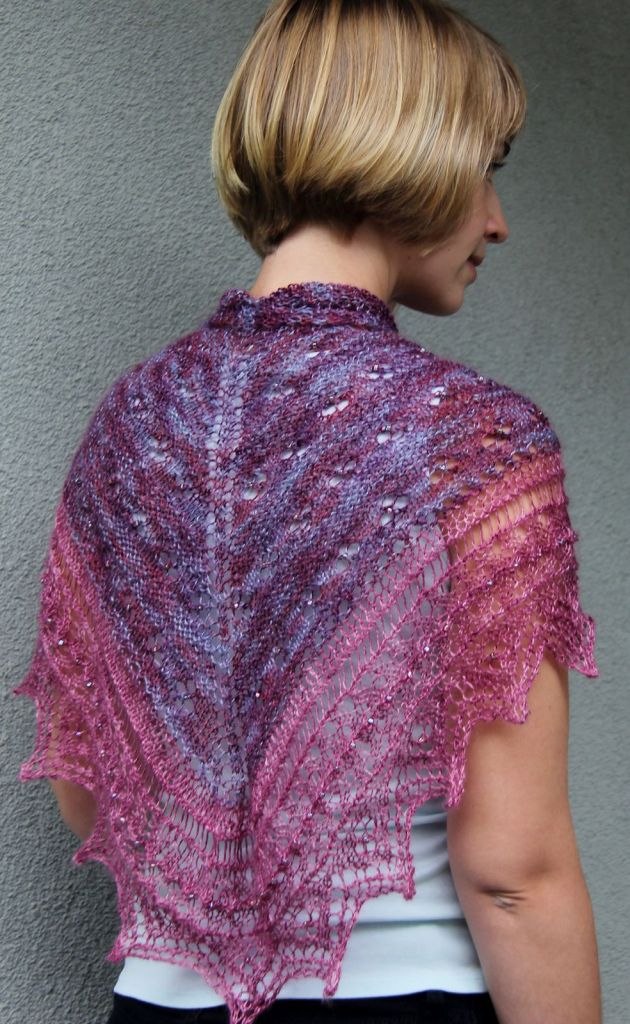
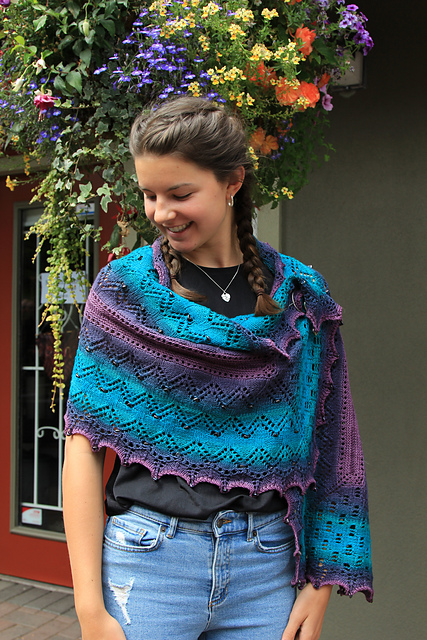
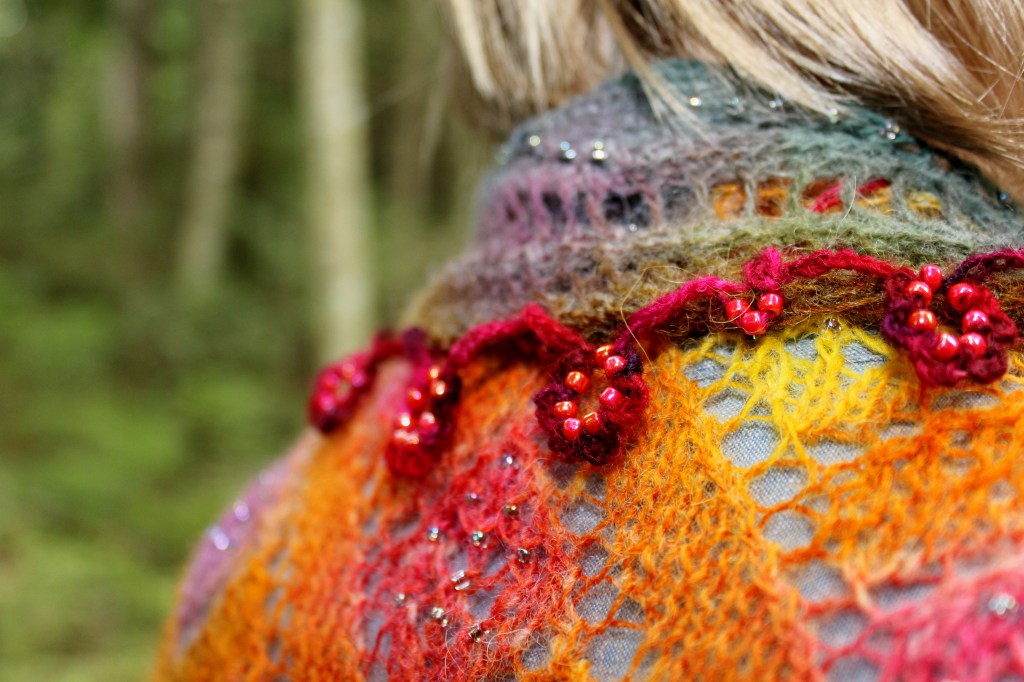
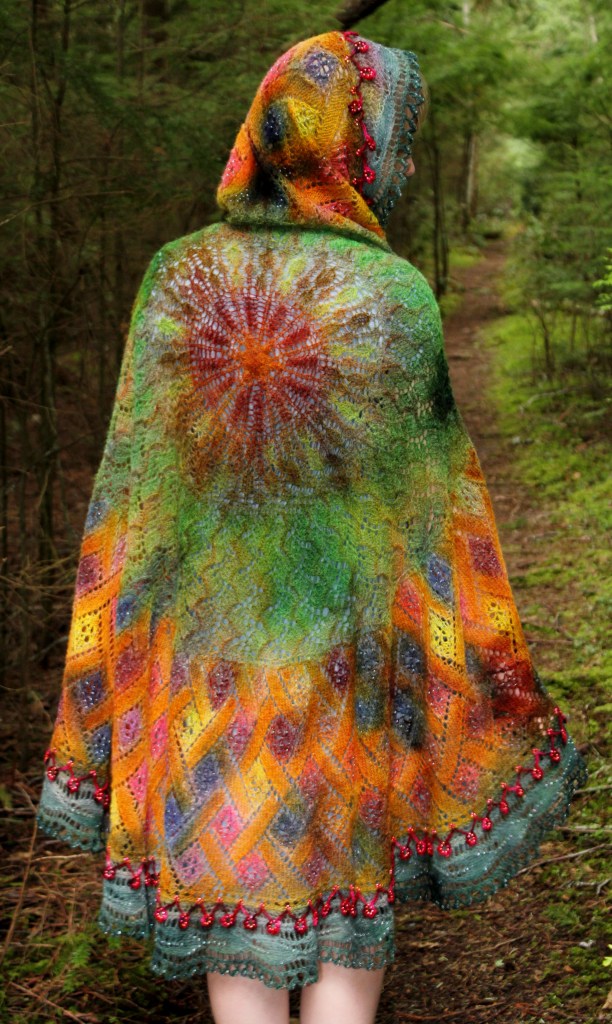
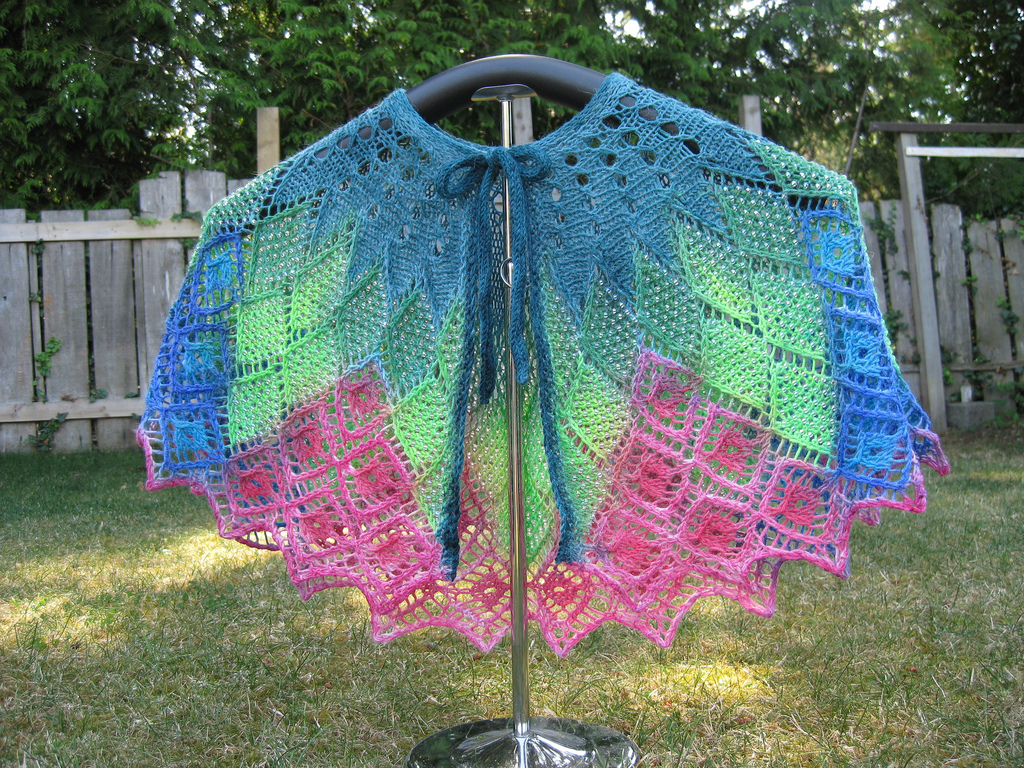
So I played hooky from my “real” knitting to create the Playing Hooky shawl/cape. Because it was Rasta, it only took the weekend to knit.
It has taken considerably longer to write the pattern. But here it is — Playing Hooky. Tapping on the link will take you to the pattern on Ravelry. Use the code HOOKY for a 30% discount.
Happy Knitting
Lynette
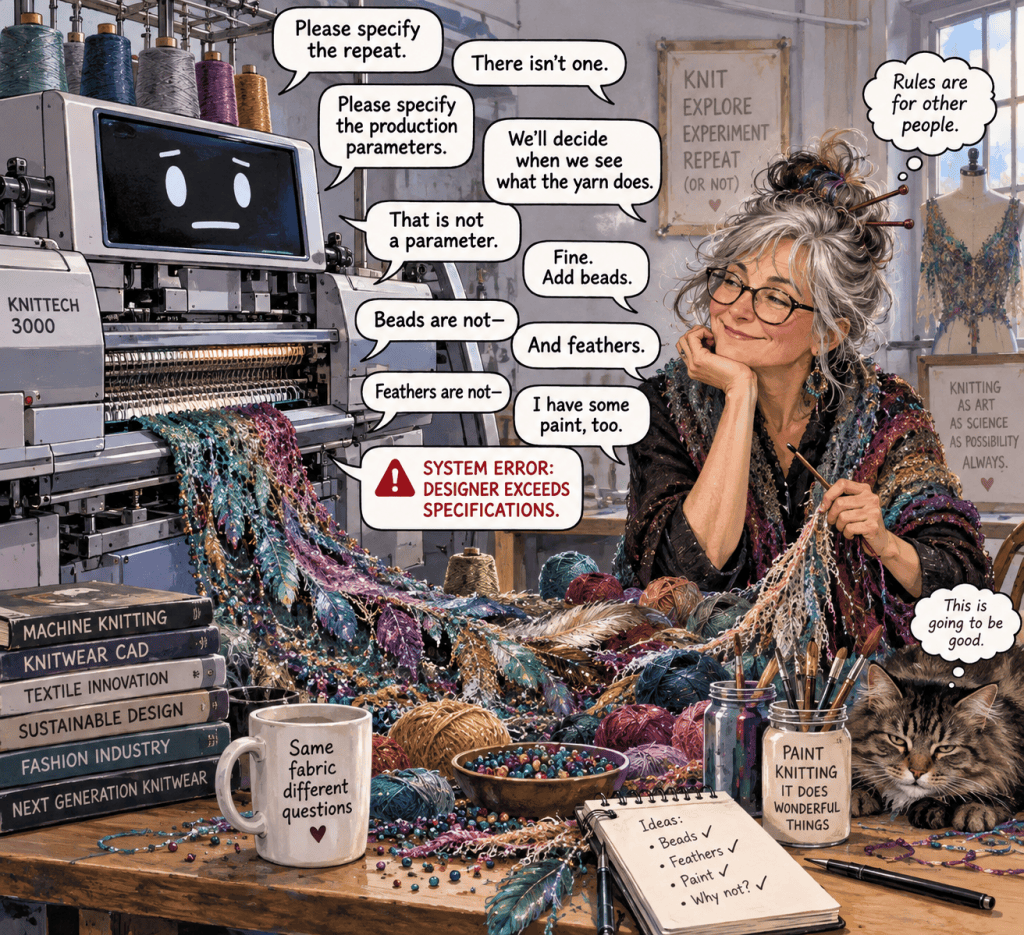
AI generated cartoon – computerized knitting machine confounded by hand-knitting designer
I think about colour a great deal. As a designer, colour is a very important part of my design process. As a person, colour is an even more important part of my life, of your life. Colour is embedded in how we describe experience.
1. Colour is already in our language
We experience a lot of things in colour. Have you thought of how many times we use colour to define the moment? Here are a few familiar ones:
seeing red
caught red-handed
red-letter day
paint the town red
in the pink
tickled pink
feeling blue
out of the blue
once in a blue moon
blue blood
green around the gills
the grass is always greener
green thumb
give the green light
golden opportunity
golden years
heart of gold
black sheep
black mood
black-and-white thinking
white lie
white as a sheet
waving the white flag
grey area
silver lining
born with a silver spoon
purple prose
Do we even notice when we’re doing it? We use colour as shorthand for emotion, character, value, danger and even morality. As knitters, whether we are aware of it or not we are always assessing colour. For example, which shade of red is the correct one for your next sweater project? Christmas Red – which can sometimes be confused with Va Va Voom Red, or Vintage Red, something a little quieter and warmer in the Red family?
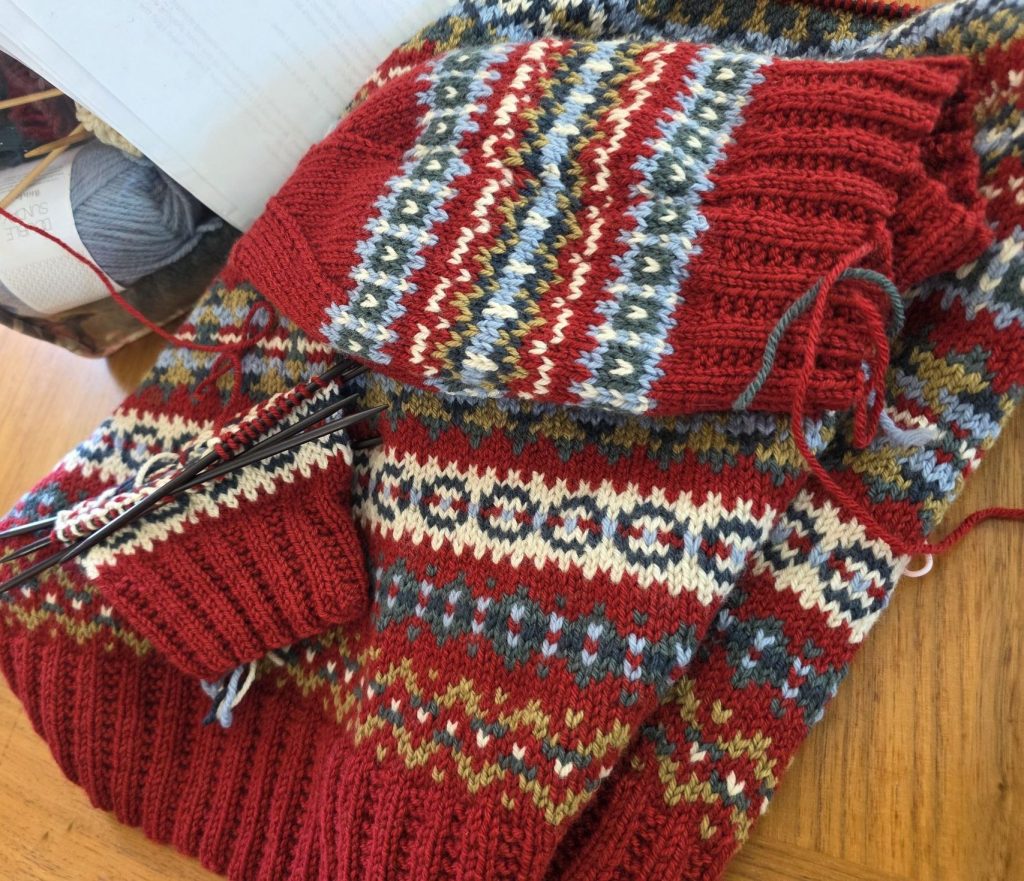
I picked Christmas red, which may have been a mistake, not because I don’t like the way the sweater is turning out, but because the association is so strong, people seeing the sweater are calling it a Christmas sweater. Not bad, just unexpected.
2. Colour affects how something feels
Think of the emotional associations in things such as golden-hour sunlight, a storm-blackened sky, new spring green, the grey-blue of a rainy day, the brilliant colour after rain, autumn leaves, candlelight, fresh snow, fog, a spectacular sunset, or the almost artificial colours of the northern lights.
And colour can communicate without words: red warning signs and stop lights; green meaning go; fluorescent safety clothing; white bridal clothing in one cultural context; black mourning clothes; school and team colours; national flags.
Have you noticed how the same colour can produce opposite feelings depending on its companions. Red can be romantic, joyful, dangerous, angry, luxurious or cheap. Blue can be peaceful or melancholy. Green can suggest spring and growth—or illness and decay.
We have a personal colour memory. You can walk into a room painted in the same shade of pink as your grandmothers kitchen or see a garment in a faded shade of brown and be reminded of a place or person that your memory has associated with that colour.
Colours that we associate with something, or someone, in memory remain important to us, and the memories can linger for a very long time. Purple was the colour of choice the first time my parents decorated my bedroom for me. Purple curtains, purple drapes, and Oh God! purple flocked wall paper. Purple (click link to check out that bedroom) as a colour was my favourite then and is still my favourite colour now, as one of my very old blog posts can attest.
3. Colour isn’t decoration in knitting
Right now I am working on “The Sunday Series” an intensive class that is examining colour and how it reacts as it is put beside other colours in a garment.
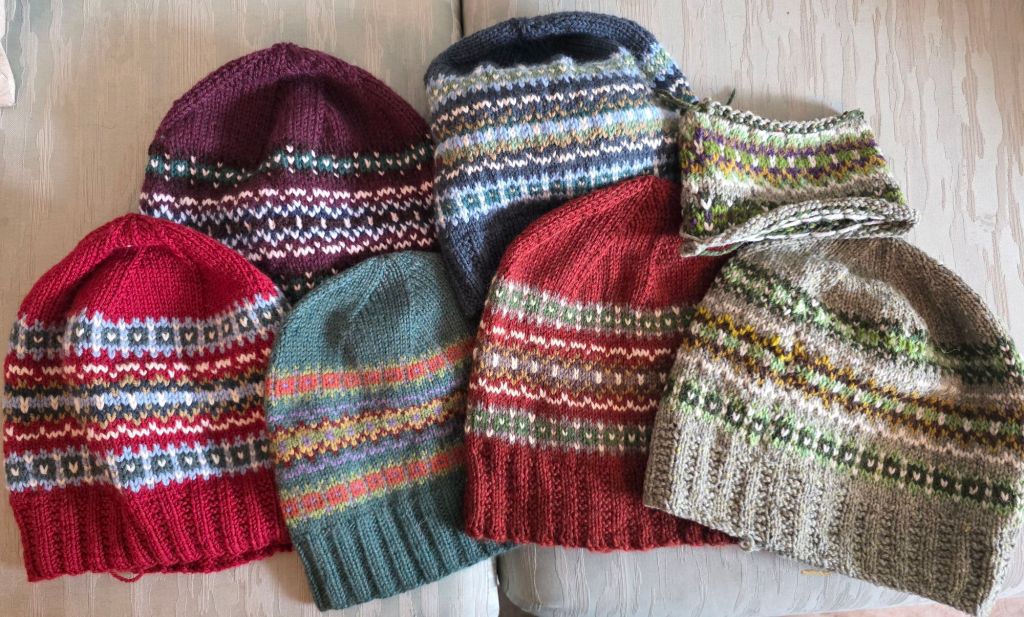
We started with the Sunday Slouch – a gauge swatch hat. That wasn’t its only purpose; it allowed the students to see how well the colours played with each other. It came about because as I was knitting my sweater I realised that my original colours weren’t working. The first 3 inches of colourwork on my sweater were ripped back and I started again with a couple of new colours and some of my original colours, including my main.
So I designed the Sunday Slouch. A gauge swatch hat that would also allow the students to test out the colours they had selected for their own sweaters. And test them they did.
One student was totally satisfied with her colours. Another only changed one colour, but the others? They had to play a little bit harder to get to where they were happy with their colour choices.
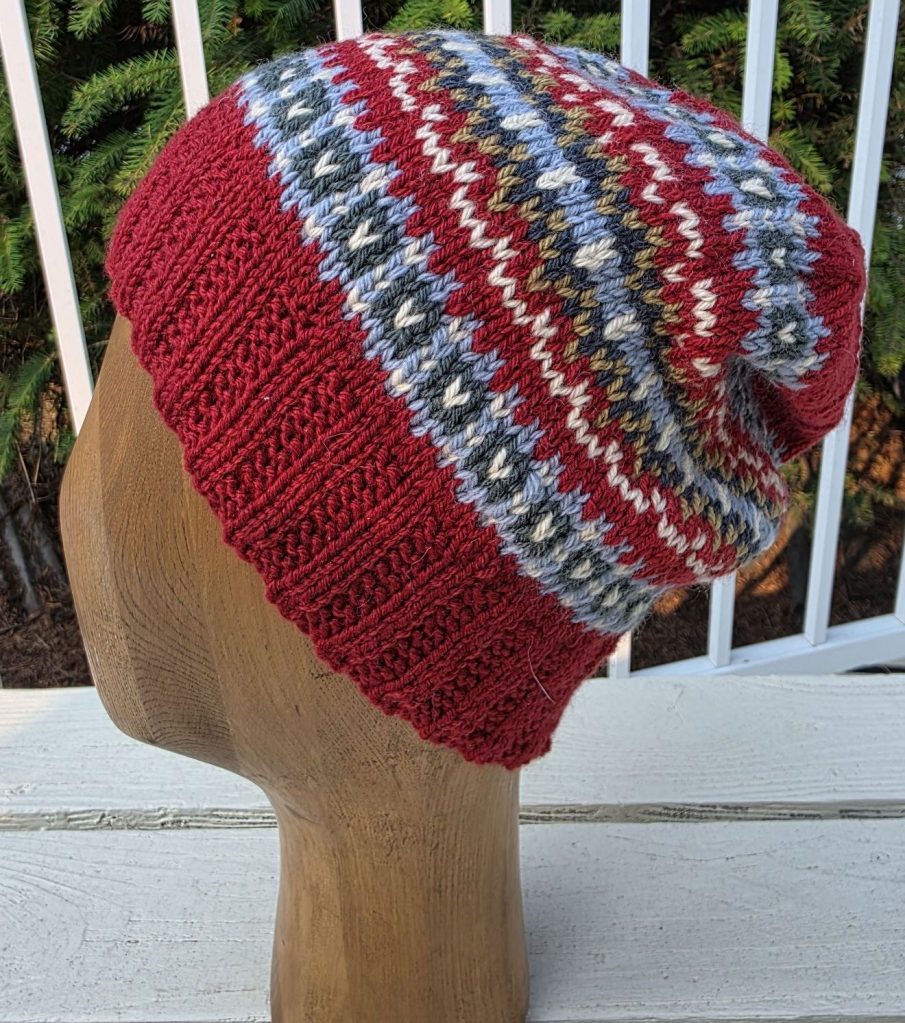
Isn’t this a fabulous collection of colour – and you can see in here two different reds (to continue with the red theme) and how different each hat is – my Christmas Red, cheerful and bright, and then the warmer, more subdued red.
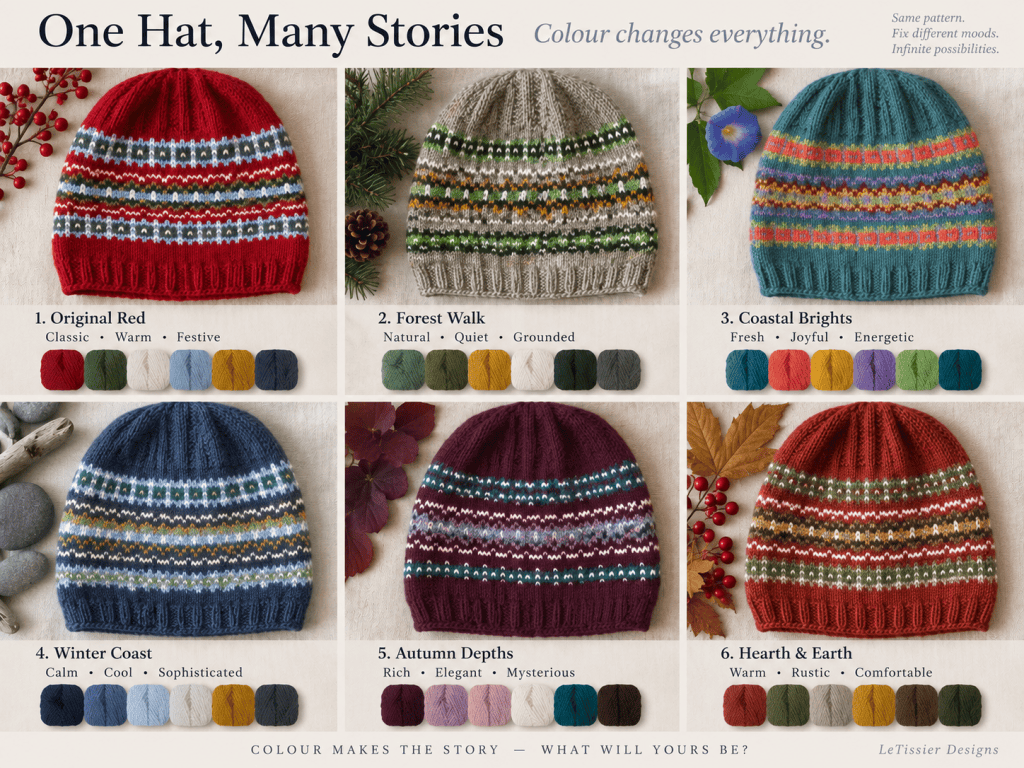
I had AI set up a chart for me with the hats and colours analysed.
Colour creates the pattern, but it also establishes hierarchy and rhythm. Change which colour dominates and the same chart can look remarkably different. Increase the contrast and it becomes graphic; reduce it and the pattern becomes quieter and more textural.
My students discovered this all firsthand. Everyone chose their original colours carefully, but they still needed to shift/change some colours before they started their sweater! The swatch hat did its job.
Colour also creates proportion. We are all working with six colours. If we used them all equally, except perhaps for striping, it could look chaotic. Used properly, the same six colours – one dominant, two supporting and three appearing as highlights – the knitting takes on a control and a sophistication.
The patterning I am using is borderline chaotic as I have been trying to use the bulk of the patterning colours fairly evenly, but spread throughout the garment. I have kept the background very defined to keep the colours under control. Cheerful is how I am thinking of the effect.
When we talk about colour and colour in our knitting there is the “unexpected” colour. The colour that doesn’t seem to fit at first glance, but becomes the colour that makes the other colours sing together and move naturally in the mix. For my sweater the unexpected colour is the light blue. It is the one colour that was both different and important. Its job in my sweater was to cut down any similarity to Christmas, and change the emotional “feel” of my background colour. It does it for me – though not for everyone. Many still call this my Christmas sweater.
So, for fun, the next time you pick a colour, think about why you chose it.
Have you noticed that there is a little chill in the air first thing in the morning? The day still heats up but it cools down again in the evening. The seasons are preparing for a change.
How do you celebrate the change? Are you pulling out your favourite knits and making sure that they are clean and ready to wear when you are ready to wear them. I am pulling mine out and trying them on and trying to convince myself that maybe it is time! Even as I throw them off knowing it is still too hot!
September Square
Even the September Square, I wanted to knit each row of “trees” (I see them as trees, you may see them as something else) in autumn tones to reflect the season ahead.
This stitch pattern is one of those patterns that can be knit to use up loads of colours. Each stripe of “trees” could be a different colour and the background colours could change as well. Instead I kept the background clean and uncluttered and the trees, simple rows of green.
This pattern is a very interesting knit without being complicated. Each “tree” is made by increasing drastically in one spot and then decreasing on each side of the tree over three rows. Throw in a few slipped stitches to keep the trees pointy and then offset each pattern row to keep the movement fluid.
Finding the name was a little more tricky – Tree Lines, Little Trees, and finally I settle on Tree Lined. Perhaps the name would have been more interesting had I seen something different in the pattern.
What I can pull out of my wardrobe in September are the shawlettes, kerchiefs and mini shawls that I have knit or been given over the years. It has been a while since I knit a small shawl and the fancy collection seemed to need one too!
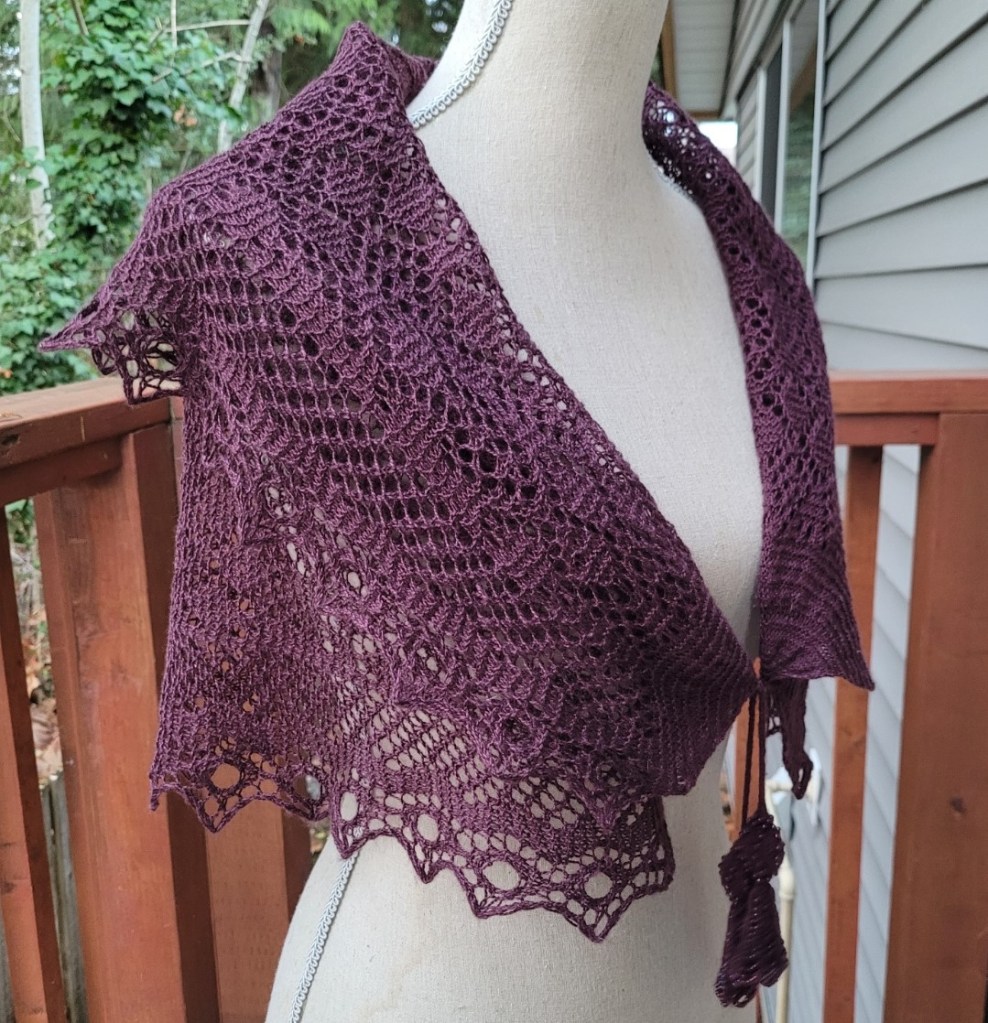
Meet my new go-to small shawl – the Morning Glory Shawlette. Knit with Cascade 220 Fingering, Morning Glory weighs less than 85 grams. It will be perfect for fall.
You may recognize the border stitch from the August Bonus Square. Doesn’t it look pretty as the border here? If you need a little help with the border, a downloadable photo tutorial for the wrapped stitch technique (Daisy Chain Stitch) is available below the Morning Glory Pattern download.
For me, because of the edging. It is usually my favourite piece to knit, and on a small shawl it is so easy to see. Worn around the neck, it frames the face and draws all the attention up!
The Four Hundred Shawl is one of my most popular small shawls. It was designed for a solid colour yarn. I kept it interesting with some simple lace patterning to add texture and depth. I still have a few skeins of the Bison Merino sock yarn from the Buffalo Wool Co. I designed 400 with that yarn and yardage, 400yds, in mind. Sometimes a solid coloured piece is just what you want!
The Jazzy Shawl is a little bigger and really is something a little more special.
When the Colinton Lace yarn arrived at the store, I was captivated. It was beautiful. I had never worked with spun mohair before, only the fuzzy varieties. It was something like working with silk, but felt a little heavier. The drape was incredible and the sheen amazing.
The yarn wanted something different, and Jazzy grew out of that.
And now Morning Glory joins them.
Three small shawls, designed at different times and for quite different reasons. Four Hundred began with a particular yarn and 400 yards. Jazzy began with a yarn I couldn’t resist. Morning Glory began with an edging I wanted to see and wear.
Perhaps that is one of the things I like most about small shawls. There is enough room to play with an idea, a beautiful yarn or an interesting edging — but they remain small enough to throw around your shoulders on a September morning when autumn is almost, but not quite, here.
I have noticed a nip in the air in the morning and have done my best to wear my knits – but I still end up pulling them off. Summer is not quite ready to let go!
I am really missing my garden. And it is not that I am a serious gardener. I just plant and pray that things will grow. But I am a serious lover of gardens and enjoy them wholeheartedly.
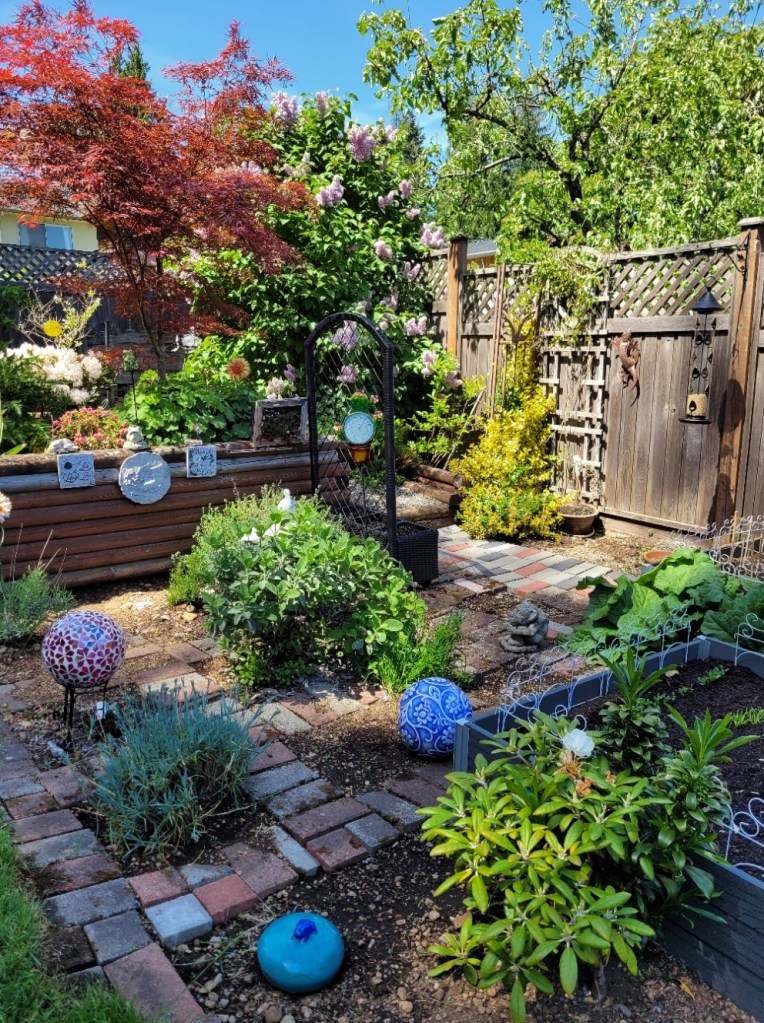
It took thirty years to develop the back yard in the old house and the last year of waiting for and then renovating the new place has not allowed time for really thinking about my outdoor space. That is about to change. The landscapers will be coming in about 3 weeks and I am so excited.
So I have been thinking about gardens, in particular, my new garden, a great deal. I won’t be able to get the landscaping done all at once. It will take a few years to get the whole yard finished. But right now I have two things planned.
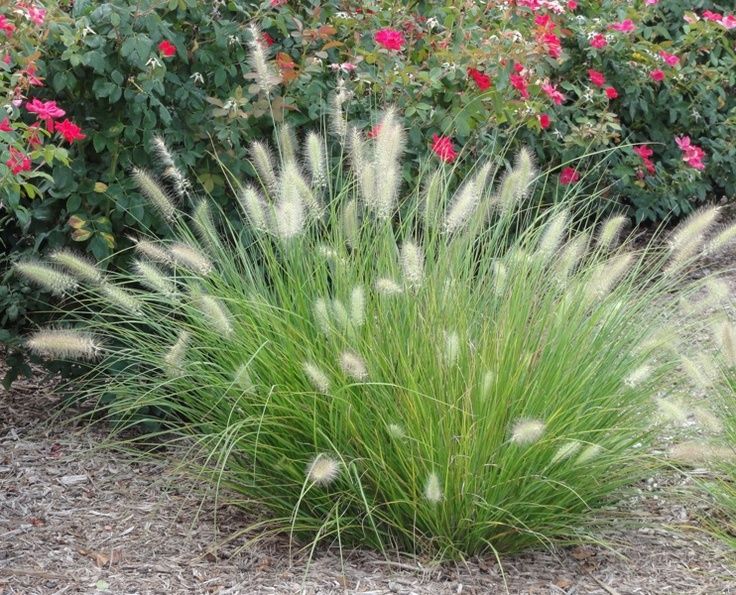
1.) A small perennial garden for bees and other pollinators, with a small tree as a center focus. A Pink Dogwood – so pretty and delicate looking. Around it will be Coneflowers, Salvia, Russian Sage and Wooly Sunflower and something called Little Bunny, a small grass – which I had to look up. This garden will be in our small front yard, and will add privacy and interest.
2.) I need to create a new herb garden. My old one was built by me, 30 years ago. I laid out the bricks in an old-fashioned square grid and filled each grid with different herbs and flowers. It was my favourite place in the yard. It delighted me and the bees both. I could and did sit out there for hours, knitting or reading.
My new herb garden will be quite different. We live in a bit of a hollow with a long bank down one side of the property. The landscaper is going to build a rock wall along part of the bank and fill it with dirt to level out and create a garden area. I will share the results sometime in September.
So our new garden won’t be like the old but it will have some wonderful things in it as well. It already has a beautiful rhodo and a gorgeous hydrangea on the front side of the bank. That area may get developed more next Spring.
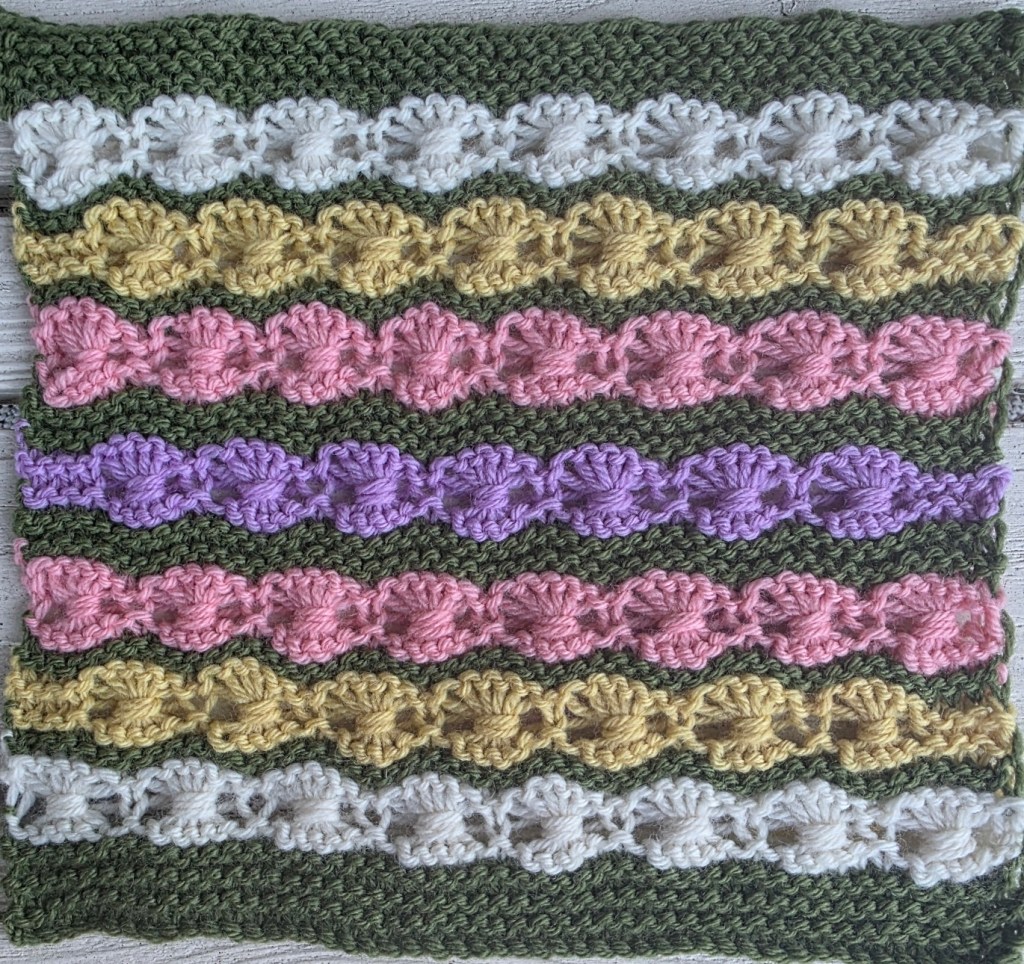
Gardens and garden themes have always been important to me. Quite a few of my patterns have been influenced by gardens. The August Bonus Square is the newest of my garden-inspired knits.
The pattern includes a photo tutorial of how to create the Daisy Chain stitch.
The Daisy Chain stitch is a fun knit. A little fiddly but worth the payback as every 4 rows of the pattern creates almost an inch of fabric. It is also a great pattern for using up the bits of coloured yarn leftover from our other squares.
I also think that interesting textural stitches like this are often overlooked. They can look more difficult than they really are. Or maybe we don’t want to think beyond what we always knit. I believe that sometimes we miss out when we don’t try those new things, those new stitches.
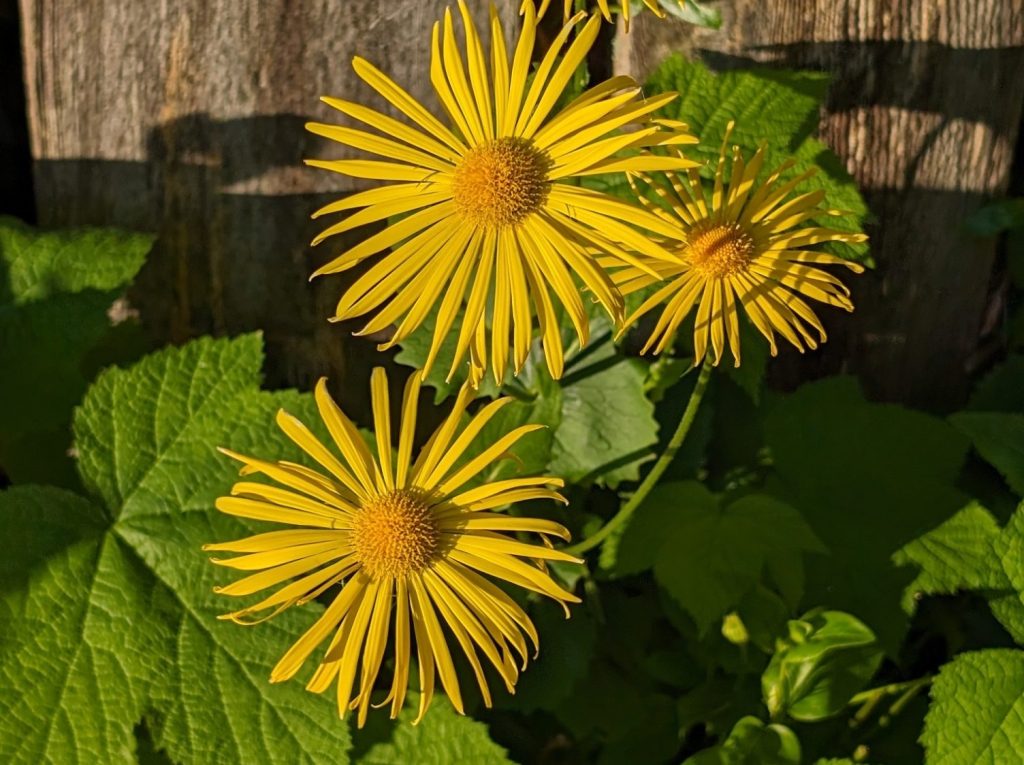
Why Daisies? I have always loved daisies and all daisy-shaped flowers. Coneflowers, Lion Daisies and the lovely little English Daisies that grow wild amongst the grasses. Daisies and pansies (my other favourite flowers) were the flowers in my wedding bouquet. These flowers have faces and can come in so many different colours. And it is August, and I am missing my garden and so I unearthed the Daisy Chain Stitch. It just made sense to play with them in this square.
I have used it a couple of times before. In a little hat for the purple hat campaign, Daisy Chain Cap. It made such a cute child’s cap. The other pattern is a shawl pattern, Peace, Love and Understanding.
Do you label yourself? What is your view of yourself? Is it defined by your work, your hobby, your family? How do you view the way you interact with the world?
I know that I define myself by what I do now – what I did in the past helped form what I do now but does not define how I see myself now. For example, when my children were younger I defined myself as a mother. That definition is part of me but is not how I define myself now.
I am a Maker first and foremost. I make things.
Mostly, I knit. And when I knit, I design.
Then there is everything else. I love to cook. And bake. And make jam. I particularly love to make jam. I find it very meditative and soothing. I grow herbs in my garden to add to my cooking. Does that qualify as making? It does in my world.
And I sew clothing for myself when I am in the mood.
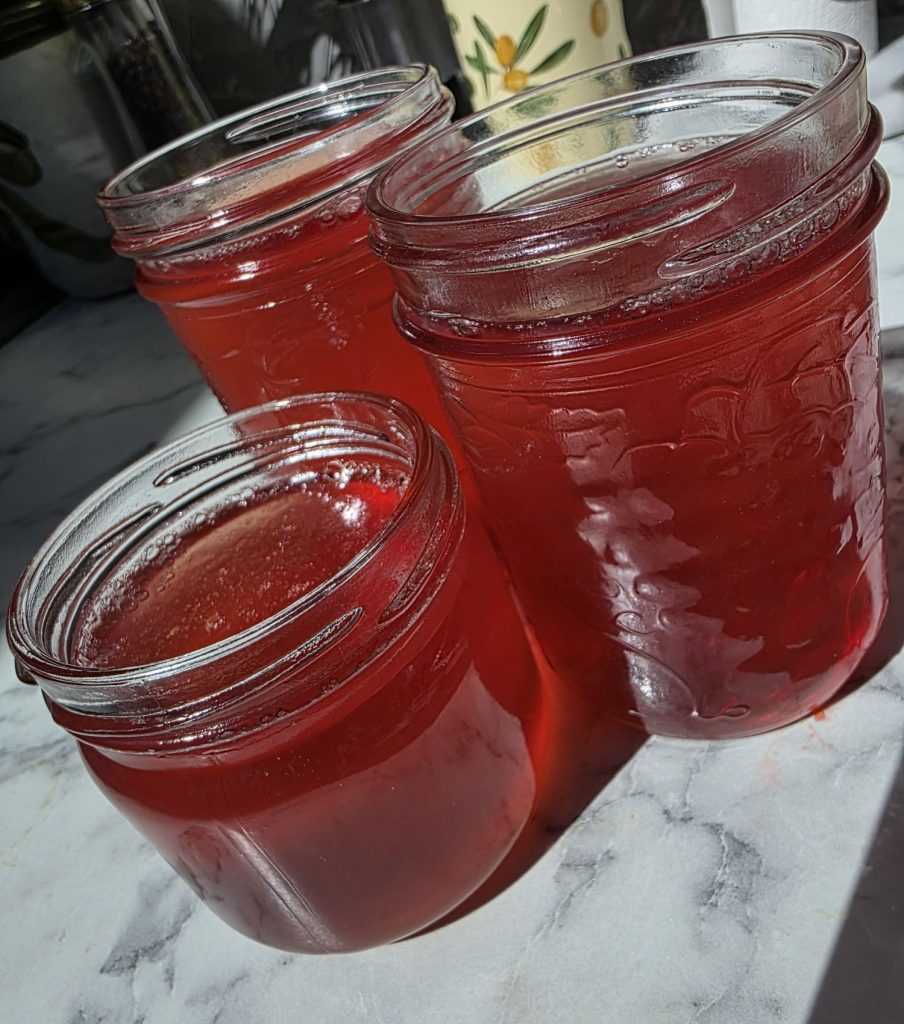
Crabapple Jelly in the Sunlight.
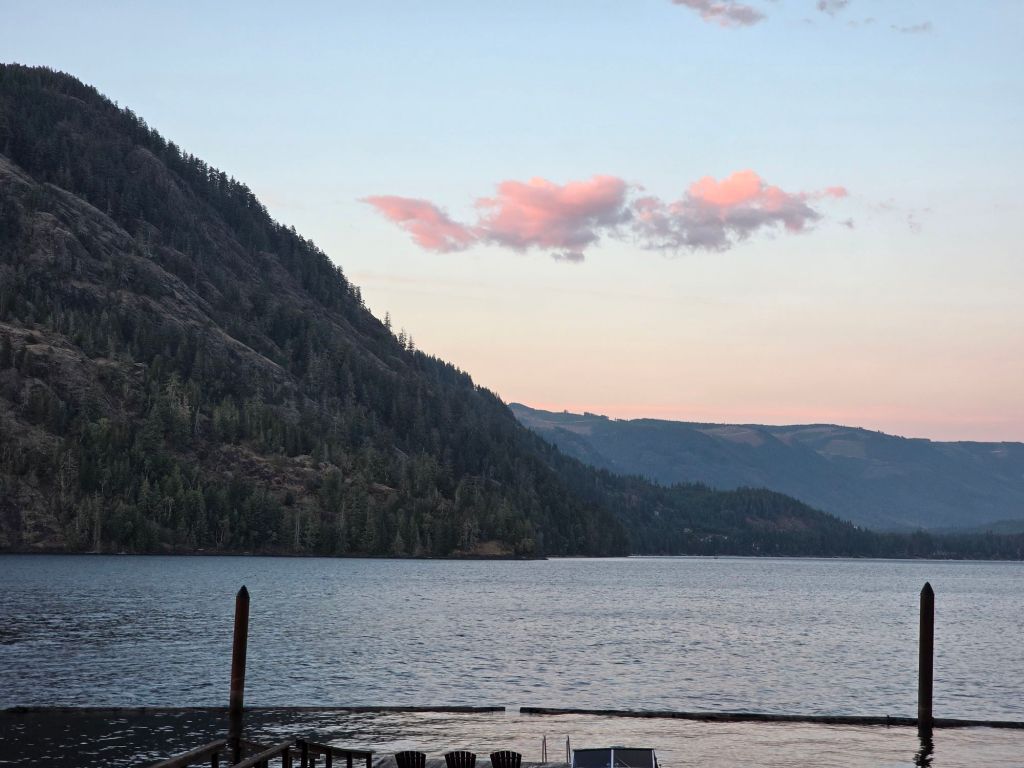
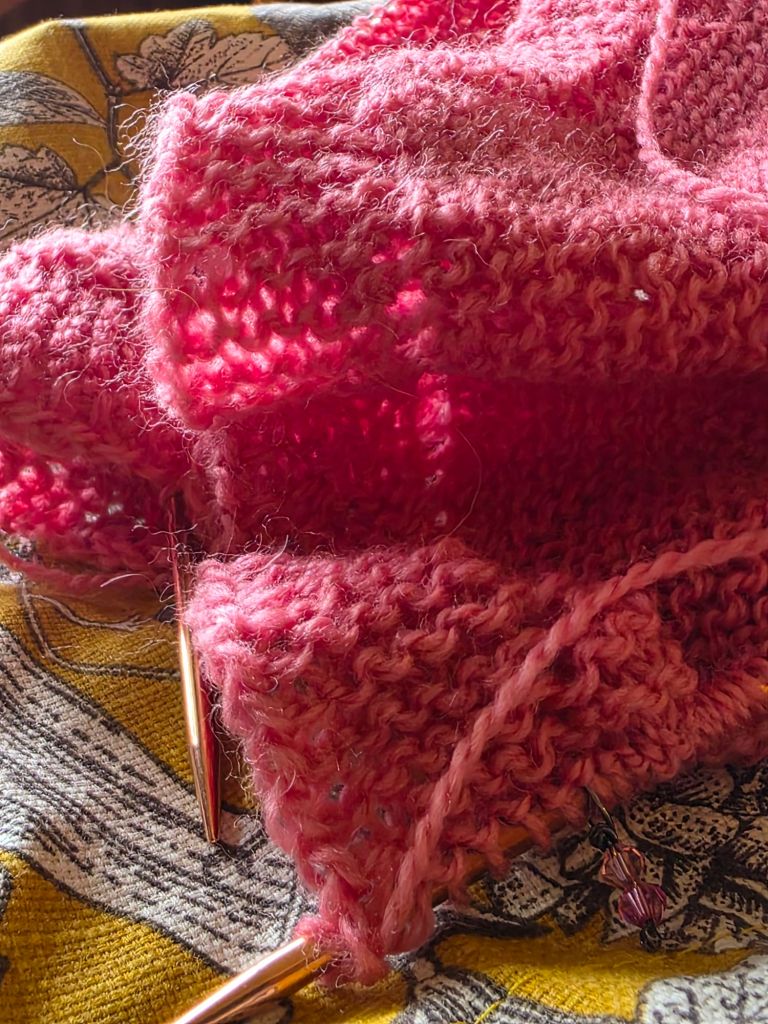
Everything I do leads to everything else I do. The colour of the jelly leads to me looking for the colour in my stash – couldn’t find it – so I settle for a bright pink. The colour of the gorgeous sunset last night.
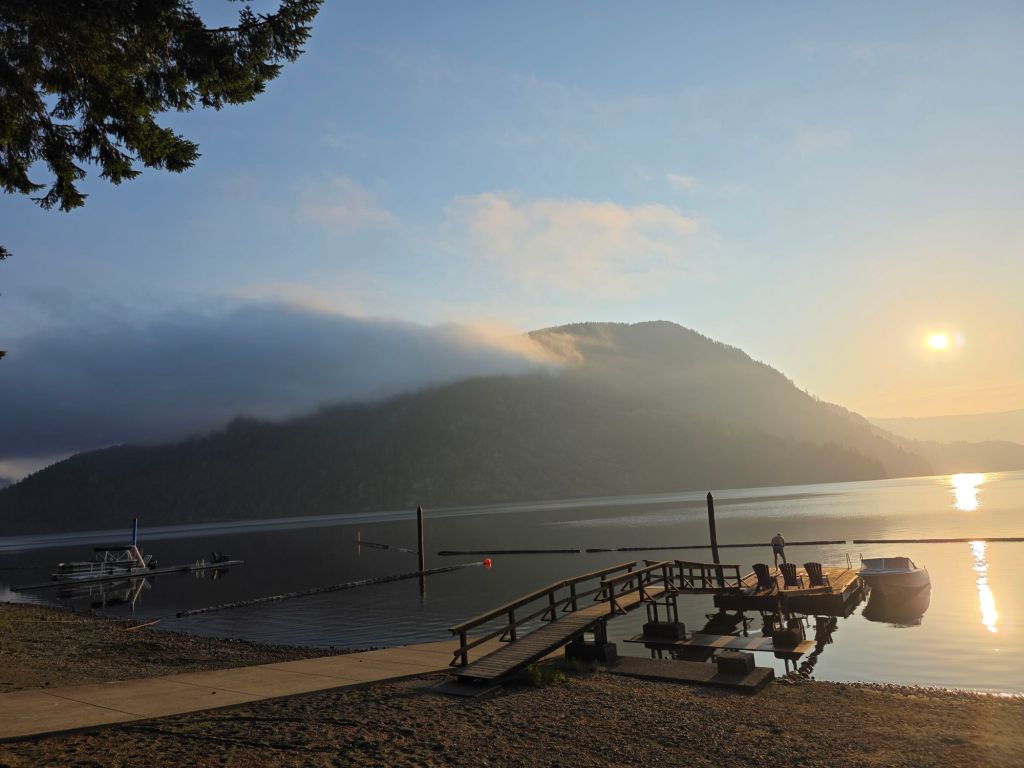
In your knitting are you influenced by your environment? Does a walk in the woods or along a lake make you look at the shadows created by sun and leaves and see a lace pattern or watch the waves along the shore and see the classic old shale pattern?
Or are you more influenced by a direct need or want?
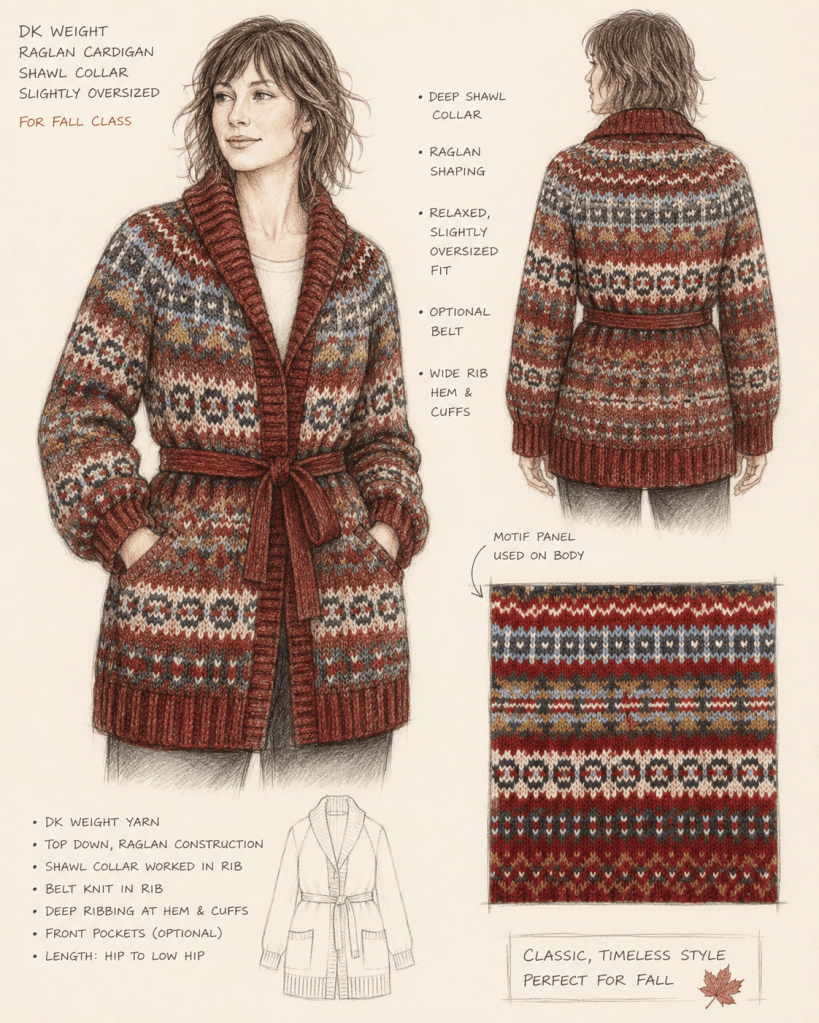
For example my latest Fall Intensive Class started with my students. There was a request for a cardigan type of sweater as a major class. Then other requests – I really want to try a shawl collar – could it be fair-isle – I have never tried raglan sleeve shaping – what about a simpler version of the sweater. As I mulled those requests, I was heavily influenced by my interest in a new sweater for myself. In red.
So the base colour for the sweater is red. And a few of my favourite colours for the patterning. Plus I need to make sure that there are a few other skills involved in making the sweater. So let’s do a traditional Fair Isle sweater, that will also include a steek, afterthought pockets, a belt, plus the requests.
AI generated sketch of the pattern based on my notes and actual sweater to date.
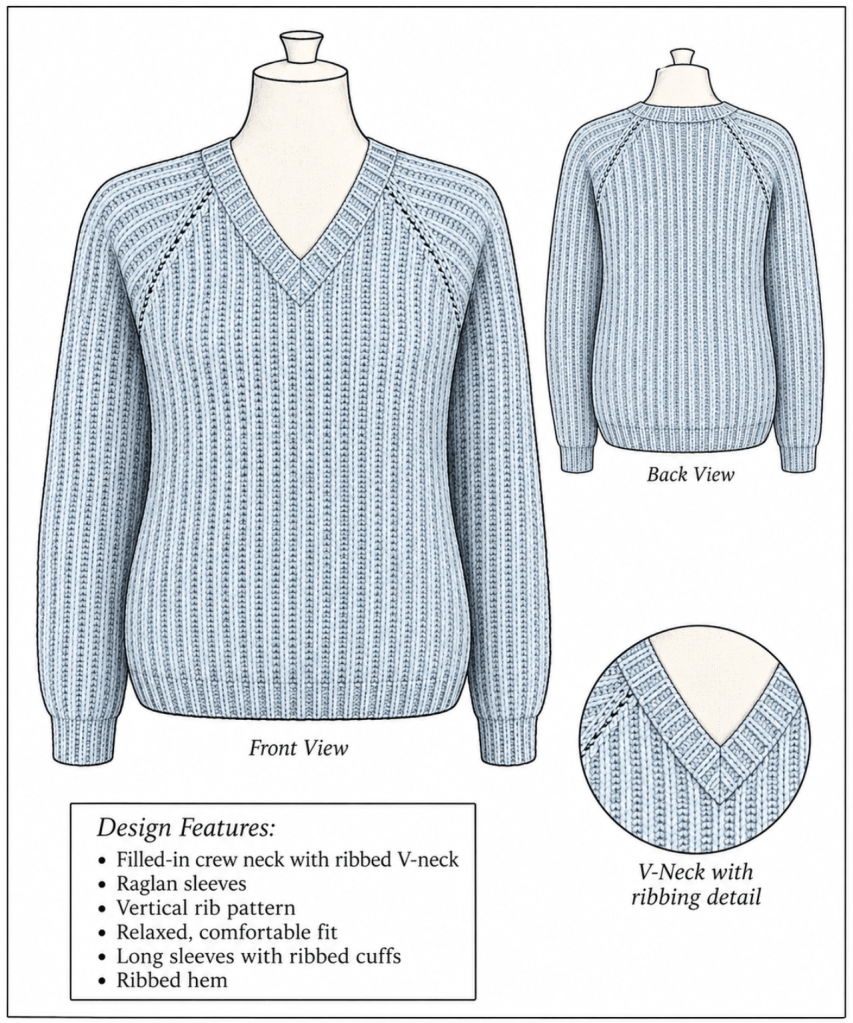
So I designed a long Fair Isle cardigan, with a raglan sleeve shaping and a big shawl collar and the fine tuning details I thought needed to be added. Including a simpler style sweater. One that picks up some of the details of the original cardigan, ribbing, v-neck and raglan sleeve shaping.
AI generated sketch of the simpler sweater based on the sweater knitting to date – complete except for the raglan shaping.
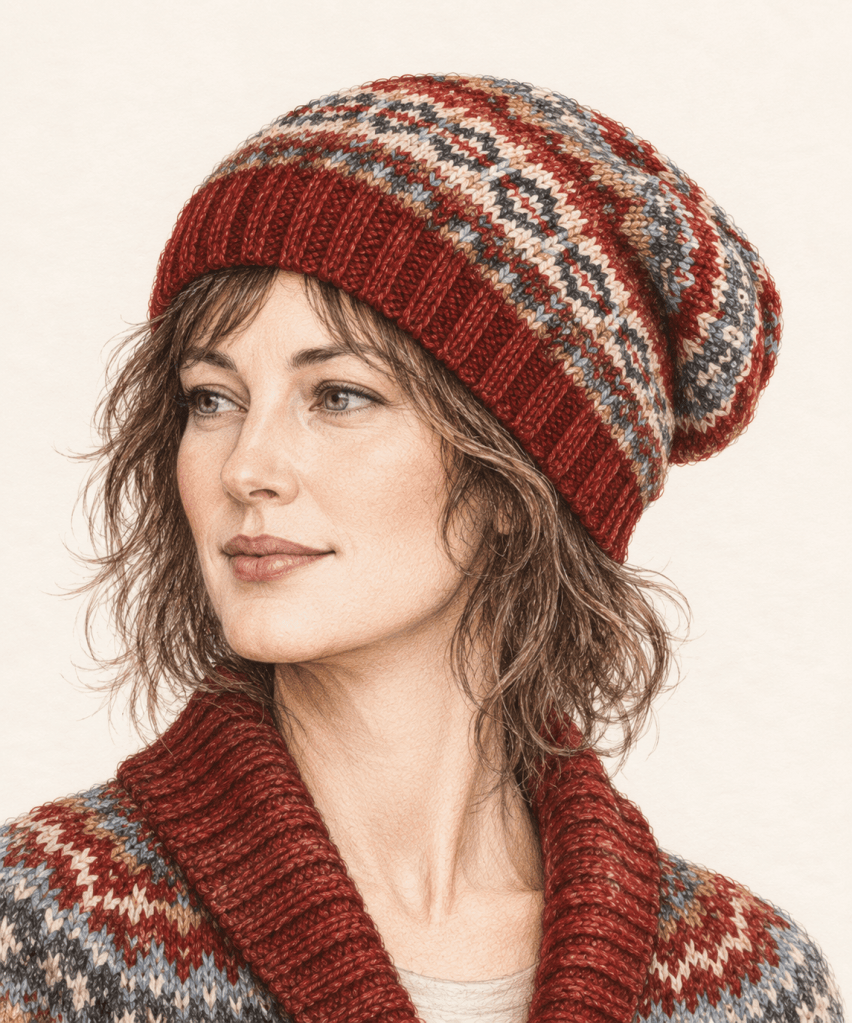
Once I started knitting my red sweater I realized I hated my original colour choices. So I ripped out the 4 inches of knitting beyond the ribbing, picked new colours and started the sweater patterning again. Much better colour choices. Umm, my students might have the same problems, so I designed and knit up a gauge swatch hat. Now I have a means for my students to check out their original selections and save them ripping out the sweater itself.
AI generated sketch of gauge swatch hat.
If I could create a flow chart from what I am, a Maker, to how I break down what I do, I wonder what it would look like.
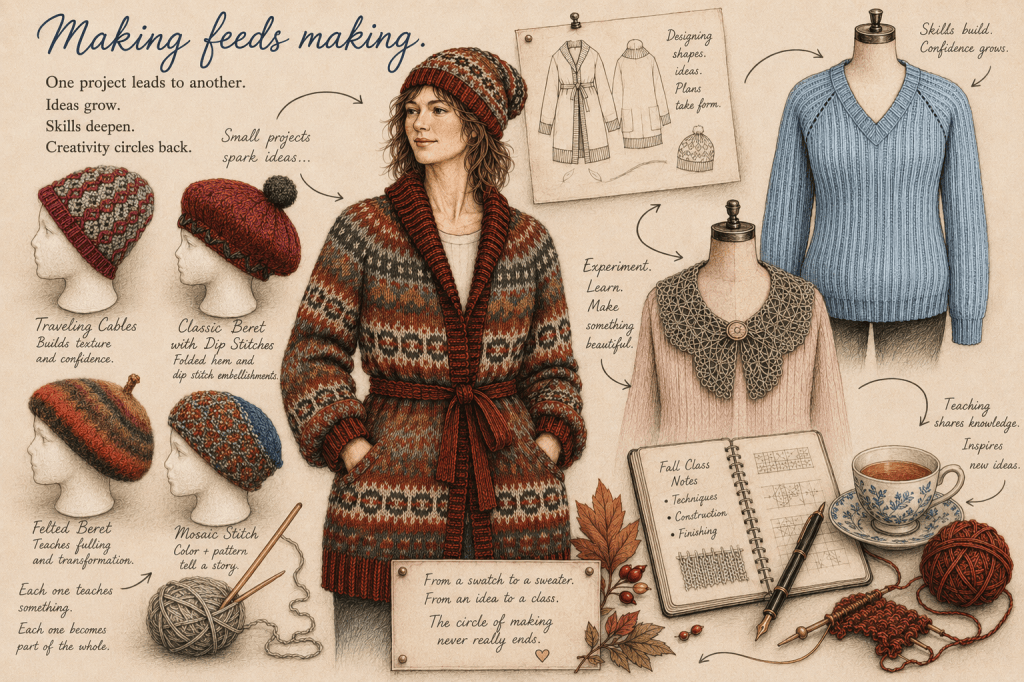
Again, an AI generated sketch of my fall plans and projects.
Projects for Fall Classes
These smaller projects are part of the same circle of making. Each one explores a particular technique or idea that can turn up later in a completely different project.
1.) The Grand Shell Collar – due to the popular response to the pattern I have added it to the Fall schedule of classes.
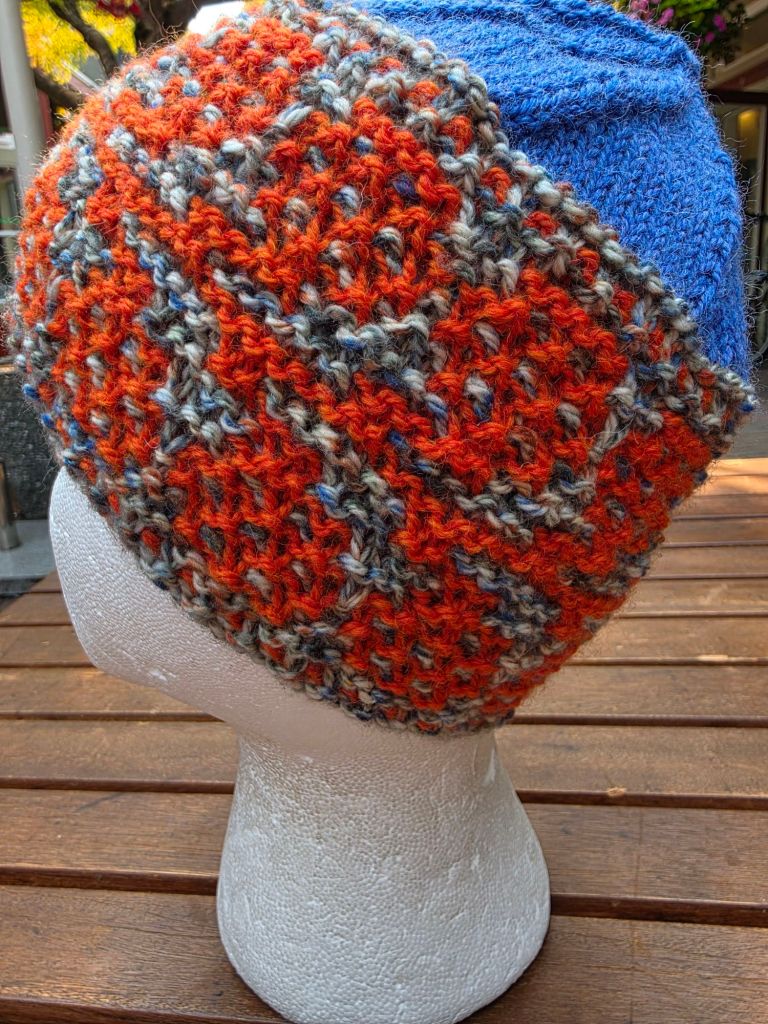
2.) Mosaic Hat – Mosaic colourwork is a fun alternative to traditional Fair Isle – and “look Mum – no stranding”.
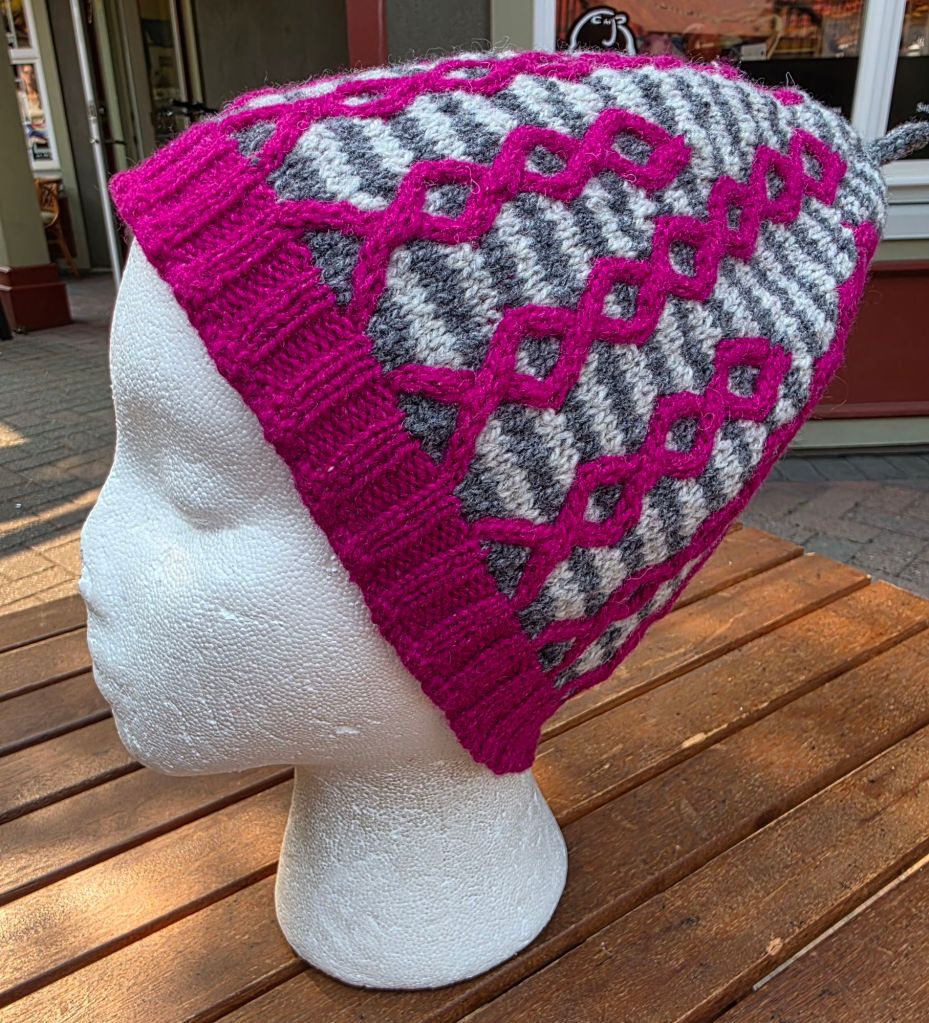
3,) Colouring with Cables – I decided to explore the Beret style hat and this hat was an outgrowth of playing around with top-down beret shaping. Which was a total bust – but it became the happy outcome of a really cute hat with fun cables!
The Beret is such a classic shape I decided to give it a really good look this Fall, which resulted in the last two classes of the Season.
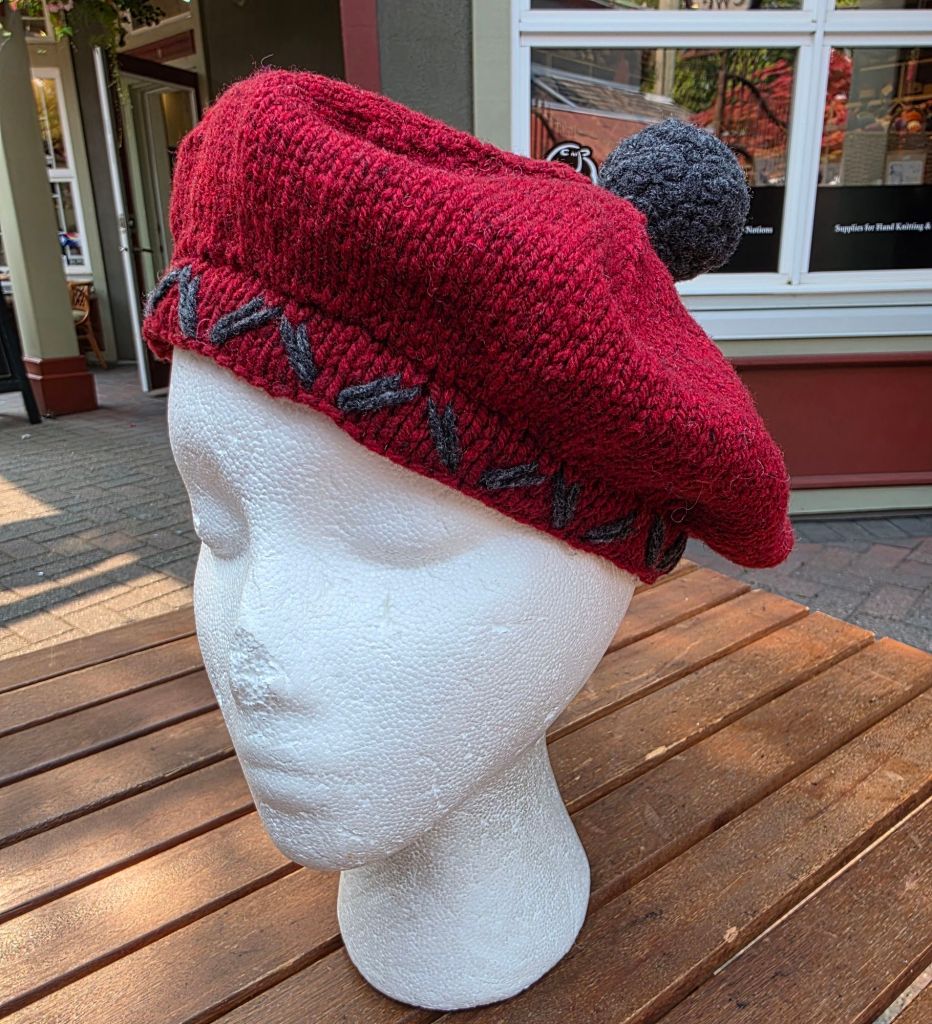
4.) Classic Beret – nothing new here just a clear, classic beret with a few fine details, folded hem, dip stitch detailing and felted pompom to jazz it up.
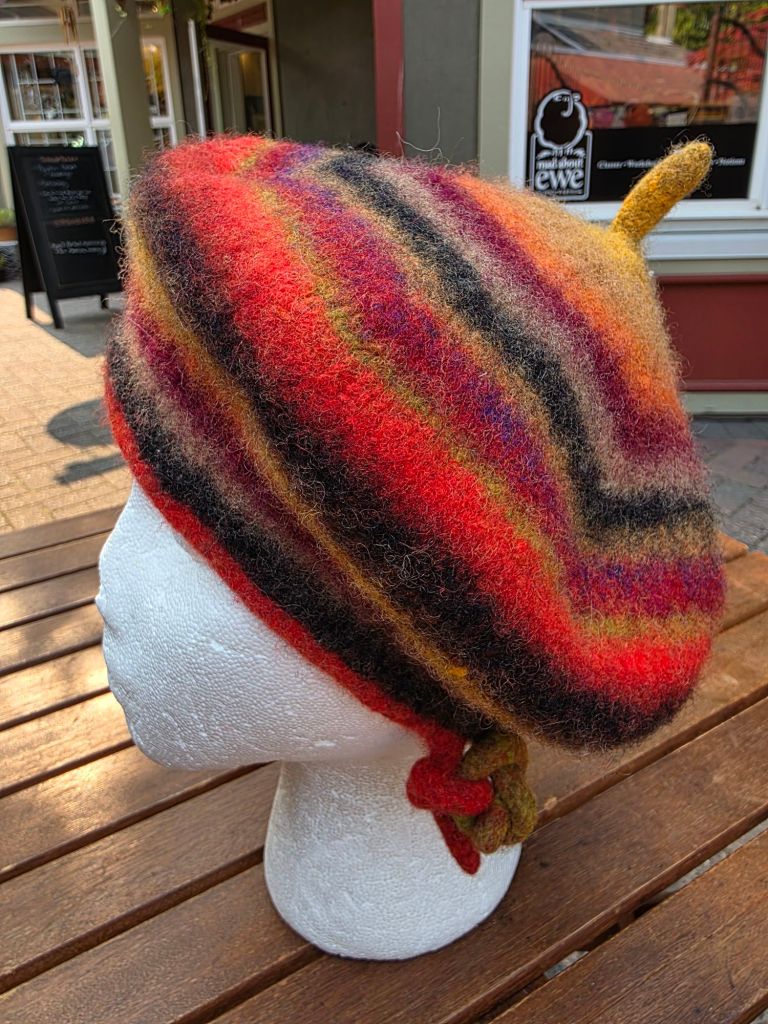
5.) Fulled (felted) Beret – classic beret shaping knit oversize to felt to size. Beret starts from I-cord to create a more interesting edge detail.
This month’s Fancy is getting its own blog post. I think it deserves one. It is a little “more” than an average fancy.
I’ve been asking around for ideas for the Fancy line of projects, an offshoot of the Blanket Project.
I wanted something small, but interesting,
Something Fancy.
Something memorable.
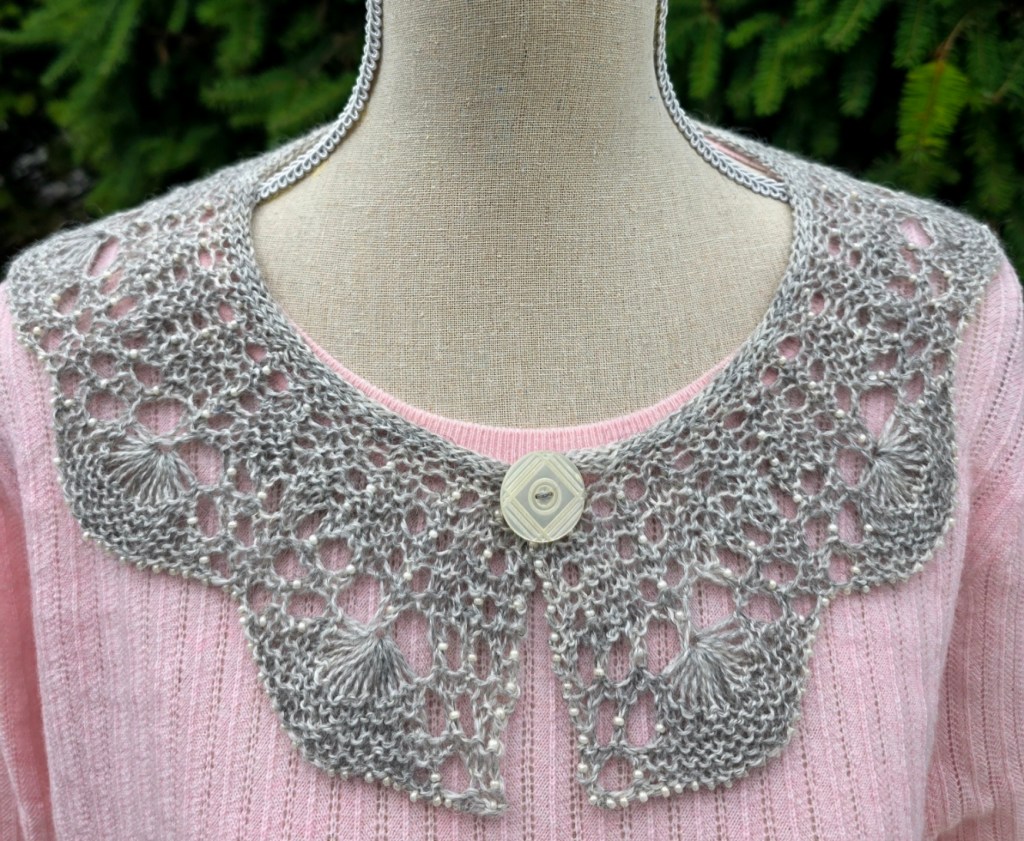
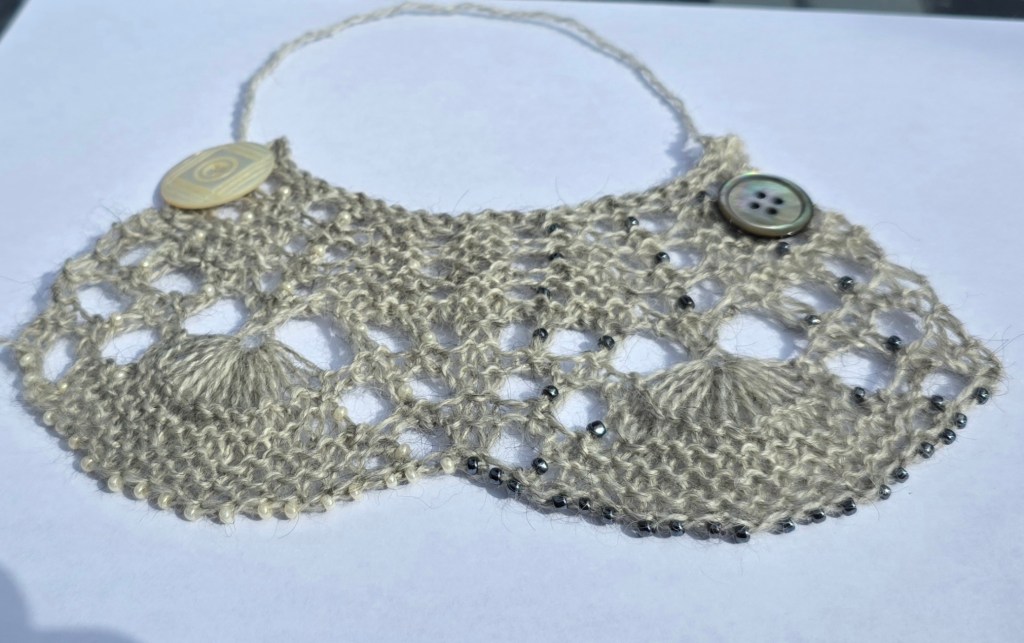
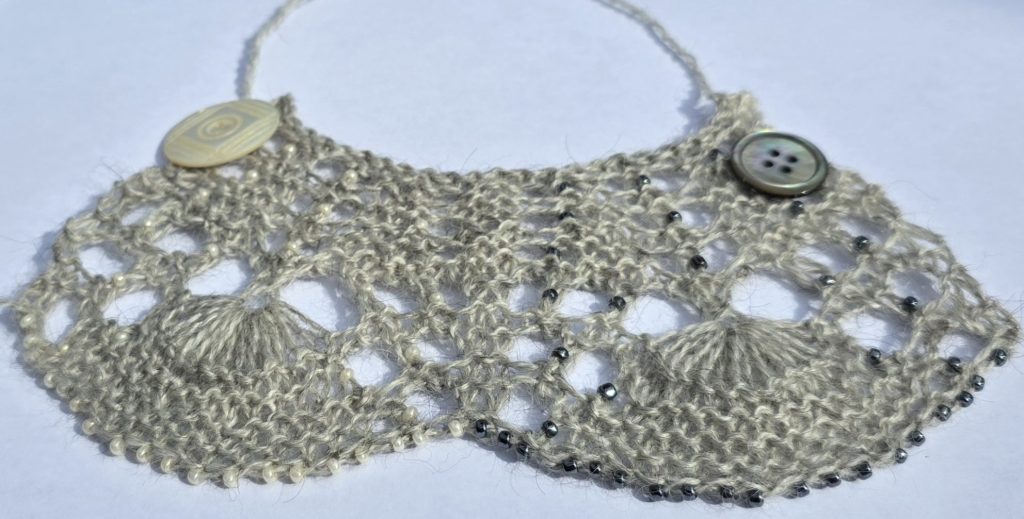
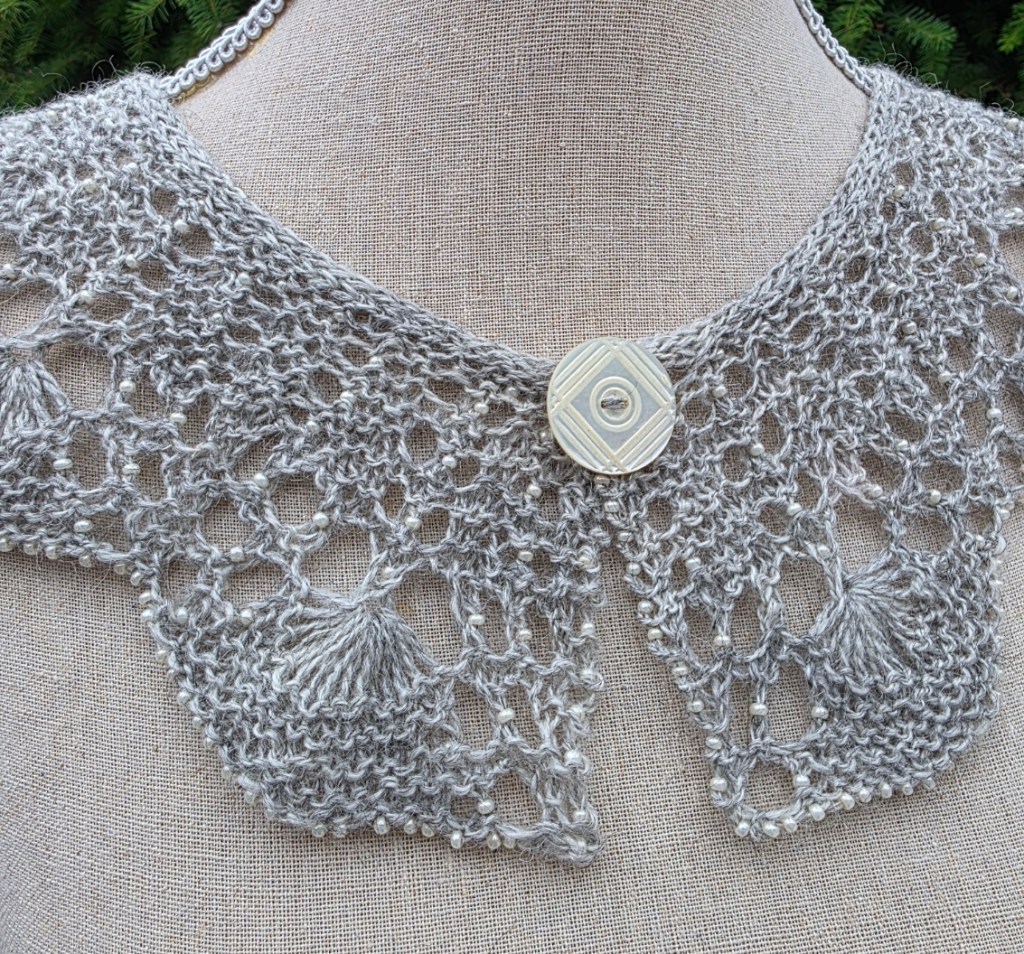
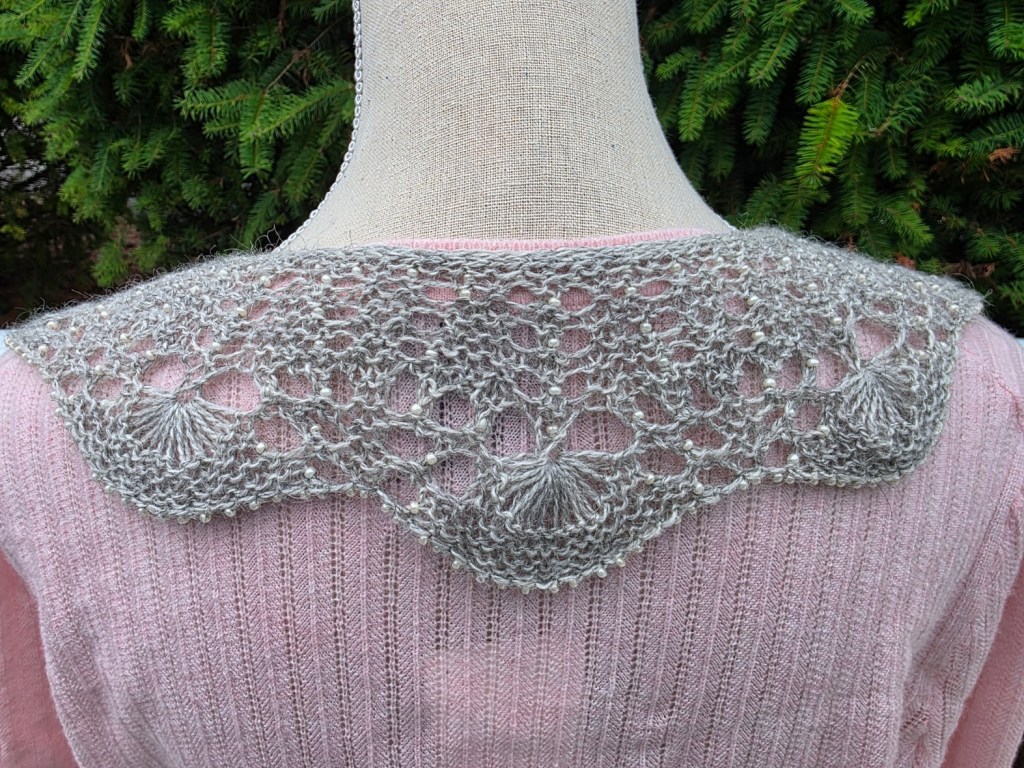
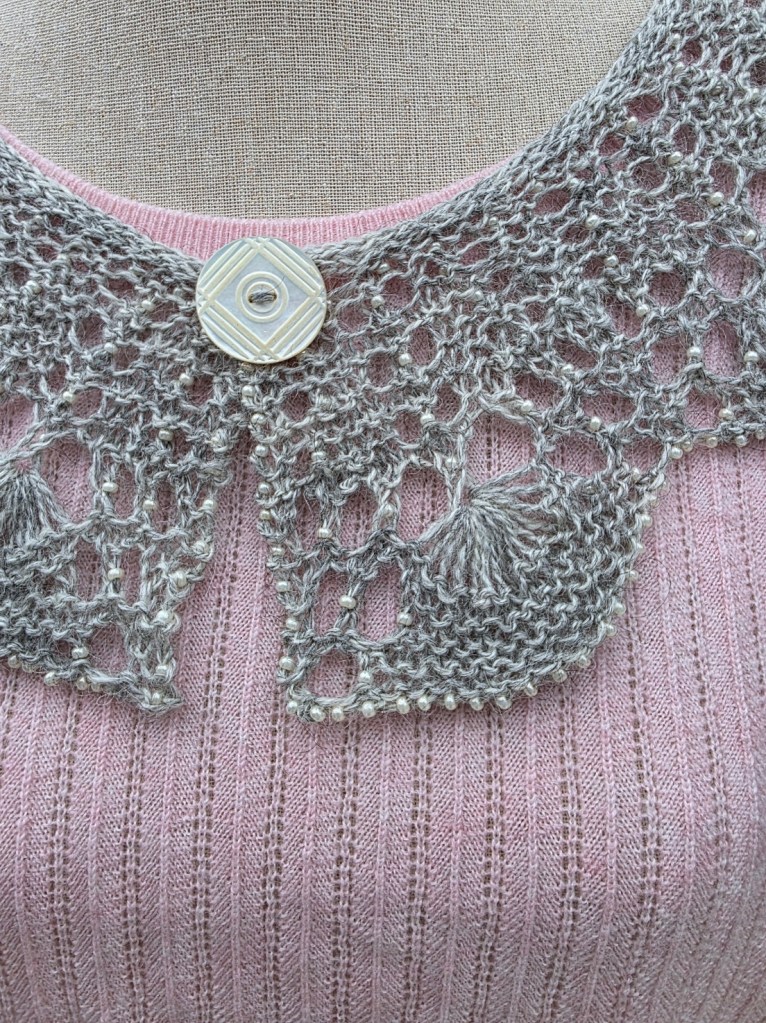
Amongst other things a collar was suggested. I have knit a few collars, The Grand Pavillion Collar and The Pretty Blue Collar are a couple of examples. My original thought was to keep this one simple. Umm… that didn’t last very long.
Part of the house organizing is going through my stash and thinning it out. I have not been very successful to date, I get sidetracked easily. For example, I found this stunning yarn in my stash.
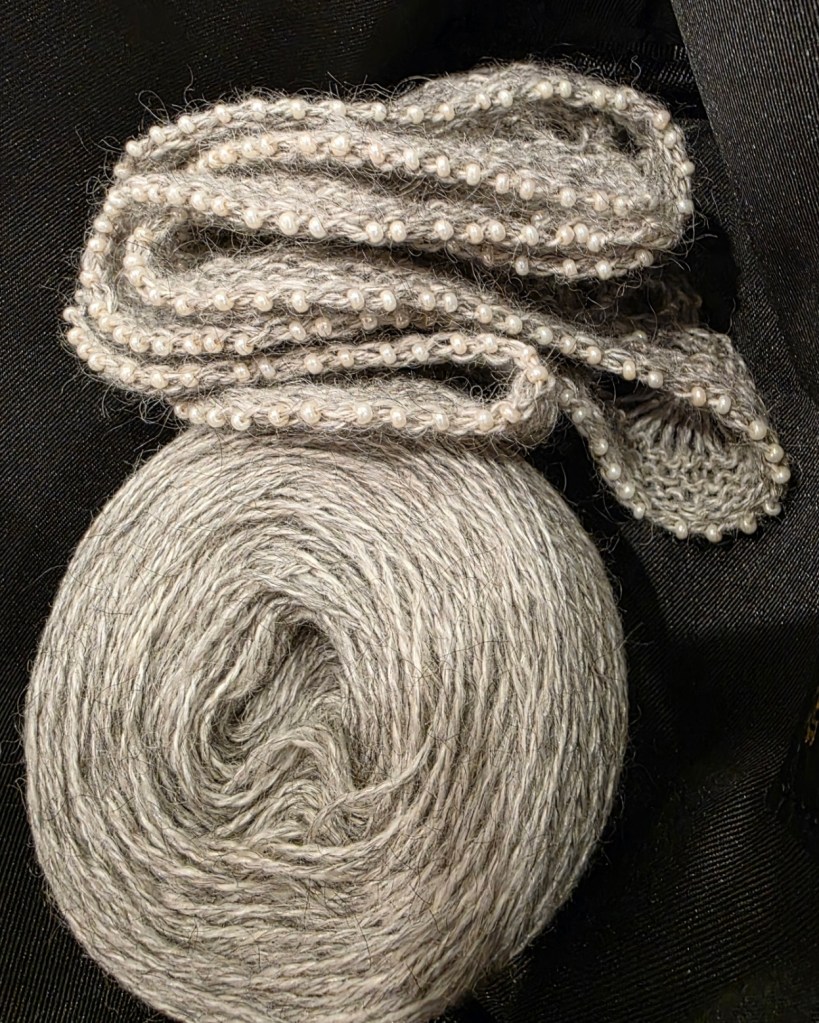
A fingering weight Cotswold lambswool. It is from a farm on Pender Island, Inish Eile, and is something I purchased at Fibrations last year.
As I learned more about Cotswold sheep, I discovered they are now a rare breed. Their history stretches back to the Cotswold Hills of England, where sheep have been raised since Roman times. Suddenly this skein in my stash feels even more special.
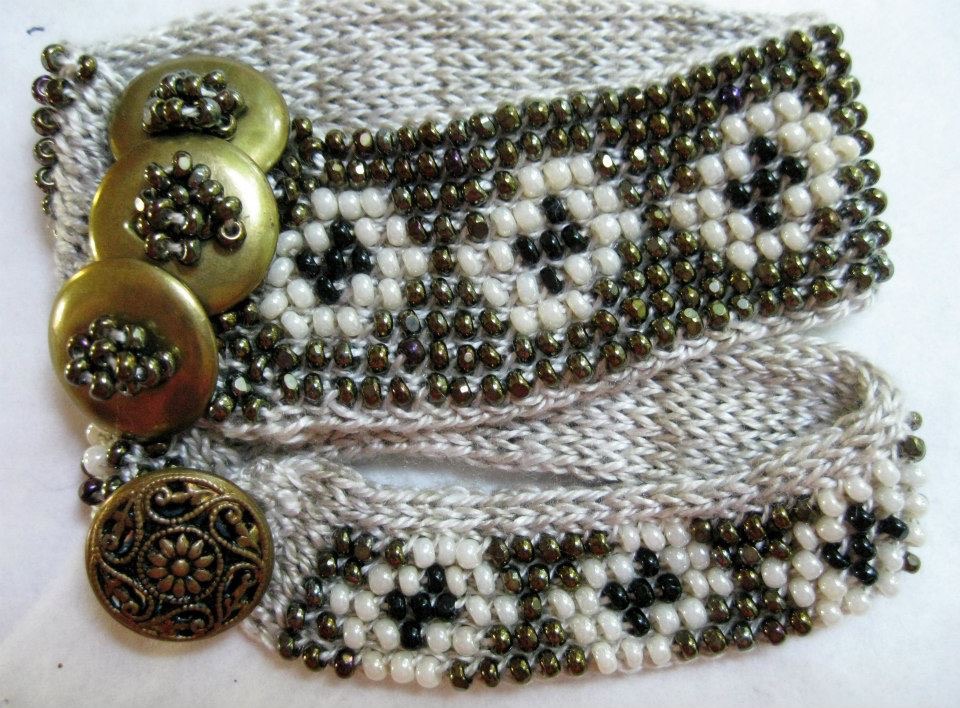
Shimmering grey with soft gold highlights, this yarn demanded something more than a simple design. Perhaps some beads. I could work with that. In fact, I would love to work with that. The yarn itself is amazing. The colour and shimmer holds the eye and has a depth no dyer could possibly create – only nature.
So I started to play with buttons, beads, and stitches. I sketched an idea and then knit a swatch. The swatch confirmed what the sketch had only hinted at – the yarn had found its pattern.
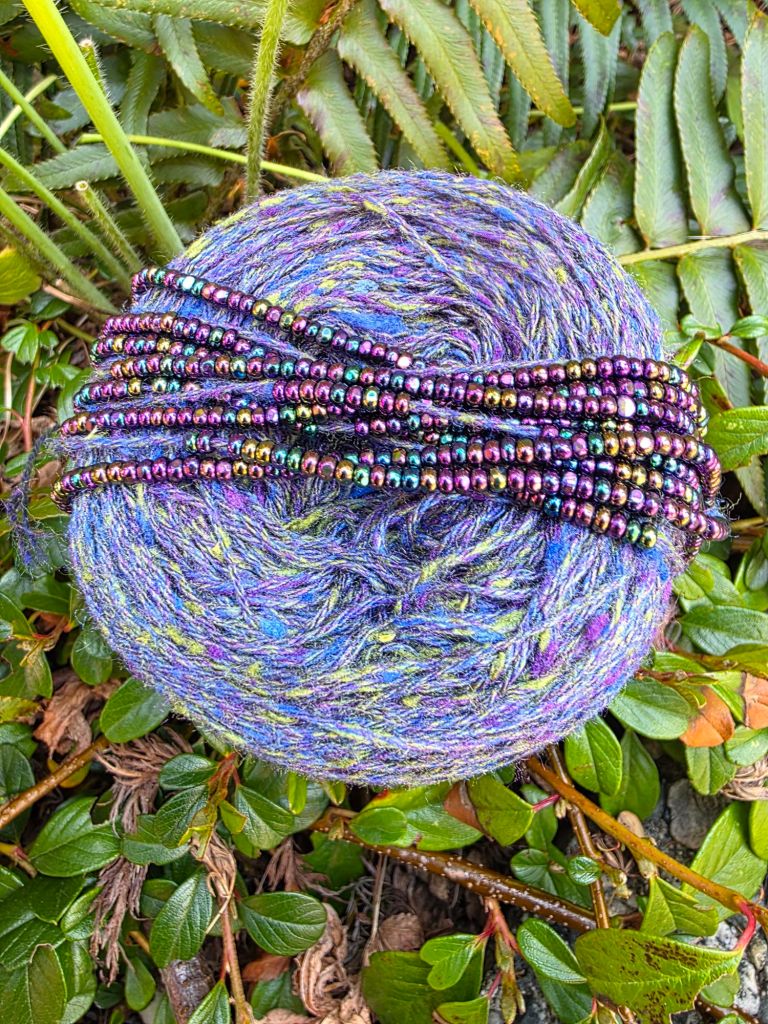
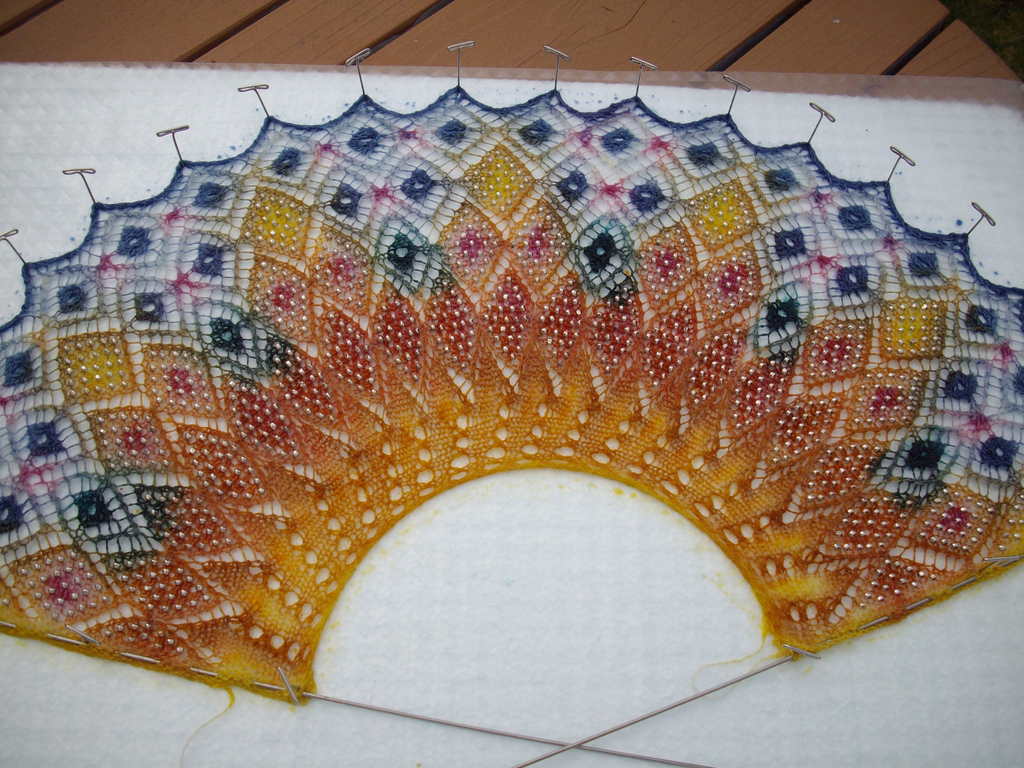
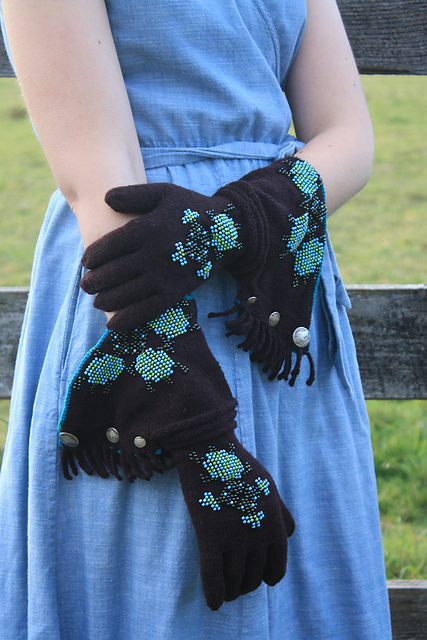
While I really loved the dark beads, their rich colour created a dramatic Art Deco feel against the golden-grey wool that wasn’t where my mind was going. Maybe next time. The cream beads, however, made a quieter statement, allowing the beauty of the yarn itself to emerge slowly.
I love Vintage pieces. This yarn made me think of something rich and classical. So I went to a classic knitting shape, the shell. A shape with a wonderful balance between open and closed space. A shape, that when knit would create a wonderful edge that only got better with the addition of beads.
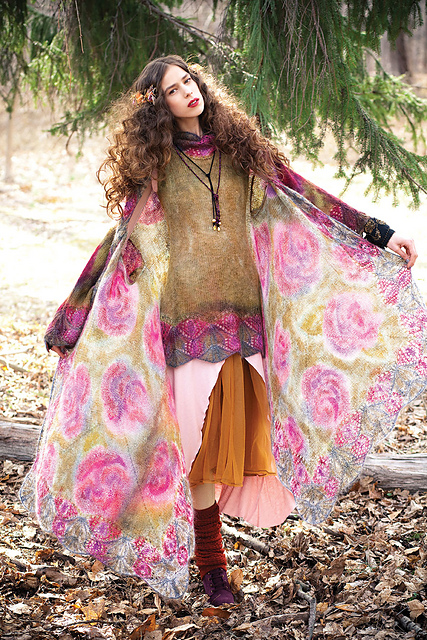
The stitch pattern is the Grand Shell. It is similar to the shell shape I used once before – on my entry for the Magic of Mohair Competition. That design later appeared in Vogue Knitting, introducing my work to many knitters for the first time. It seemed fitting that this beautiful Cotswold wool should bring the Grand Shell to life.
Photo credit Rose Callahan
Sometimes the right yarn reminds us of ideas worth revisiting.
Some projects are planned. Others seem to choose themselves.
Does your yarn “speak” to you? Can you tell what it wants to be when you pull it out of your stash? Do you think that there is meaning to rediscovering something, not lost, just misplaced and out of mind?
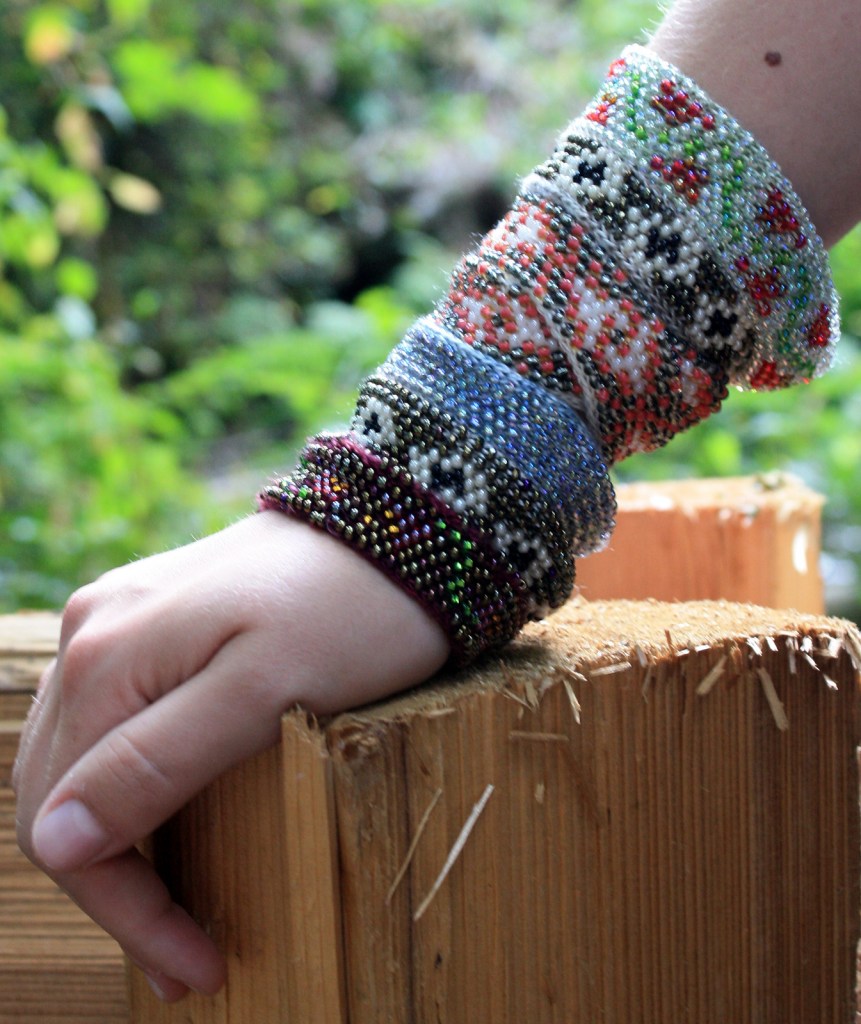
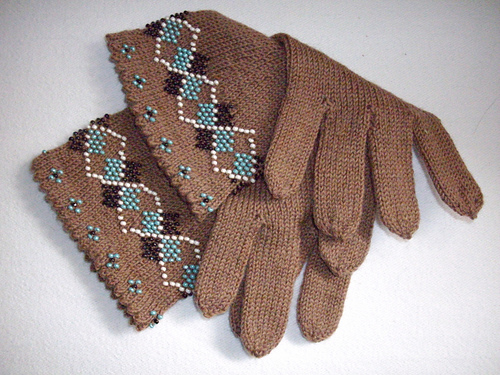
I love working with beads in my knitting. I try to add them to lace knitting at every opportunity. These are a few of my favourite pieces. They each have a story.
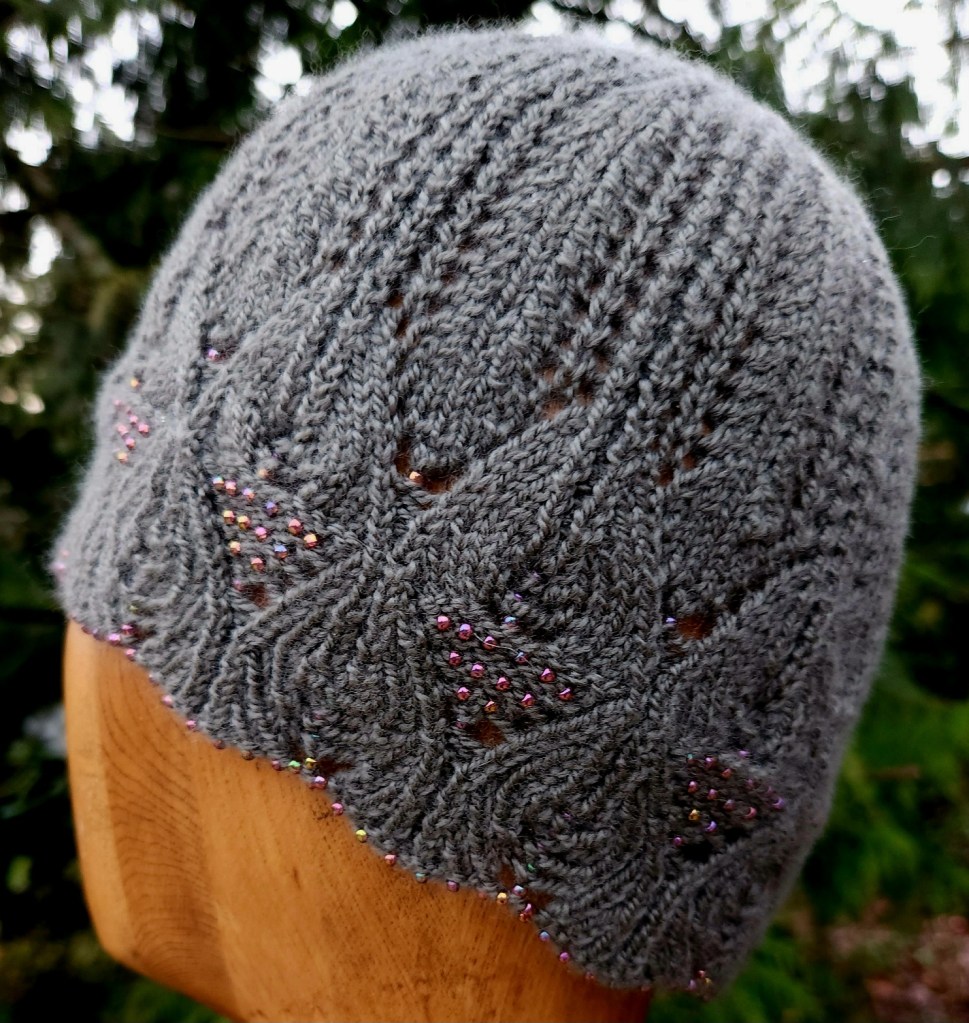
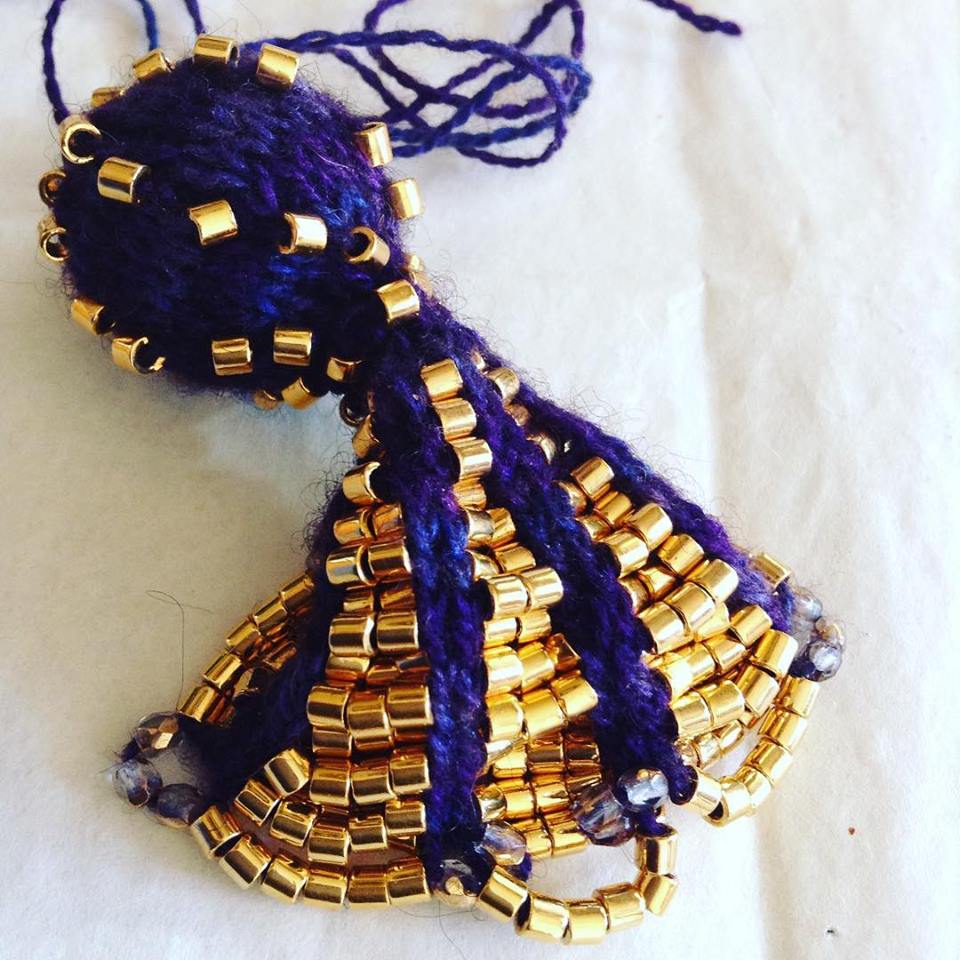
Some, like the beaded lace hat, Galadriel’s Gift, I have knit multiple times. The painted circular shawl is the Garden Gate Shawl, showing my favourite pictures of one of my painted pieces. The Shetland Fascinator, the little lace shawl, has the prettiest little beaded tassels.
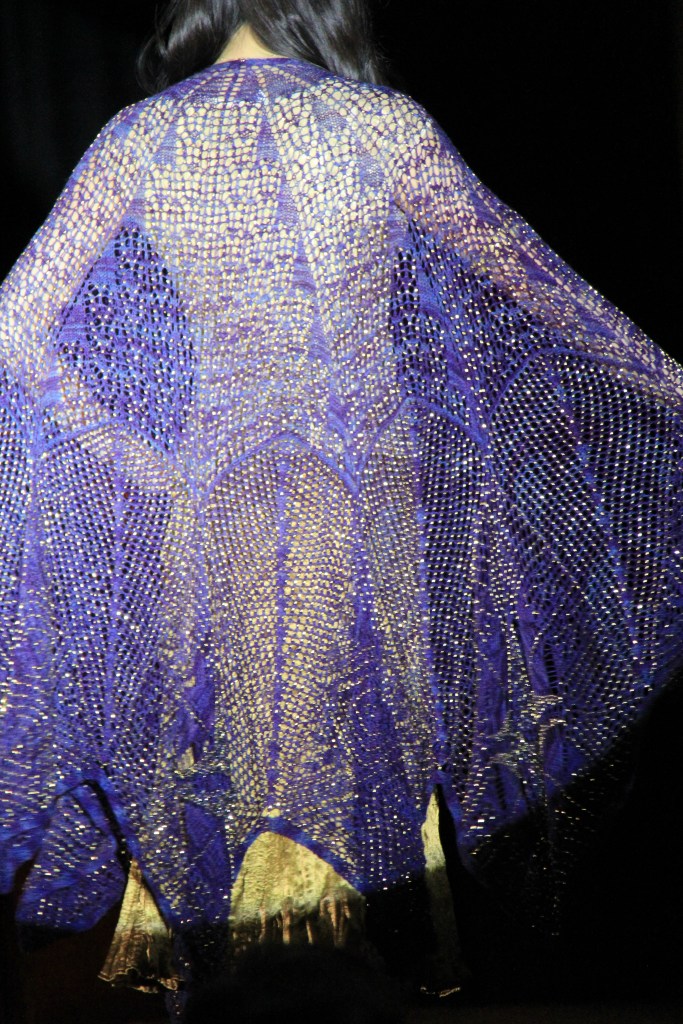
Rhiannon’s Wrap, the purple shawl, is the most beautiful thing that I ever knit, that never won a prize. A story for another day. I never wrote a pattern for this large version. But there is a pattern for a smaller version, the link is attached to the beaded tassel photo in another gallery in this post.
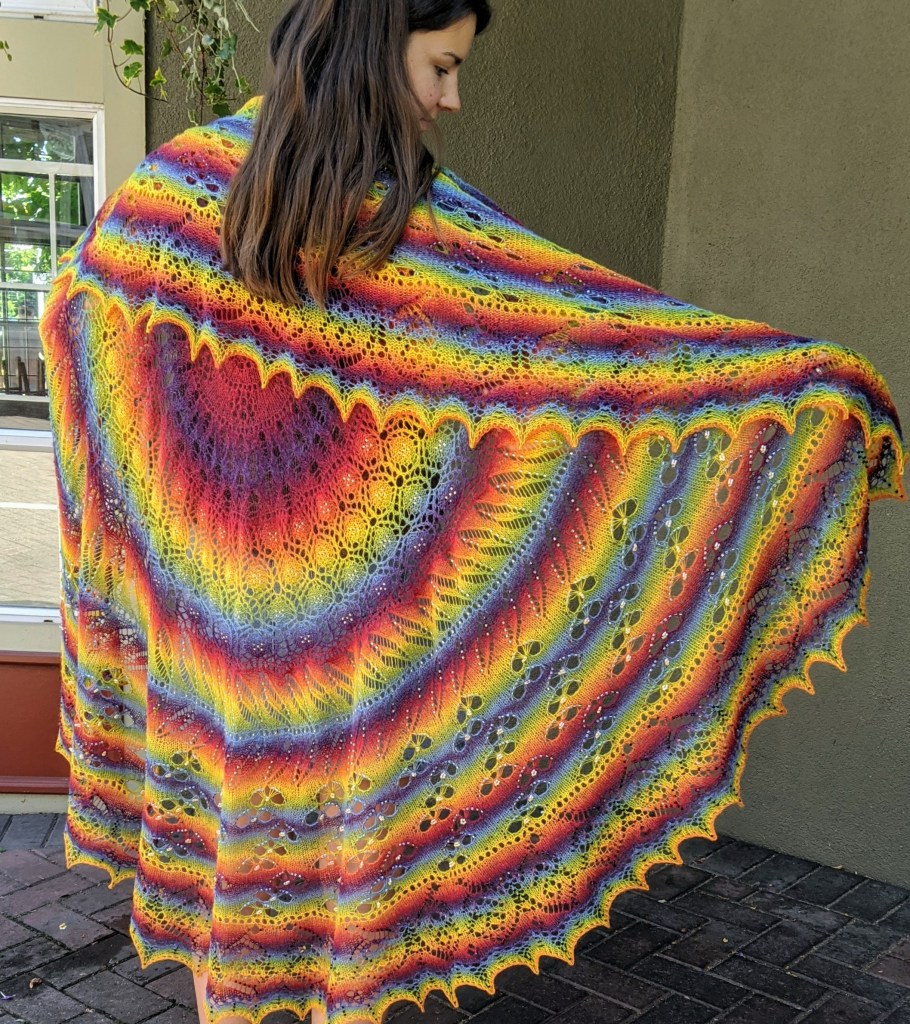
And Covid Be Damned – The Impulsive Shawl – rainbow, bees, butterfly’s and beads – there are so many ways to add beads.
If you want to know more about the pictures below click on the picture. Some of them are linked to patterns.
But when I discovered bead knitting (beads knit into every stitch) I thought that here was a pinnacle of achievement. I have been working towards that pinnacle every since. My inspiration and resolution just got a big boost.
Treasure
I was in Victoria not too long ago, spending some quality granny time looking after my Grandson. As he is in school I had some time to wander around during the day. I visited family, met up with a friend and got myself into trouble of the best kind.
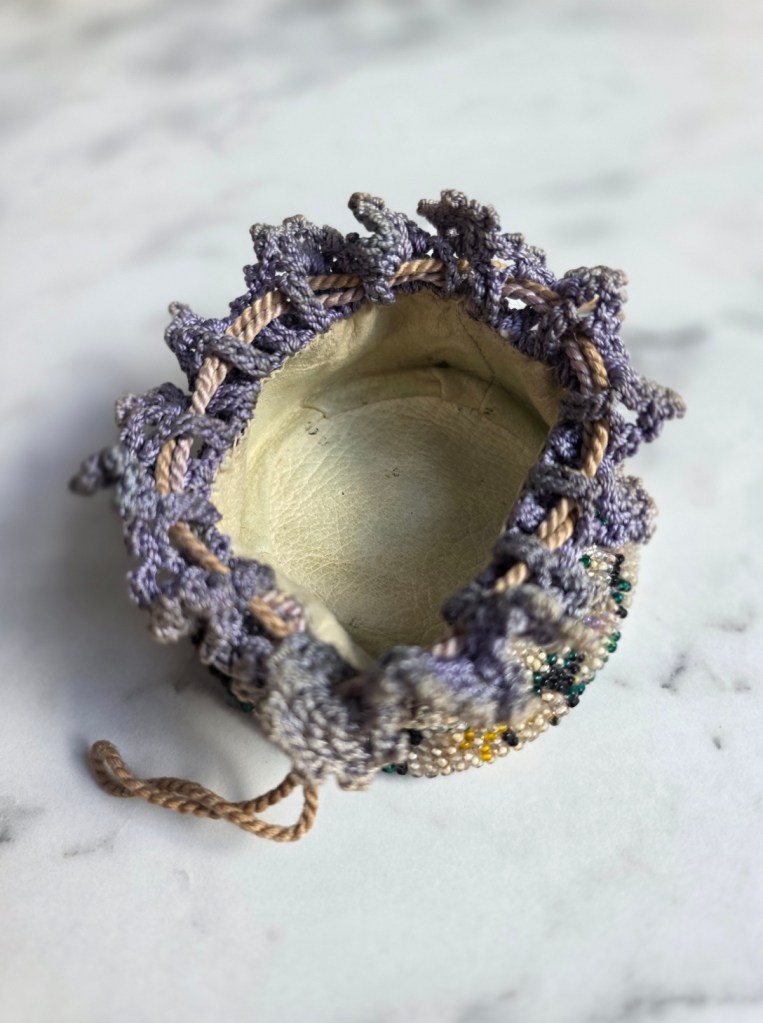
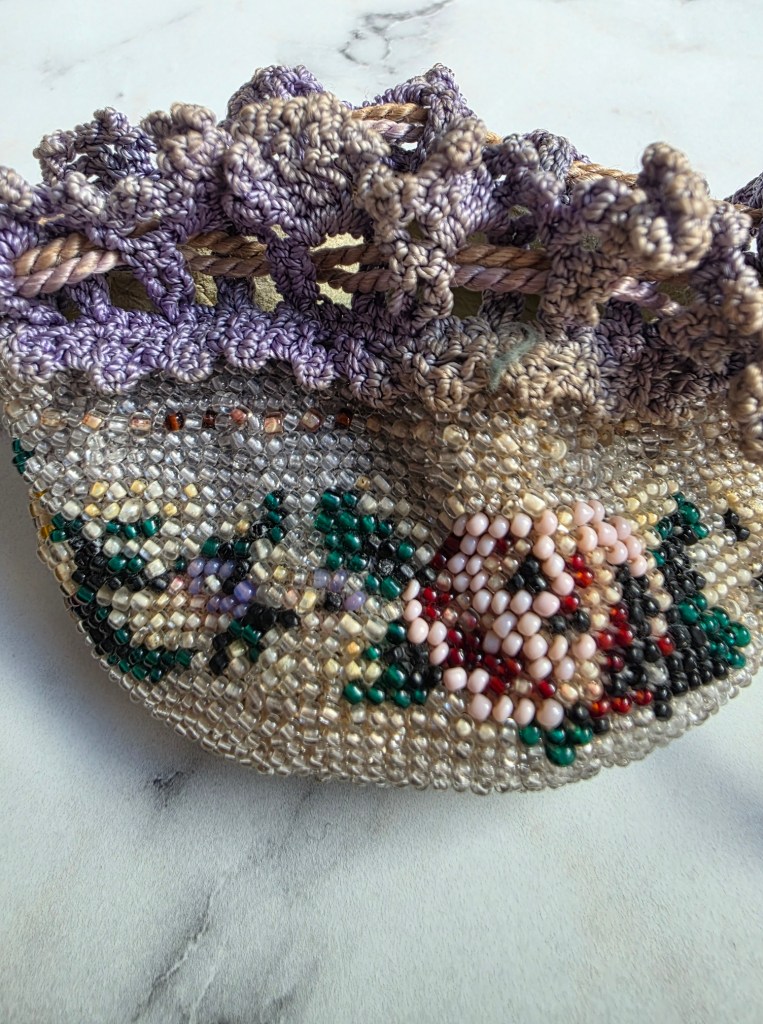
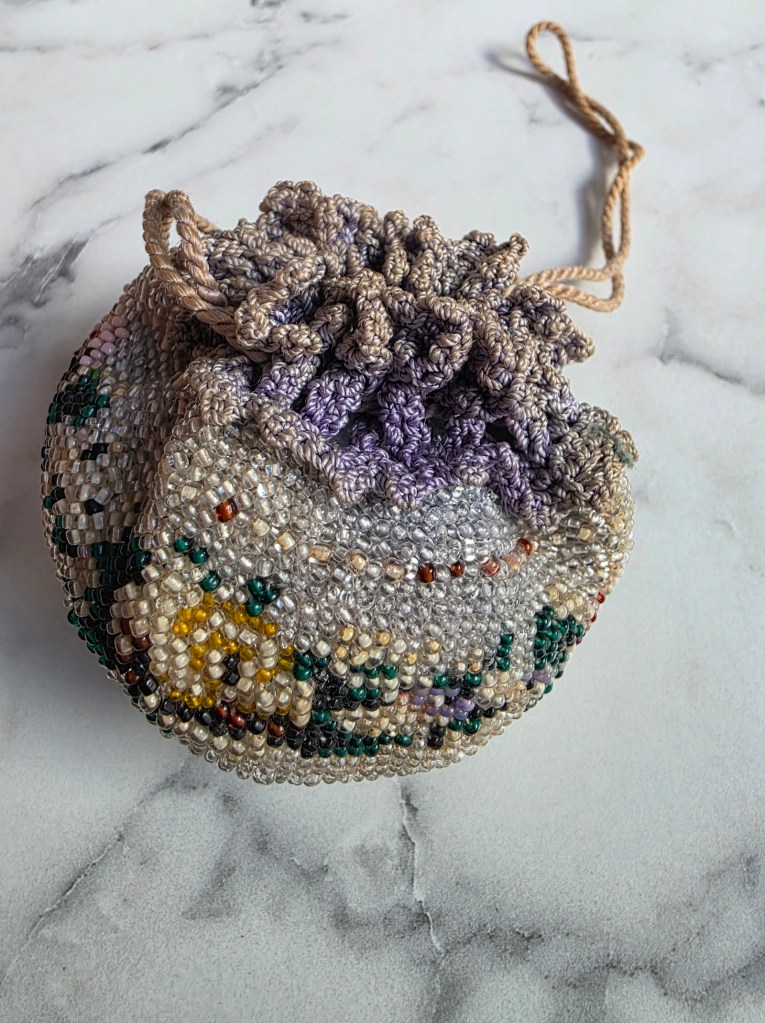
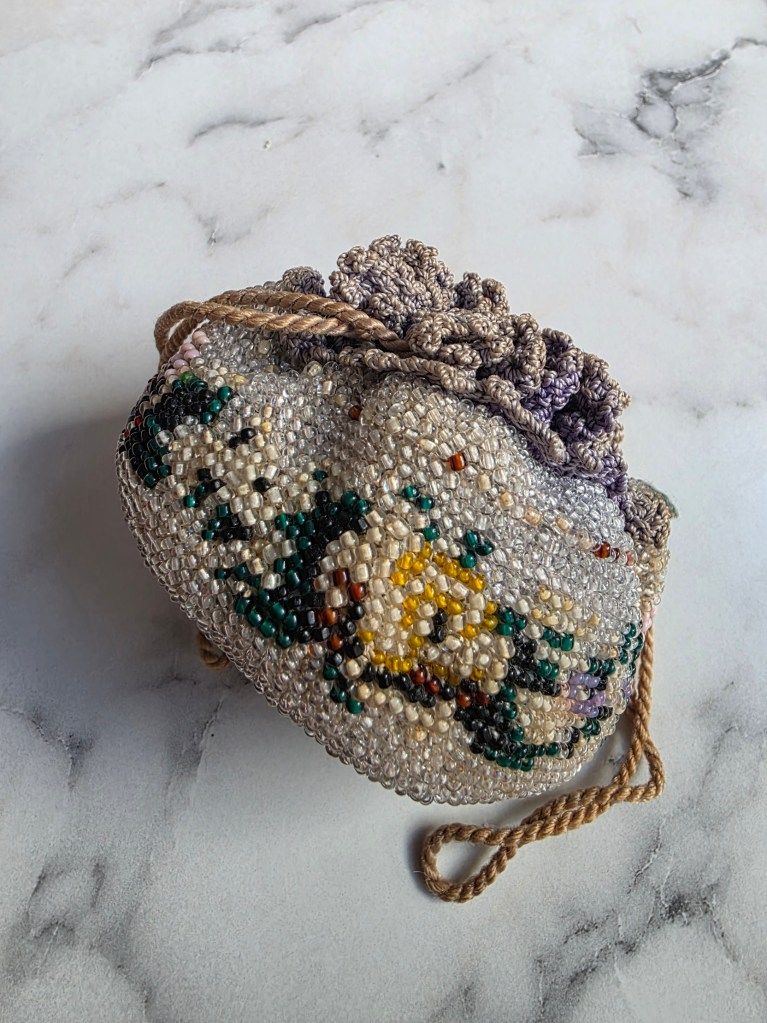
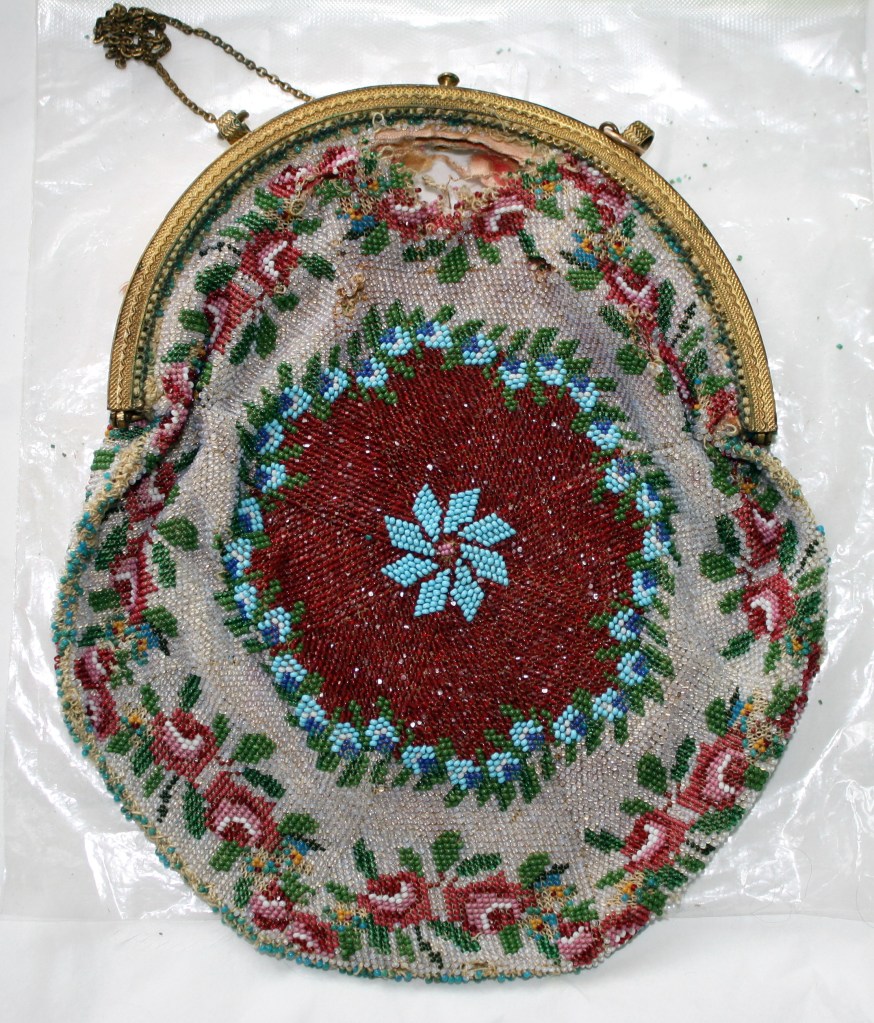
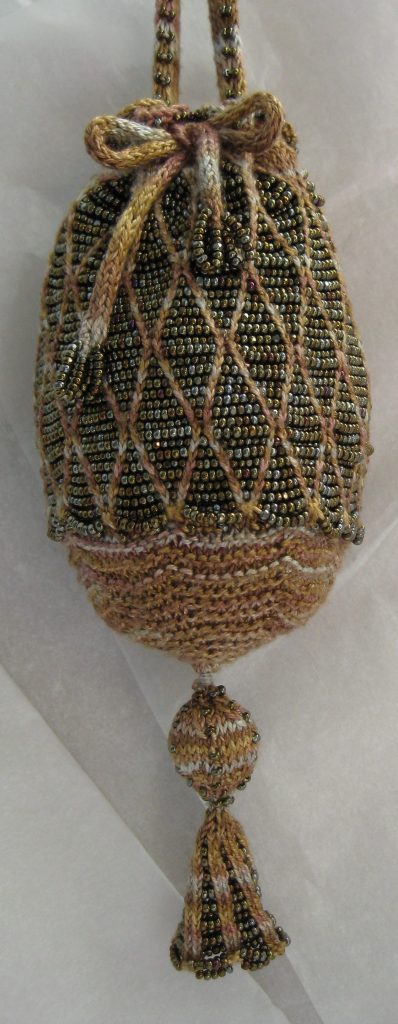
My daughter lives close to a wonderful little second hand store. I have been there a few times but this last time I found something I had never seen in real life, not outside of a museum. I have seen pictures in books or magazine articles – I found a small, exquisite, circular knit, beaded bag!
I did not buy it immediately. I went back to my daughter’s and slept on it, as it was not cheap. It was not useful and I wanted it. So I didn’t do much sleeping! I kept thinking and thinking and in the morning rushed back to the store and looked at it again. Who was I kidding – it was mine!
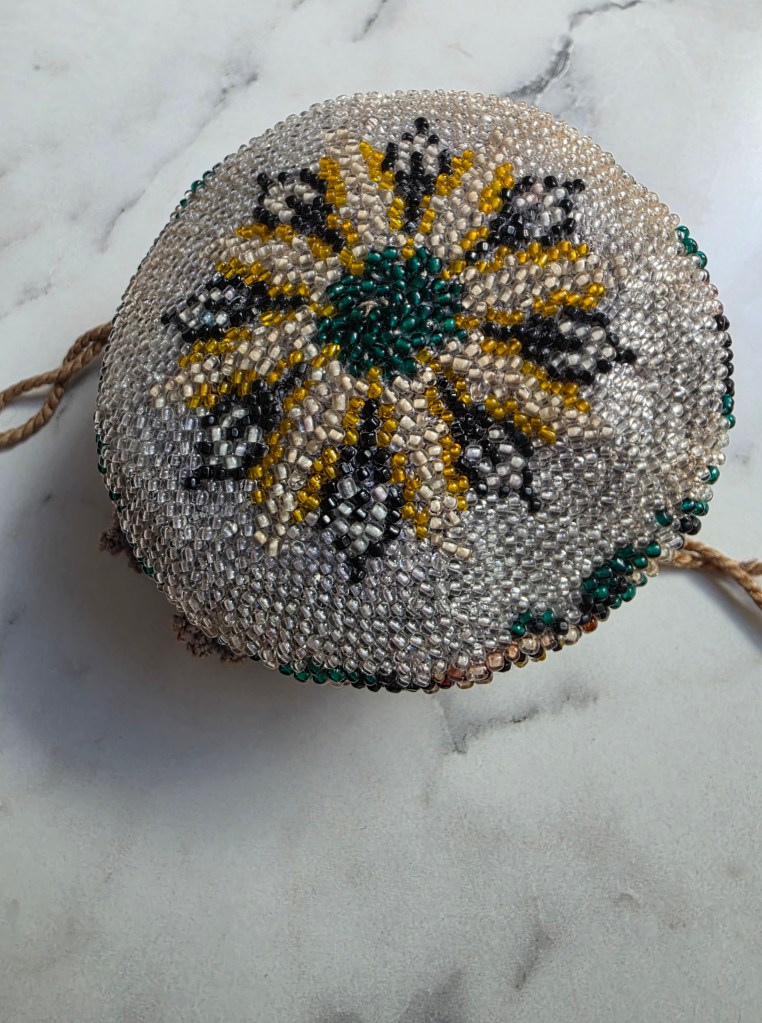
It is tiny, only 3 inches across and about 2 and 1/2 inches high, maybe three inches high if you include the closure. But it is perfect. A perfect little coin purse.
Kid Leather lined, designed to sit upright on a table, lavender cotton lace top and a beautiful, twisted silk cord… And the BEAD work!
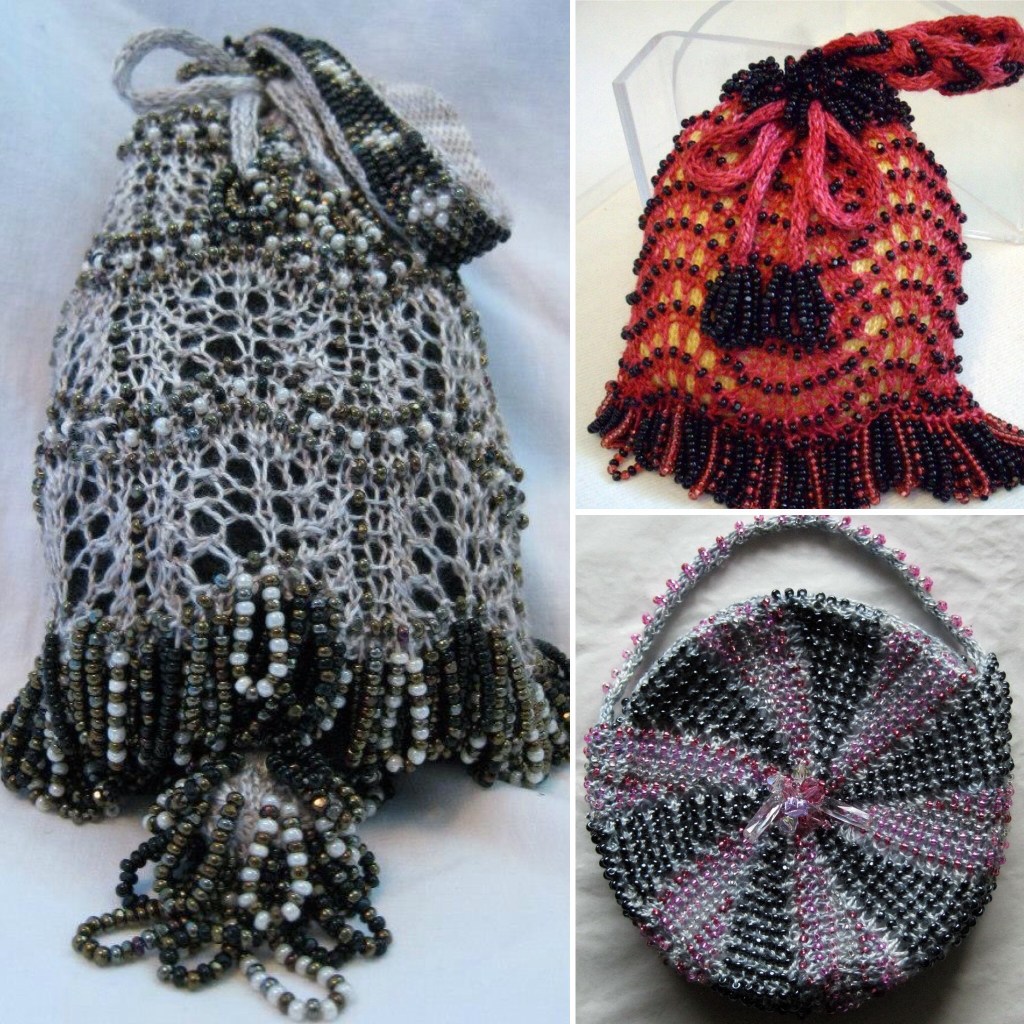
Micro Bead Knit bag with Pink and Yellow and roses, deep green leaves and the bottom is a beautiful spiraling bottom, in a leaf and bud pattern. There is just 1 loose bead, you can see it resting in the center of the bottom of the bag. For its age it is in great shape!
This bag is roughly dated to the 1920’s and 30’s and unlike most beaded bags, which were designed only to hang this bag was designed to sit on the table and hold a few essentials, a bit of “mad” money, a compact perhaps, just the necessities necessary for a evening on the town.
These bags were mostly knit in Europe at this time. I can see a woman in a garret apartment in Paris madly knitting away and creating a bag for her month’s wages. I have knit with beads, a lot. But knitting circularly with such fine thread and micro beads… it boggles the mind.
My other beaded treasure was a gift from a customer, someone who wanted the bag saved and appreciated. I call it the Napier-Hemy bag to reflect the name of the original owners. This bag came to me in pretty rough shape. It is losing beads and had started to fall apart. But it is still beautiful. The work that went into such creations. The beads are smaller in this bag than in my new treasure. That allows for greater detail in the design. The colours are stronger too – less light exposure perhaps.
You might have noticed that I have been creating a few things with a tiny circular cast-on. lately I am playing with a crazy idea – I think I want to try knitting a small bag like this one.
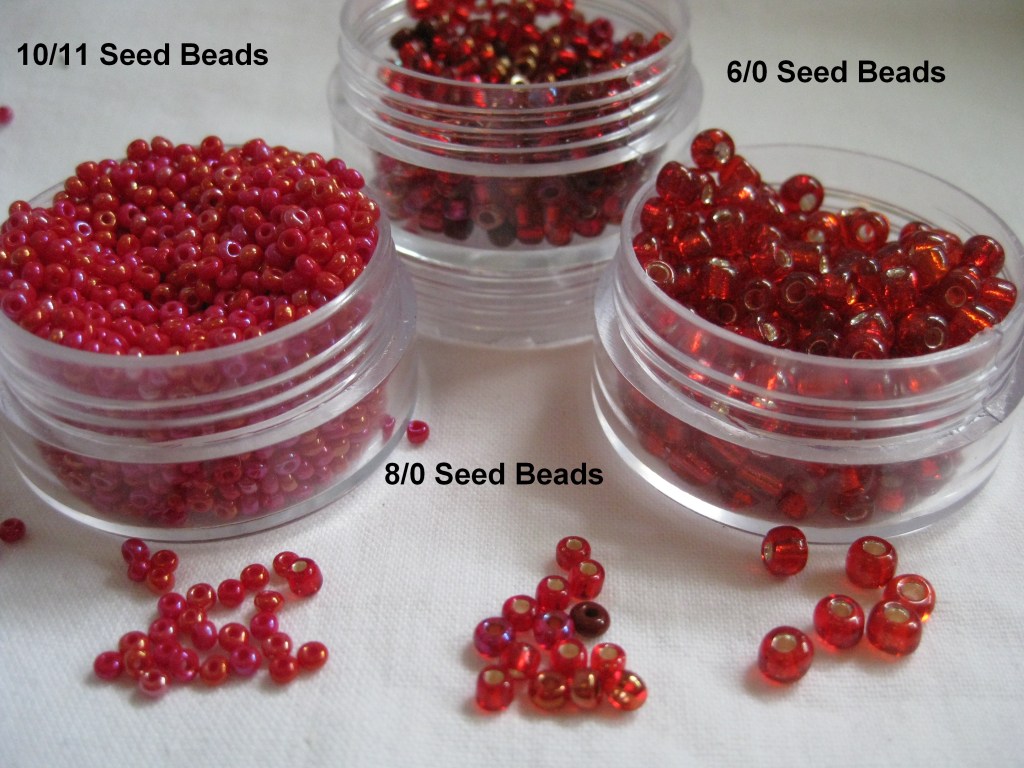
I won’t knit my bag with such tiny beads, I am thinking of size 8/0’s and then of course what kind of pattern do I want to tackle with my beads? It can’t be too complex – I am not totally insane.
So Many Styles of Working with Beads
I am not without some experience in working with beads. I have tried a great many different beading techniques over the years. I have knit quite a few other beaded bags. Or shawls and tassels with beaded details. Beaded bracelets as well. I could incorporate aspects of these into a circular bead knit bag.
Beaded Mesh – Knitting with Beads
The yarn is BC Garn Tussah Tweed Silk
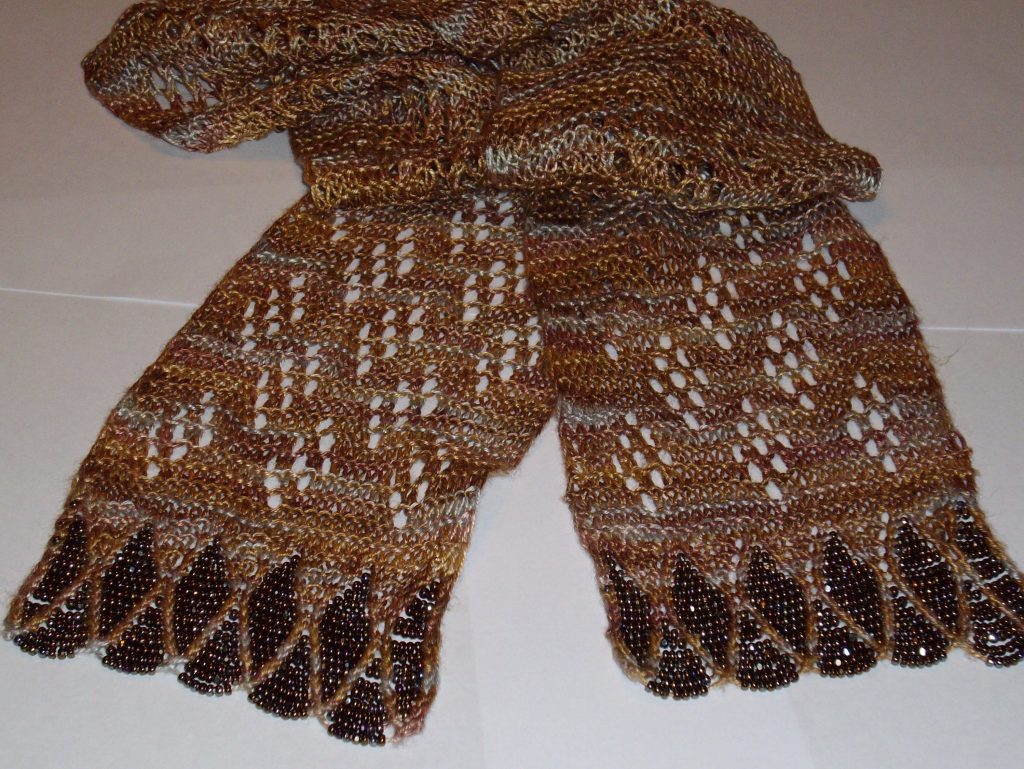
This is the Victorian Beaded Mesh Bag. It is a lot of beads and not quite so much knitting. But is was the start of my fascination with beads and beaded bags in particular.
I also designed a scarf, Victorian Beaded Mesh Scarf to co-ordinate with the bag. It is a little short scarf with beads at both ends. I have just started knitting myself a new version.
Being a small piece, knit in two pieces and grafted – it knits up relatively quickly and gives a great finish! It is also fun to wear!
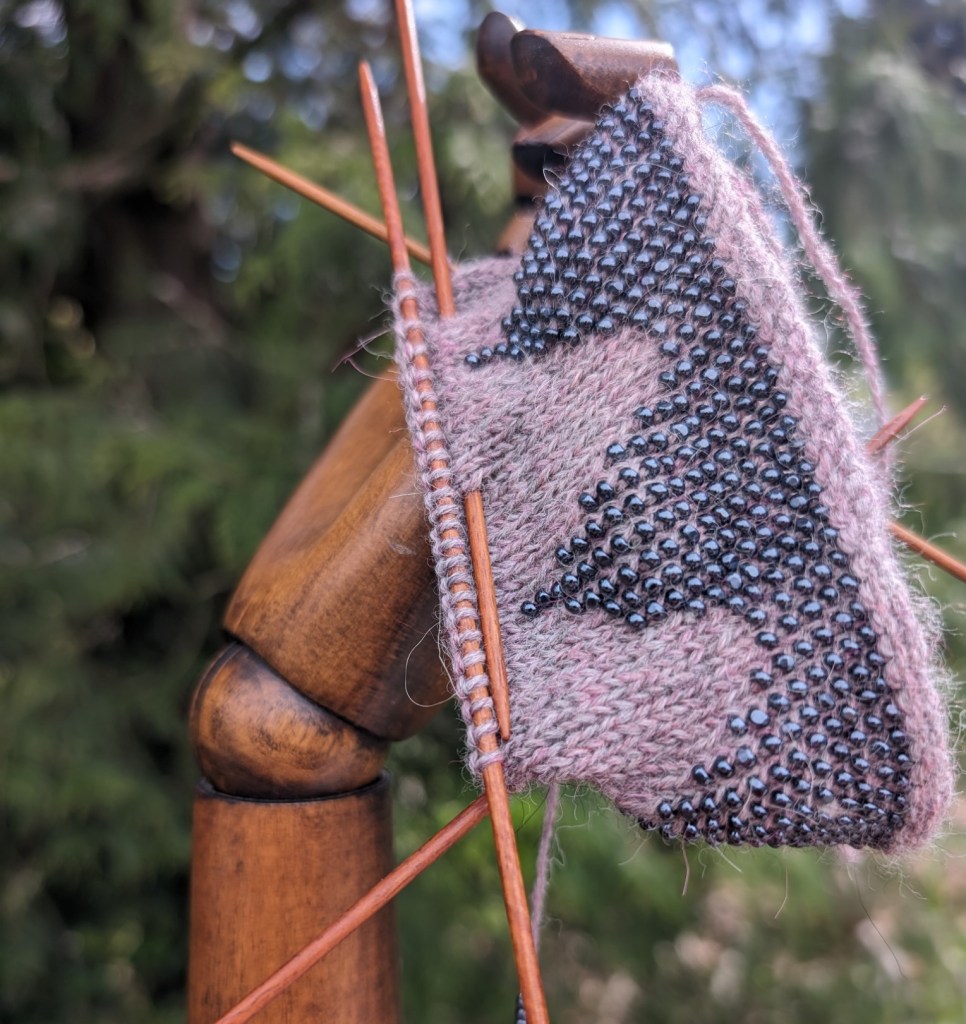
I am making myself a new version just long enough to tie around my neck. You can see it’s progress in the pictures above.
You can use beads in so many ways in your knits! Below are just a few. Some of these are just pretty pictures of my work (well, I think they are pretty). If you want to know more about the pictures below click on the picture. Some of them are linked to patterns.
Just in case you want to be crazy too! Here is some information on different styles of working with beads in your knitting.
Beading Techniques:
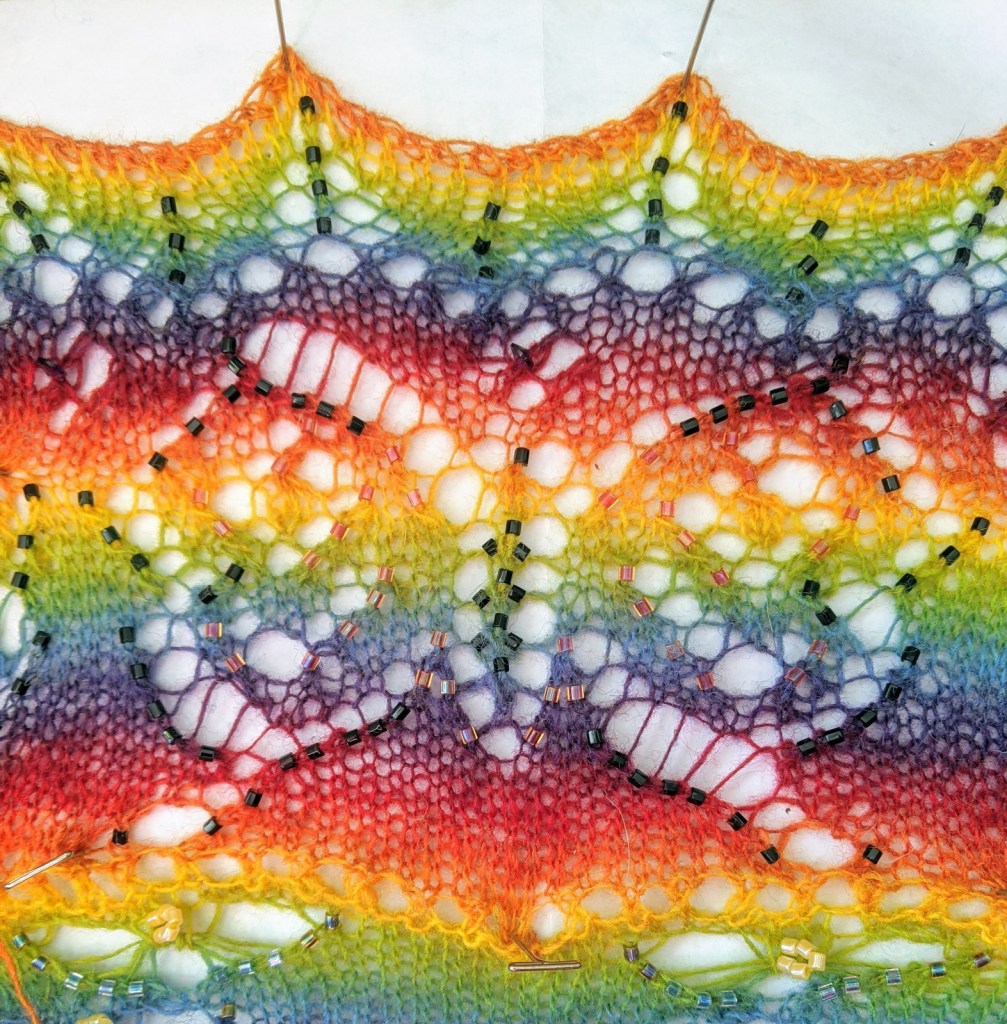
Placed while Knitting – knitting with beads – beads are placed in pattern, but not creating a solid beaded surface
This technique is the most commonly used technique in modern knitting. A bead is carefully placed on a stitch as your knit. It can be placed before or after the stitch has been worked. When you place the bead determines which row it sits on.
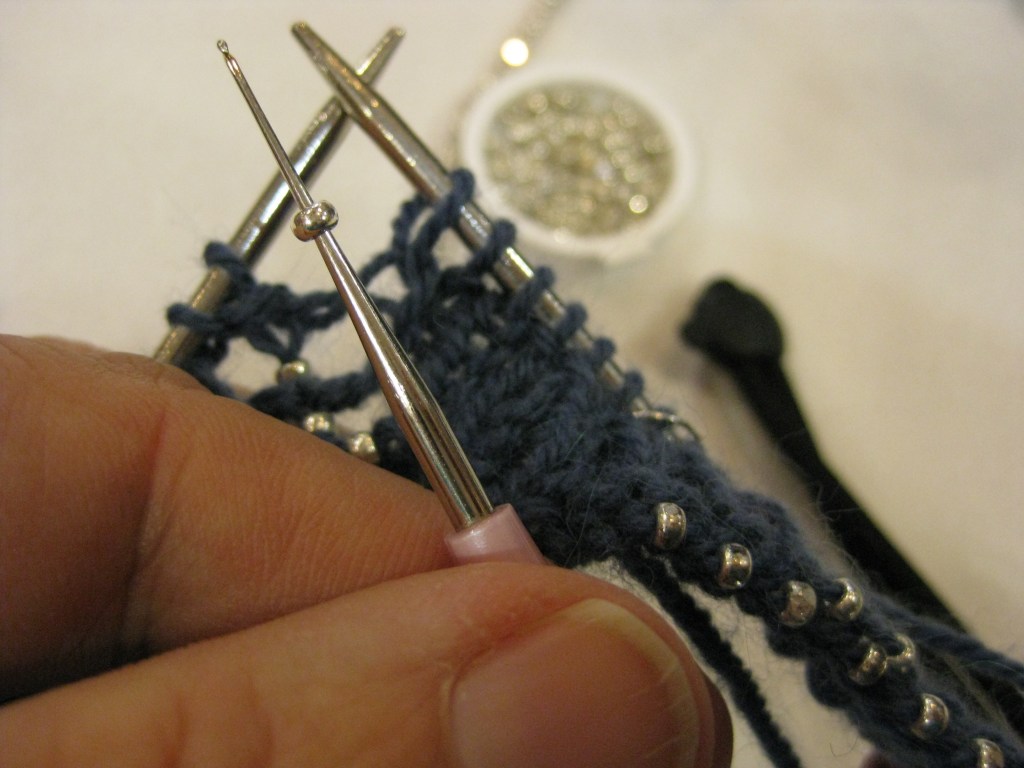
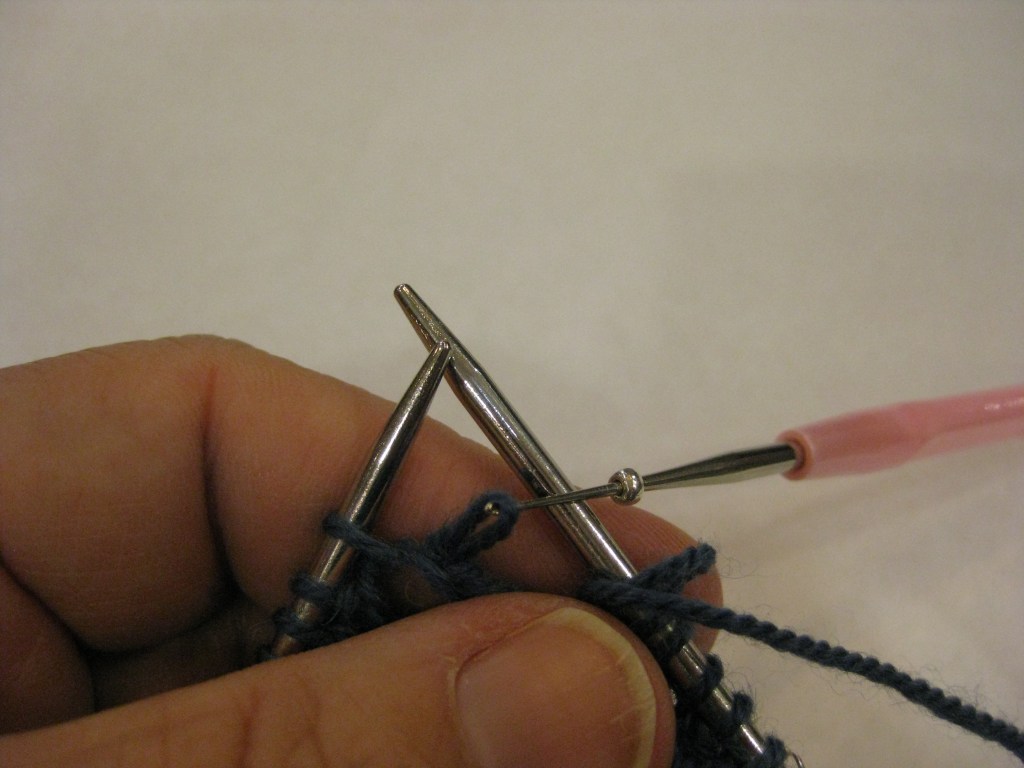
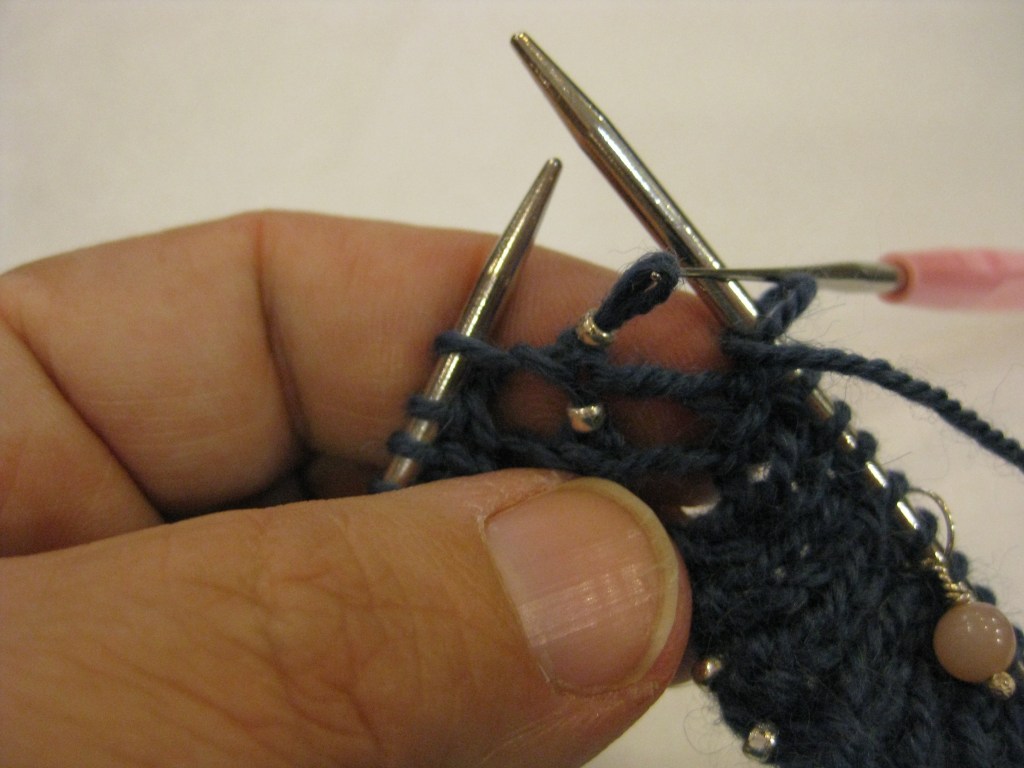
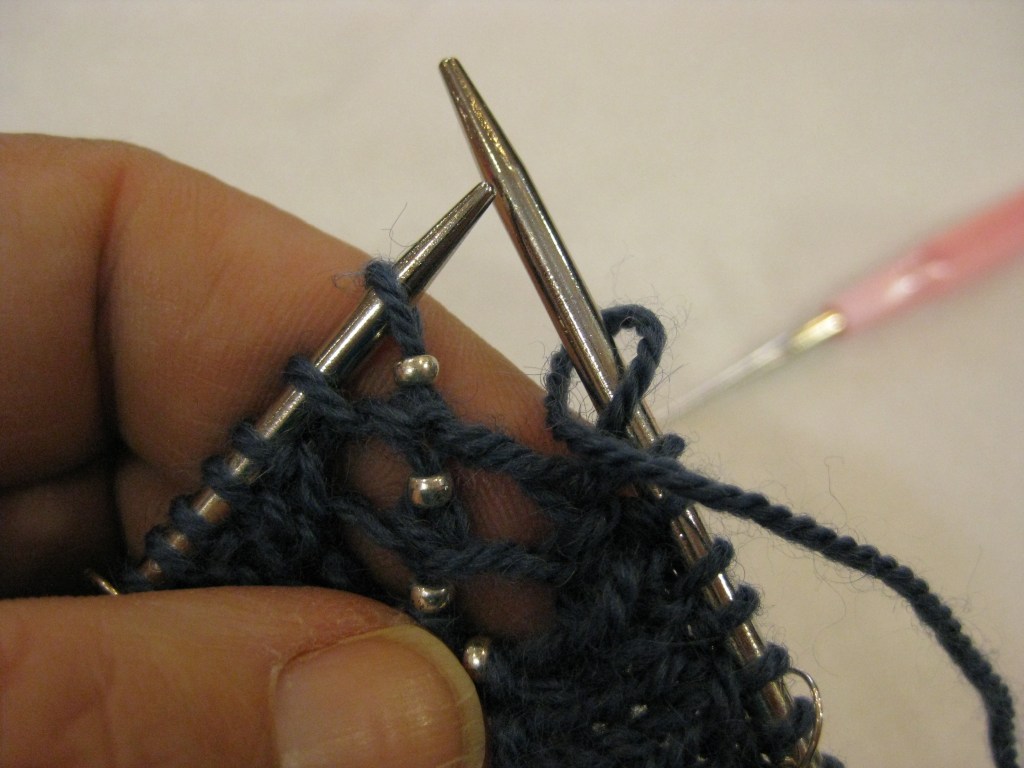
The bead is placed with a small crochet hook or beading tool. The size of the hook is determined by the weight of the yarn and the size of the hole in the bead. I have a small collection of hooks from a .60mm to a 1.25mm. I always try to use the biggest hook possible, but some beads, especially the ones with the beautiful finishes have smaller holes.
.60mm hook with 8/0 bead – hook is ready to pick-up the stitchpicking up the stitchbead has been slipped onto the ststitch is ready to be worked
This technique allows you to place beads exactly where you want them as you knit. It requires a very small crochet hook – 0.6mm – 0.75mm most commonly (bead holes can vary, sometimes a bigger hook will work). Pick up a bead with the tip of your crochet hook, use the crochet hook to remove the next stitch from the left hand needle and then slide the bead down the hook and onto the stitch, return the stitch to the left hand needle and then work the stitch.
Beading Techniques: Pre-Strung Beads
Three beading techniques requiring pre-strung beads that I use; beaded long-tail cast-on, beads between purl stitches and knitted in beads. These are all pre-strung beads, easiest in one colour, more complicated with several colours.
Notes on Pre-stringing beads: All three of these techniques require that the beads be strung onto your yarn before you start knitting. The first time that you try knitting a pattern with beads I recommend that you work a pattern with knitted in beads, keep the pattern simple. A small repeat something that mistakes won’t show as much or will be easily fixed. That way as long as you have enough beads there won’t be any problem with beads not being strung in the right order. This is the simplest way of learning.
After the first time you will be able to decide if you want to knit in a coloured pattern. When working a coloured pattern the beads must be strung in the correct order. In order to do this you string the beads in the reverse order that they are being knit. The first bead knit is the last bead strung. Flip your chart upside down and use the reverse chart for the bead stringing order.
Pre-stringing Fixes: If the beads are out of order you will need to cut your yarn and fix the problem. An extra bead can be crushed with pliers. Work very carefully if crushing a bead the sharp edges can cut the yarn.
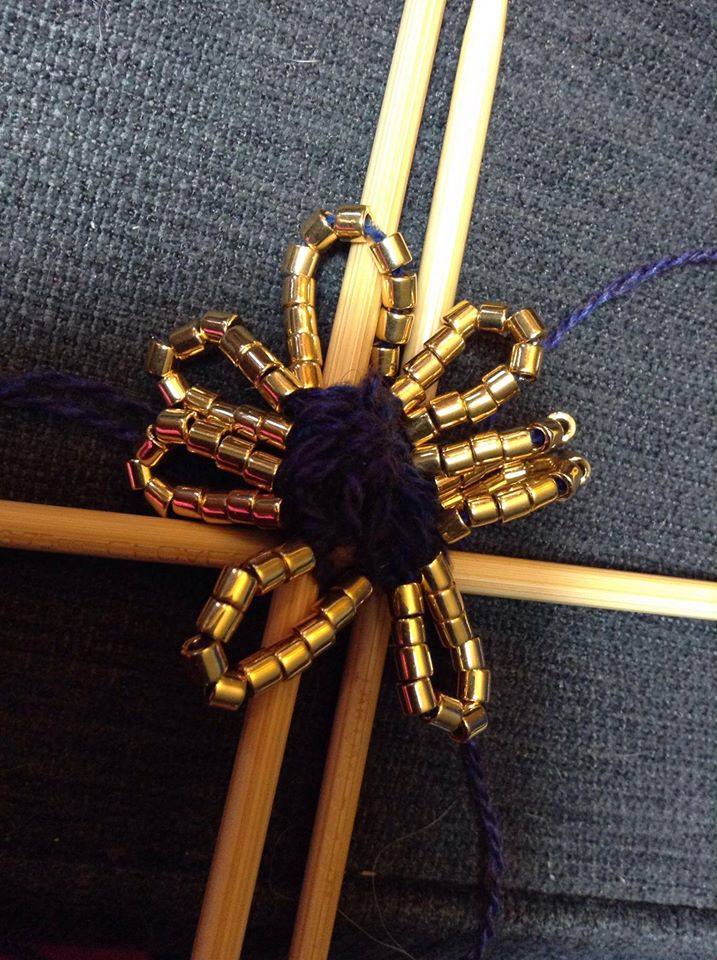
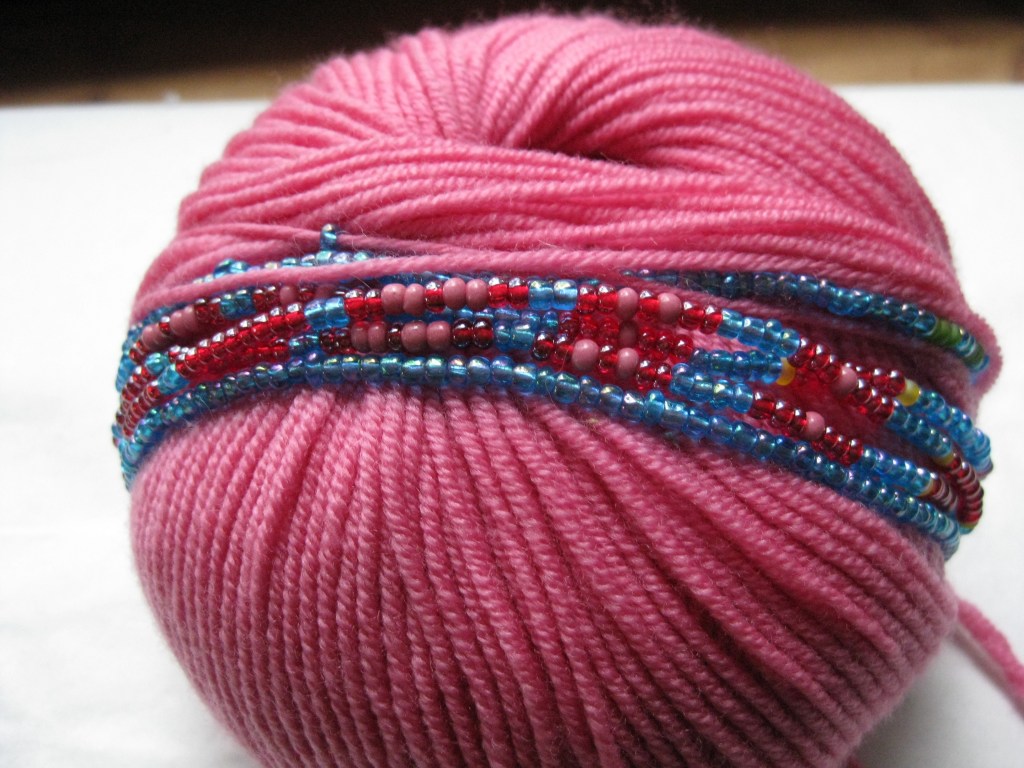
Beaded long-tail cast-on – beads are pre-strung and I usually bead every stitch or every other stitch, but for special beads, a different shape or size, the beads might be added less frequently. These beads are on the the tail (the length of yarn over your thumb). Start with your slip knot and immediately pull up 1 bead to rest close to the slip knot. *Cast on 1 (2 ) or desired number of stitches and then pull-up another bead.* Repeat from * to * until you have run out of beads and then finish your cast-on – this should give you the right number of stitches for your cast-on, if you had the right number of beads. Always check your count.
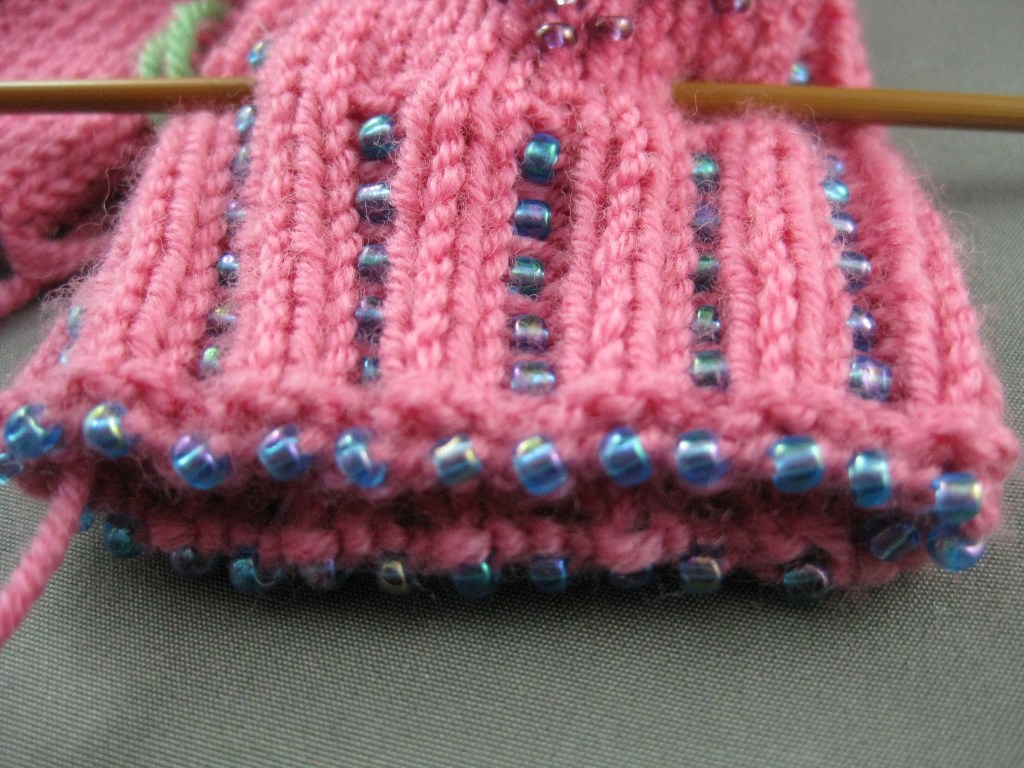
Beads between purl stitches – This is the easiest of the pre-strung beading techniques. The beads are pulled up and placed between your purl stitches The purl stitches hold them in place. This technique does not work well between knit stitches as they will fall to the purl side.
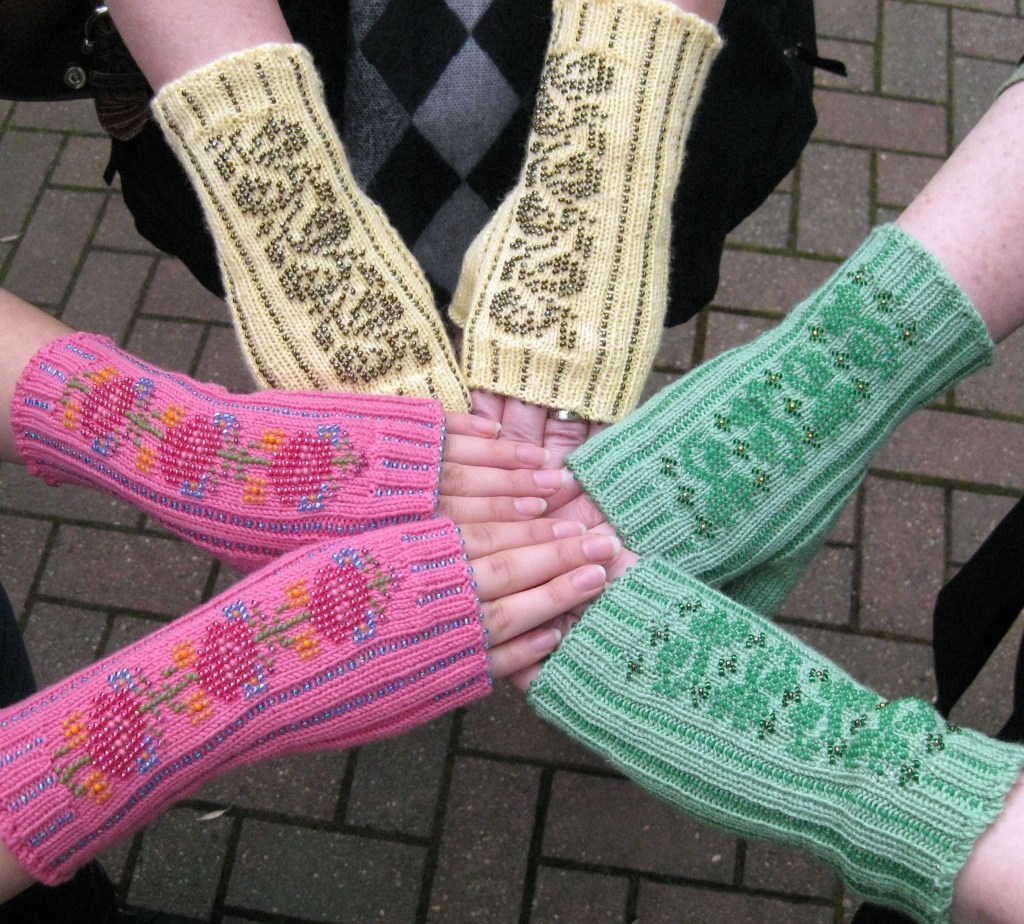
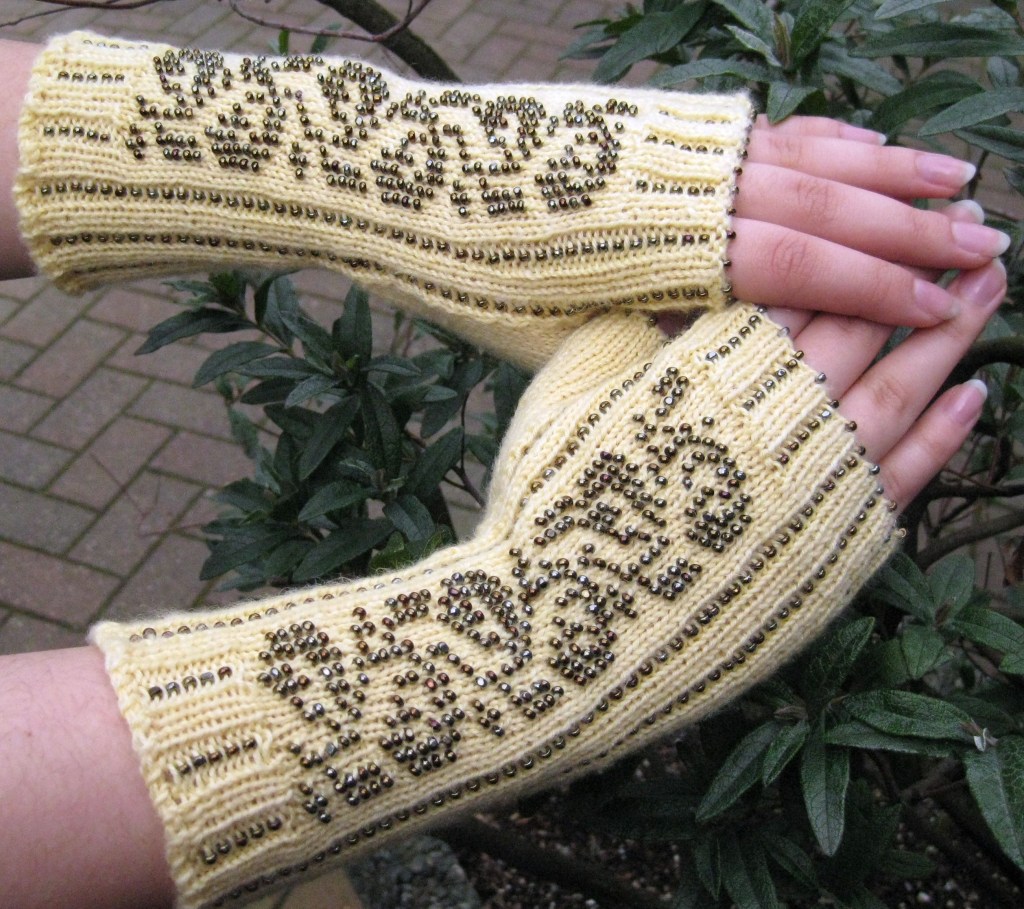
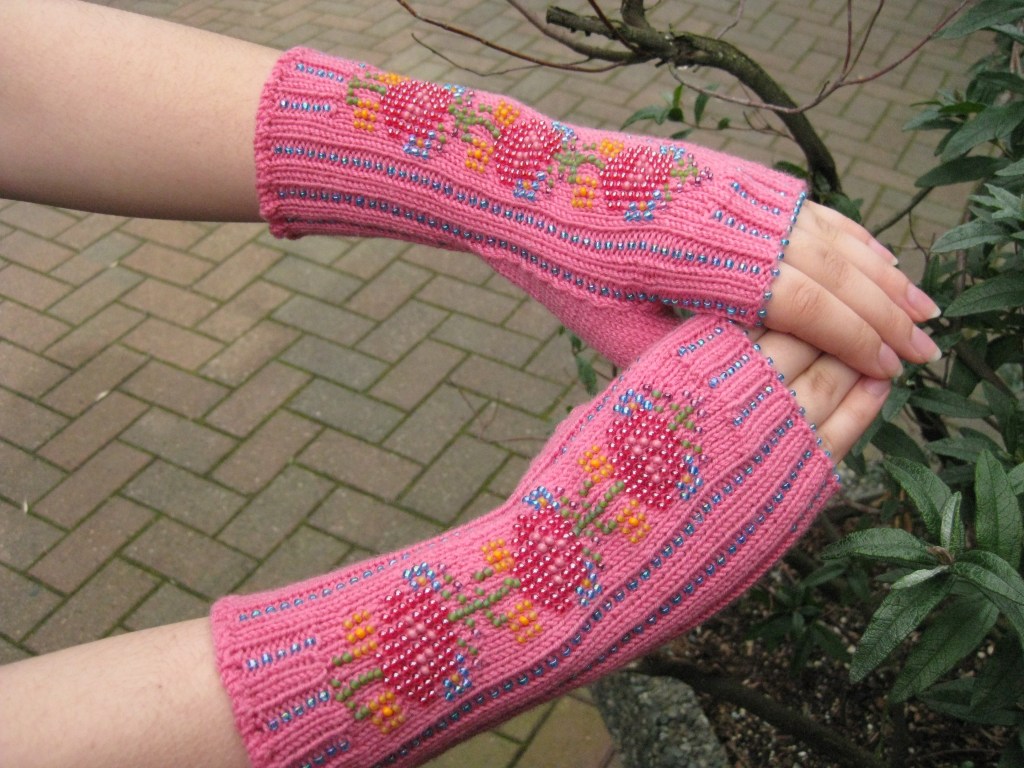
Fretwork mitten cuff – beads on the cast-on and beads between stitches in the ribbing.
Bead Knitting – creates a solid beaded surface
Method and rules: Knitted in Beads –
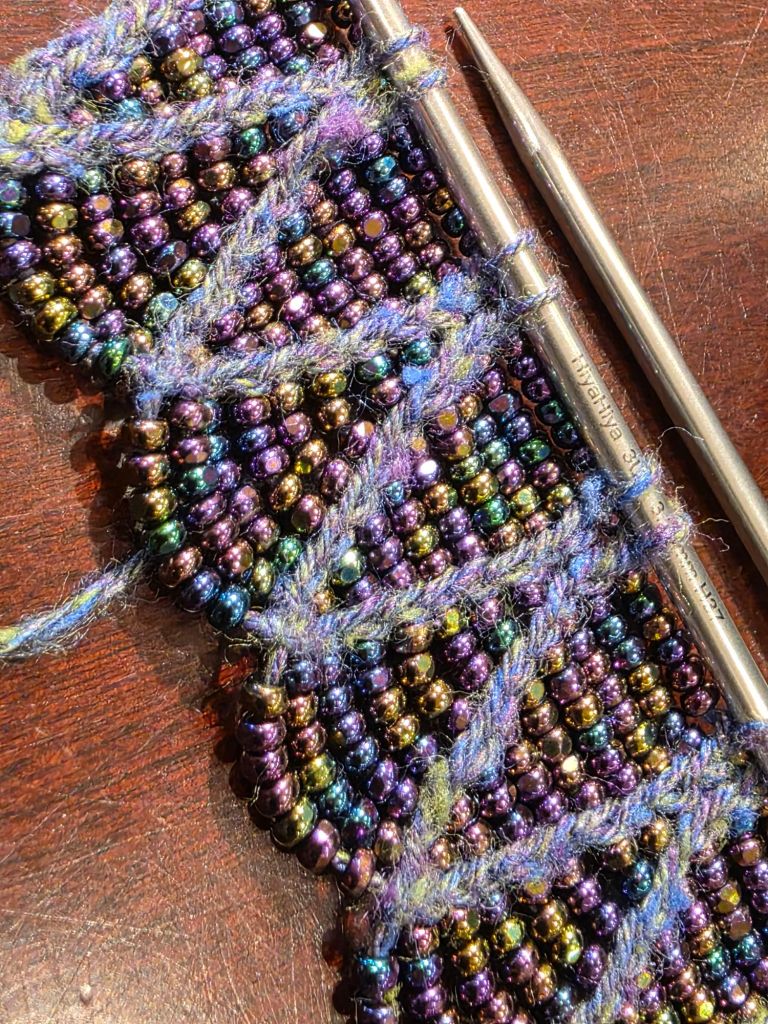
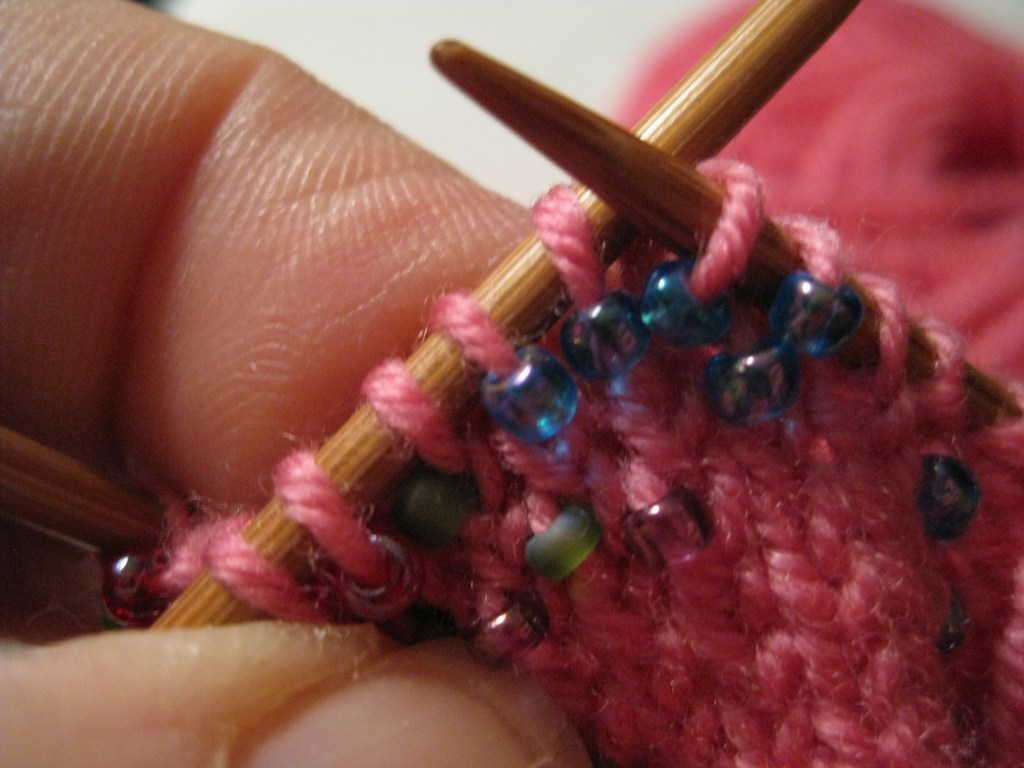
1) When knitting in your bead you will always knit into the back of the stitch on which you wish to place your bead. The twisting of the stitch by knitting through the back of the loop insures that the bead will be locked into place.
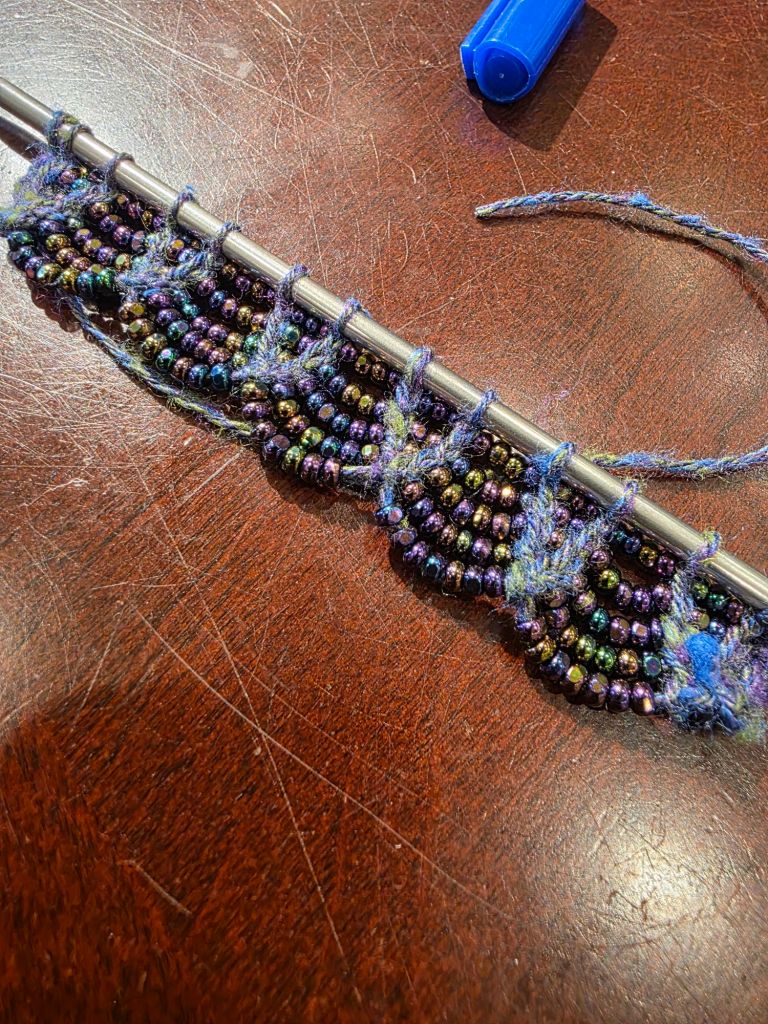
2) When the needle is in place in the back of the stitch, pull up the bead up to approx ¼ of an inch away from your knitting. As you knit the stitch, pull the bead through to rest on the front arm of your stitch.
3) The bead will be furthered anchored when the stitch on top of it is also knitted through the back of the loop. This is done when knitting the next row of beads in place. If beading the next row you will automatically twist the stitch with your current bead. If no bead is being knit into place simply knit into the back of the stitch above the bead to finish the anchoring process.
The beads have been knit in and are sitting on twisted stitches. You can see the twist below the beads. The bead have just been pulled through the stitch and the stitch is about to be removed from the LH needle.
If you are looking for more information on Knitting with Beads or Bead Knitting the Mary Thomas Knitting Book is still one of the best. It was originally published in 1936 and most of the modern writing on the topic references back to this book.
A New Project in the Planning Stage
I have collected so many colours of beads over my years of knitting. More than enough to create a completely bead knit bag. I would work it in Handmaiden Lace Silk. I have a good quantity of that to hand. It would certainly be easier to work with than a linen thread – if I could find some of this thread strong and long enough. The yarn for bead work like this has to be strong and long with no knots if I plan on stringing thousands of beads. And I am. Am I crazy?
So am I crazy? Or what? Are you crazy too?
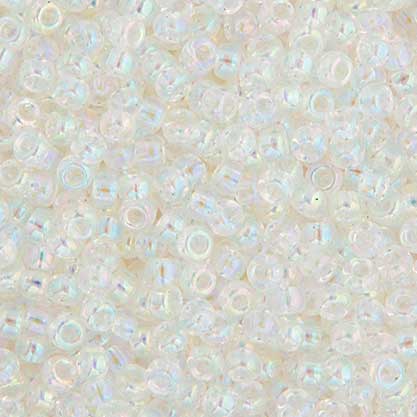
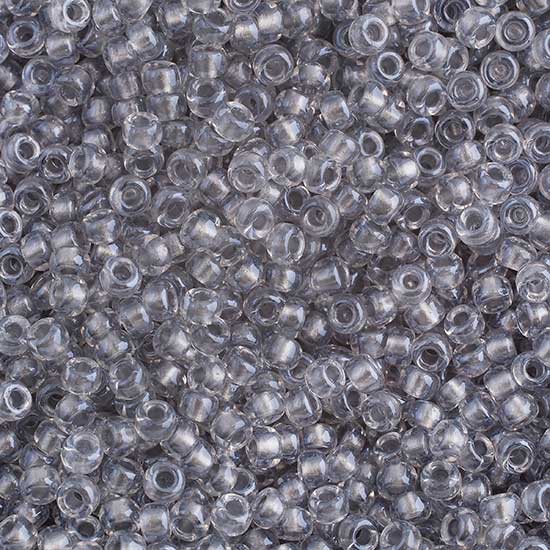
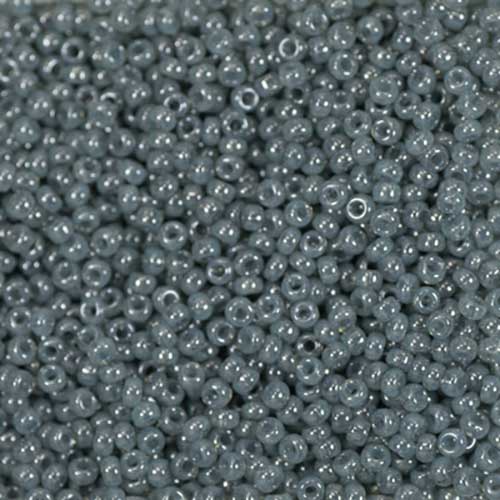
If you are interested in more – I have just been looking at beads for the background. I usually order from Bead F/X in Toronto when I need a larger quantity of beads. They offer design size pkg of beads – approx 9000 beads per 250 grs of 8/0’s. These are the three possible colours that I am considering. Maybe you might want to check our some options for beading your knits.
Crystal AbSparkle PewterLight Steel Blue
I will probably only order two colours, but first I have to decide on my pattern colours and then pick the background! This may require some swatching. I dusted off my swatch instructions for bead knitting. If you are interested in giving it a try, this swatch is a fairly inoffensive way to begin.
It has been an epic month. The reno is complete, the storage locker is empty and the house is currently a work in progress with stacks of boxes in each room. We are at the stage where every box is an adventure. What does it contain? Do we really need it? etc. More on this later.
I have knit the square and the fancy for this month and I love them both. I hope that you will too.
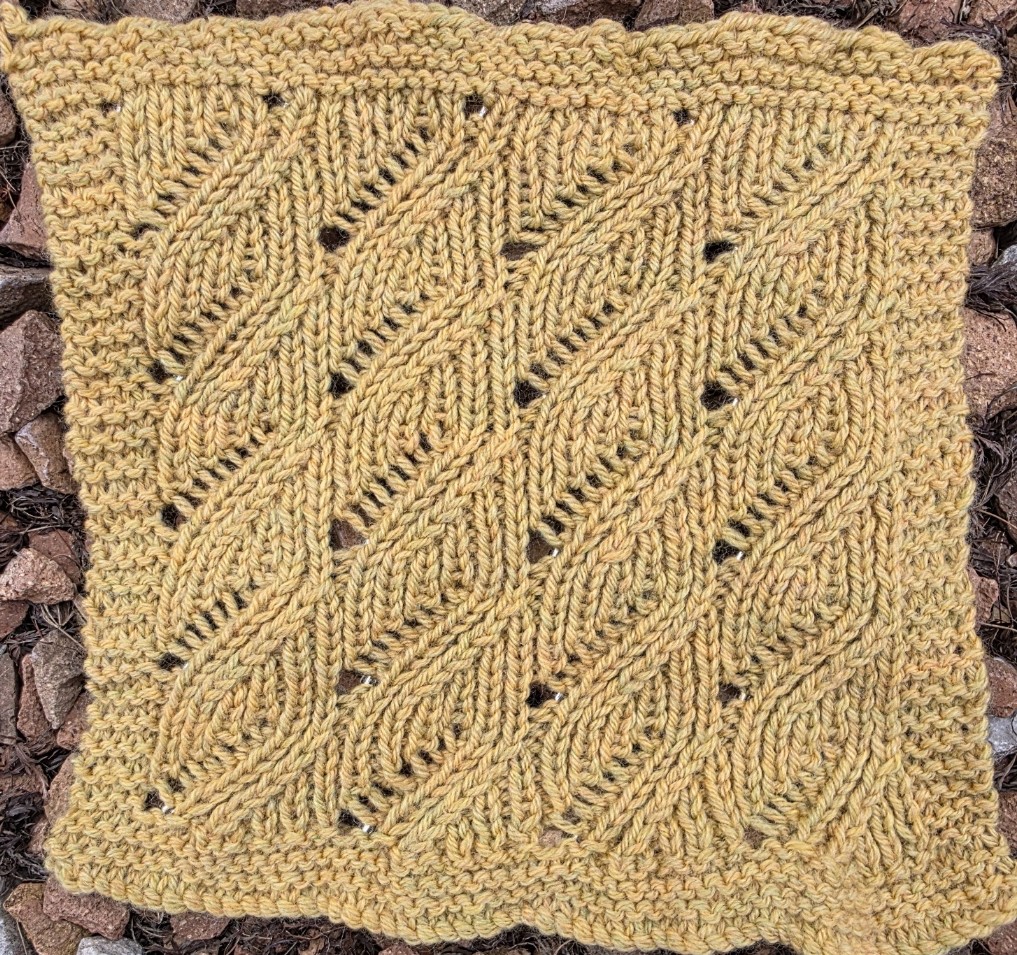
The Square
Is is lace, need I say more? Take note of the code on the last page of the pattern. It will give you the Rain Shadow Shawl pattern at half price once it is released, most likely Wednesday or Saturday. It will be good for the remainder of this month (June 2026).
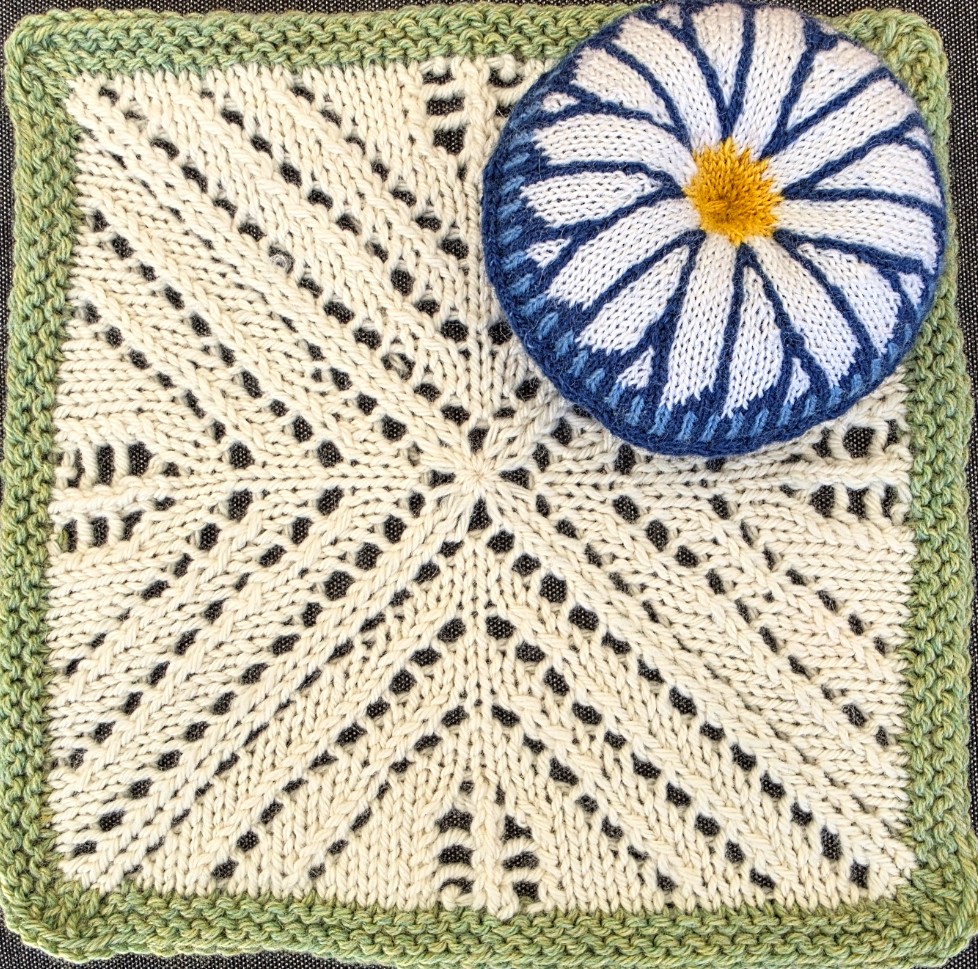
I went down a rabbit hole with this one. Did you know how many styles of pincushion are out there? I was vaguely aware. But now – I am in the know. Pincushions go back centuries and across cultures and stitchery techniques. I didn’t go too wild. I kept the shape fairly traditional, just added a little colourwork. I hope that you will enjoy the knitting. And may be check out some pincushion sites. LOL!
We are up to 8 squares now with the six monthly additions and the two bonus squares. So I am starting to think of how we might want to put them together. I mentioned a couple of the standard styles in the opening post, but I have a couple of fresh ideas. I will share them with you later in the month.
Circular Cast-on – German Pinhole
Here is a link to an earlier post on the pinhole cast-on used in the two patterns for this month.
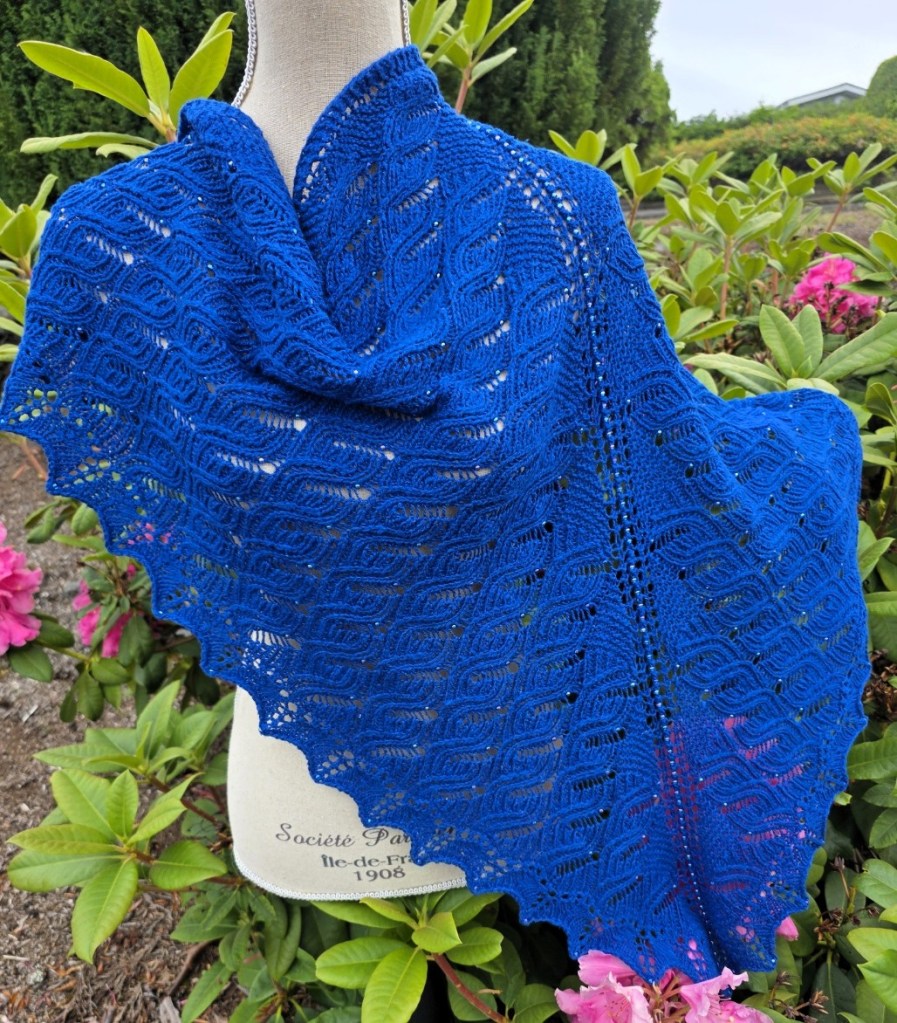
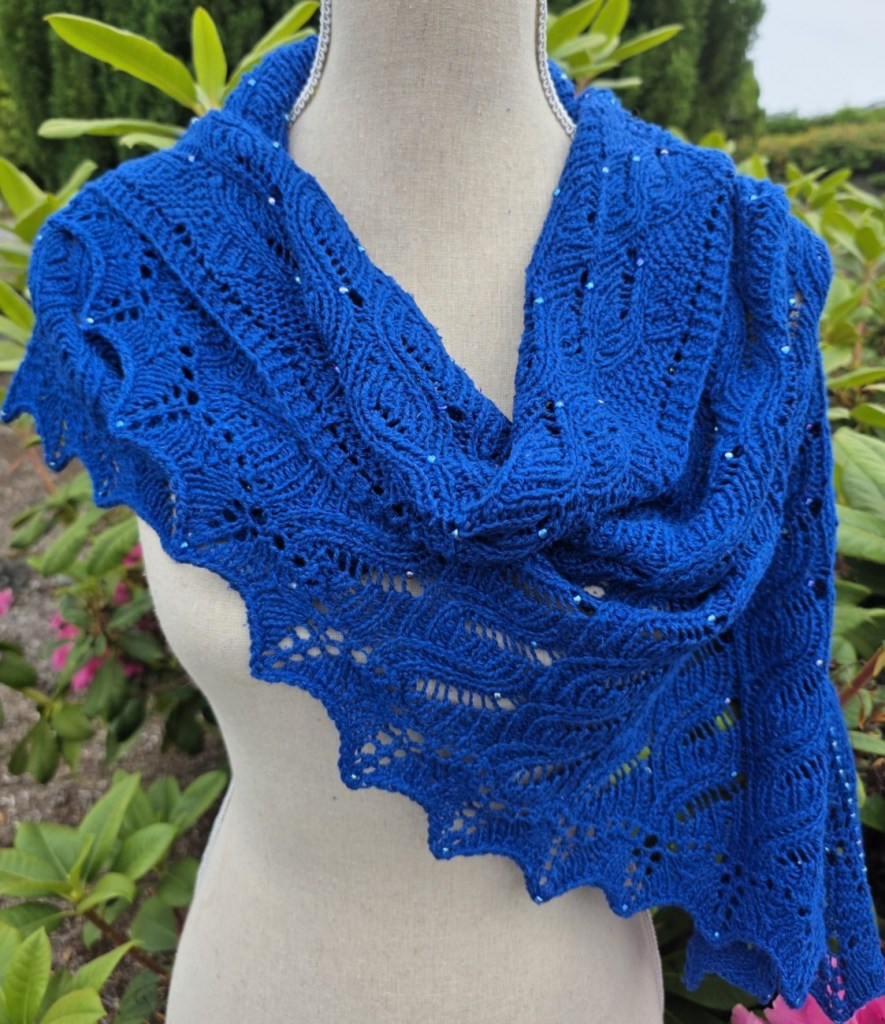
Rain Shadow Shawl
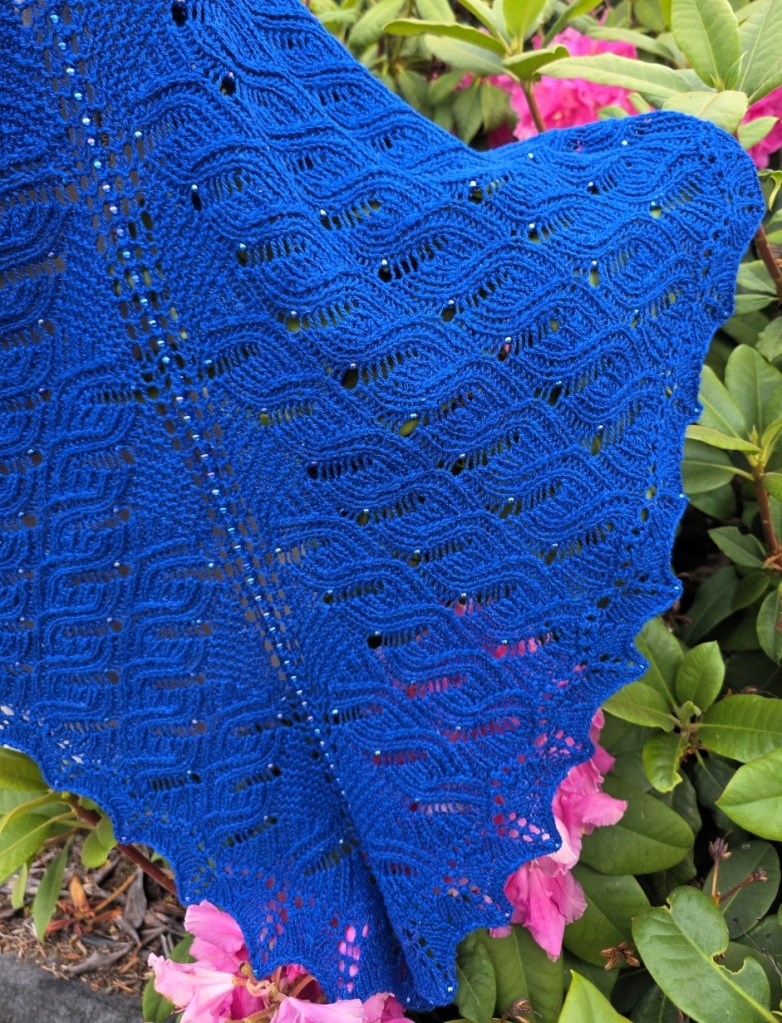
Just a few pictures to whet the whistle once more. The pattern will be released next weekend. I got caught up in boxes.
Apparently “later in the month” is a thing. I hope that I can get it all done “later in the month” LOL!
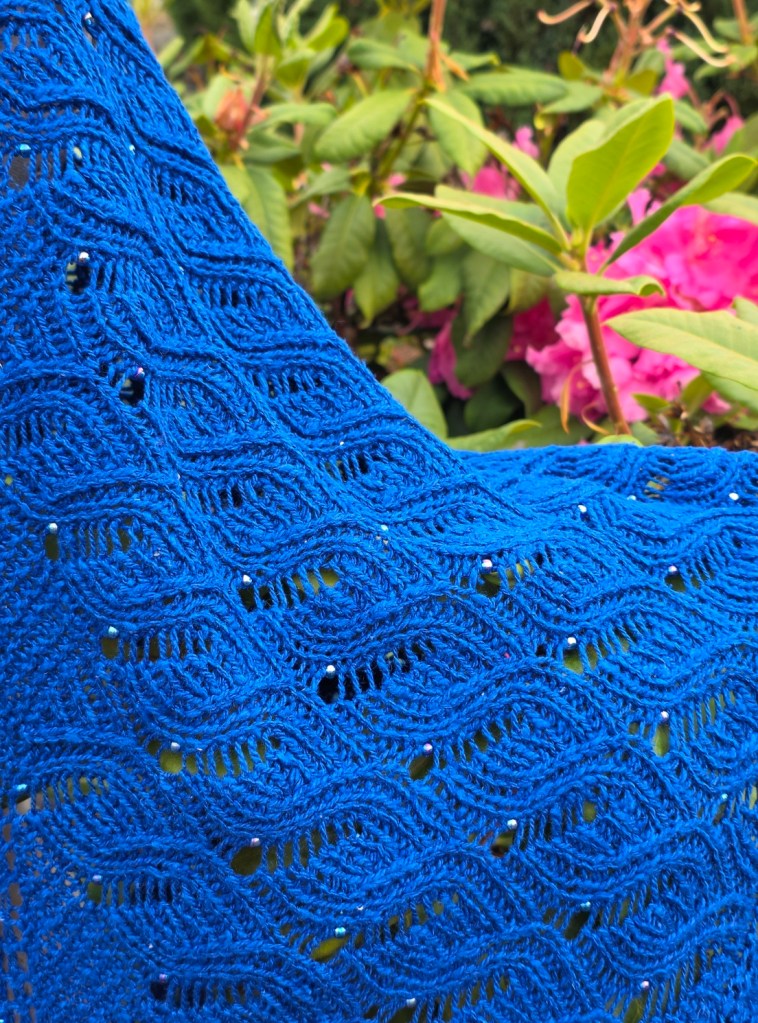
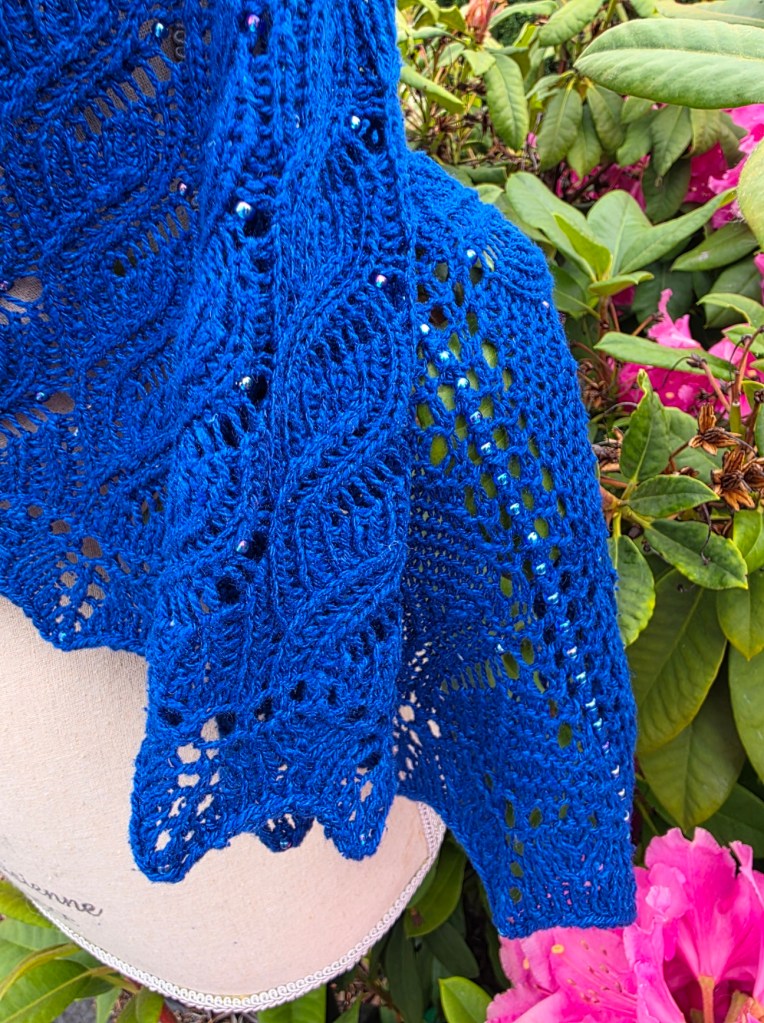
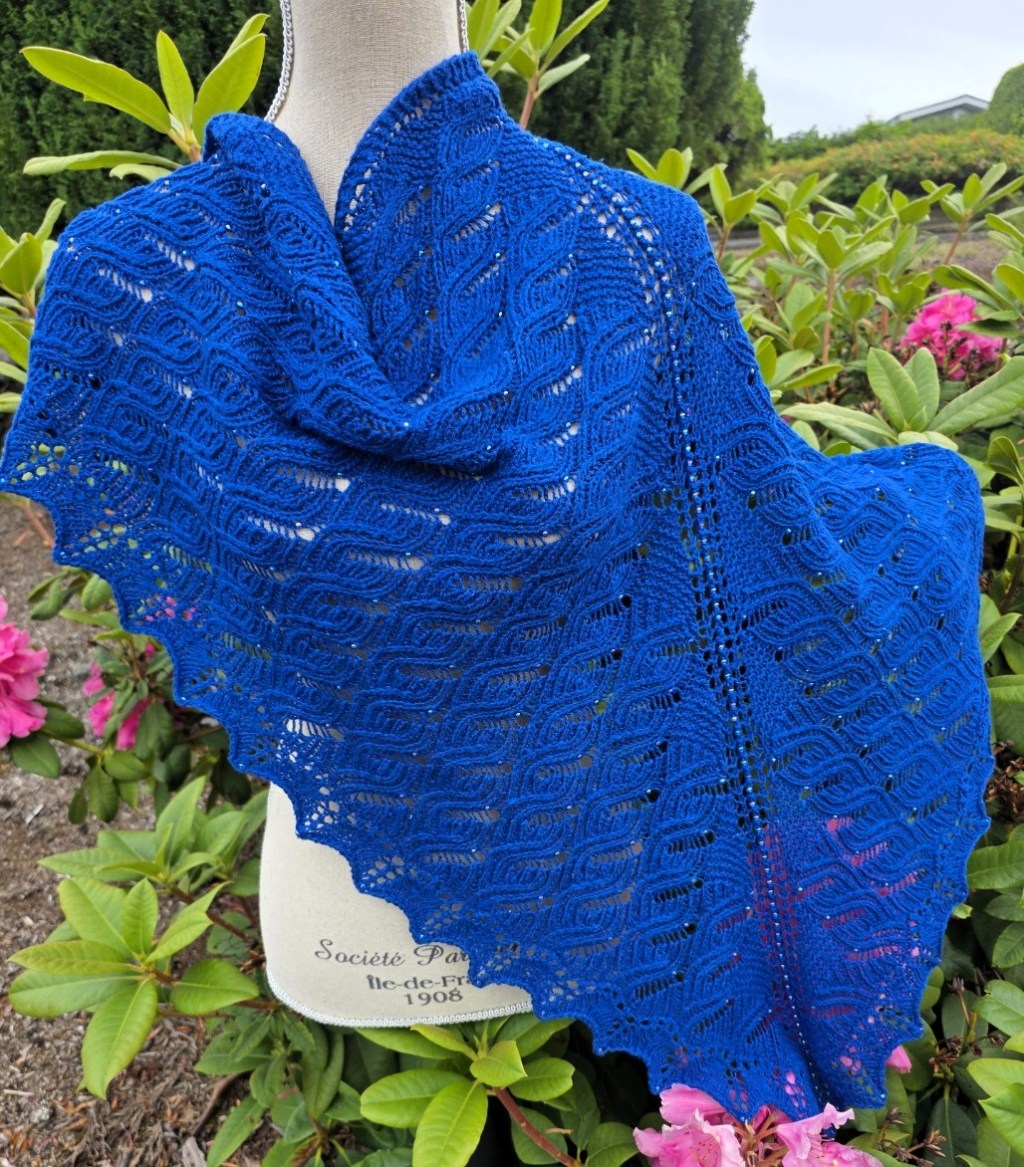
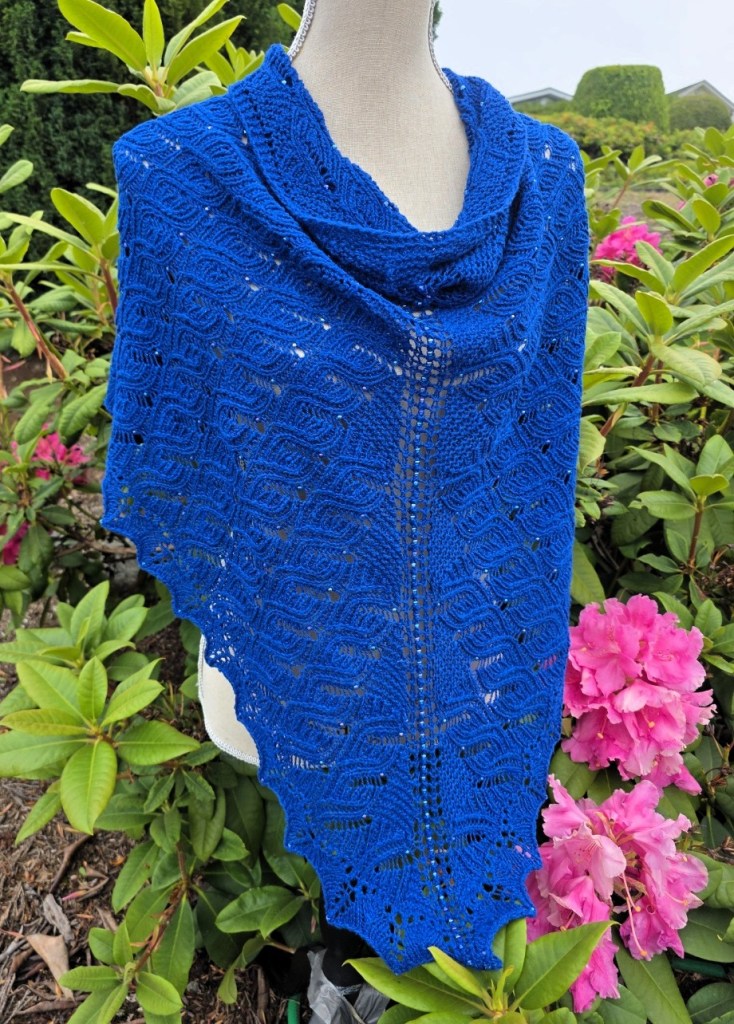
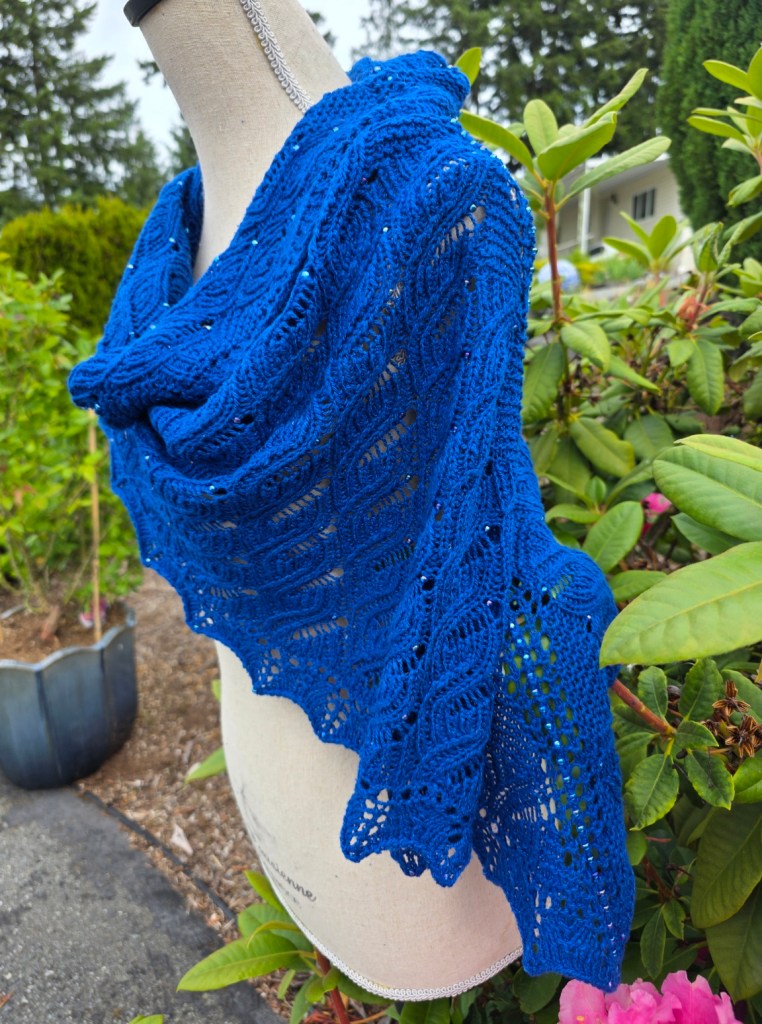
I just picked up the Rain Shadow Shawl from my test knitter Jana. And I am so thrilled with how it turned out.
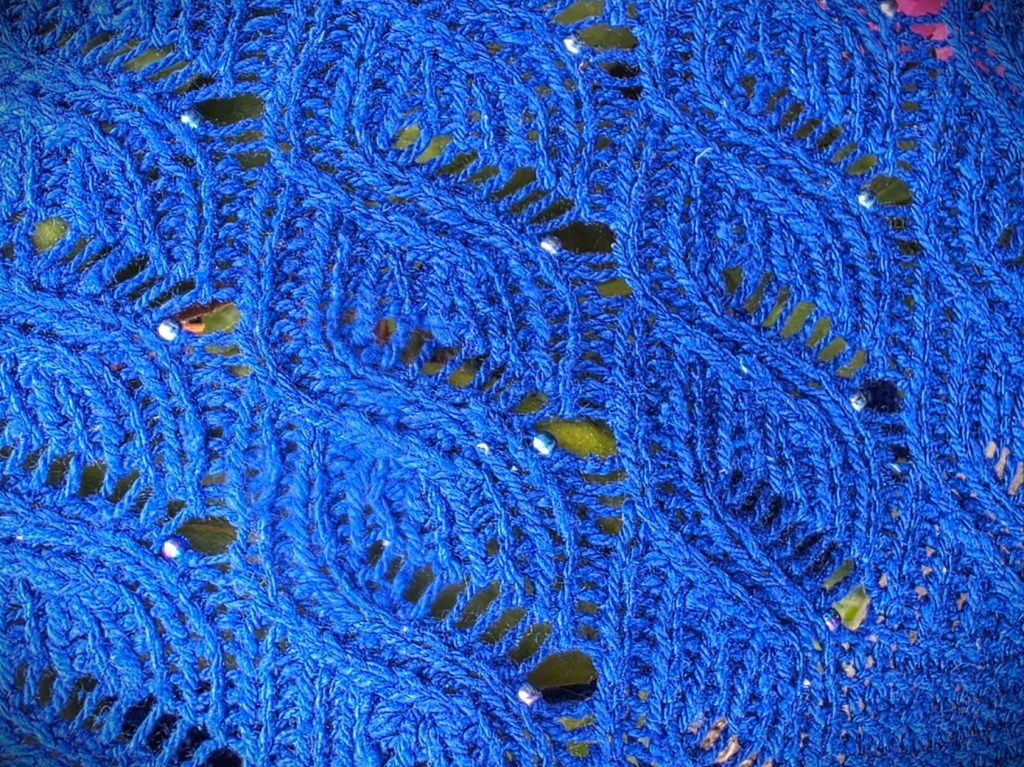
Rain Shadow Shawl was entirely inspired by the new to me stitch I chose for the April Square. I loved the way the stitches moved. It immediately inspired this triangular shawl.
Look for the pattern to be released at the same time as the June Square. There may be a discount code attached to the Square pattern… just saying.
I haven’t had much time for writing this month. I have been emptying the storage locker and that job is almost complete. There is maybe 3 or 4 loads left. Some to Restore, some to the dump and some home. My challenge, and the biggest job, has been fitting everything into our new, smaller space..
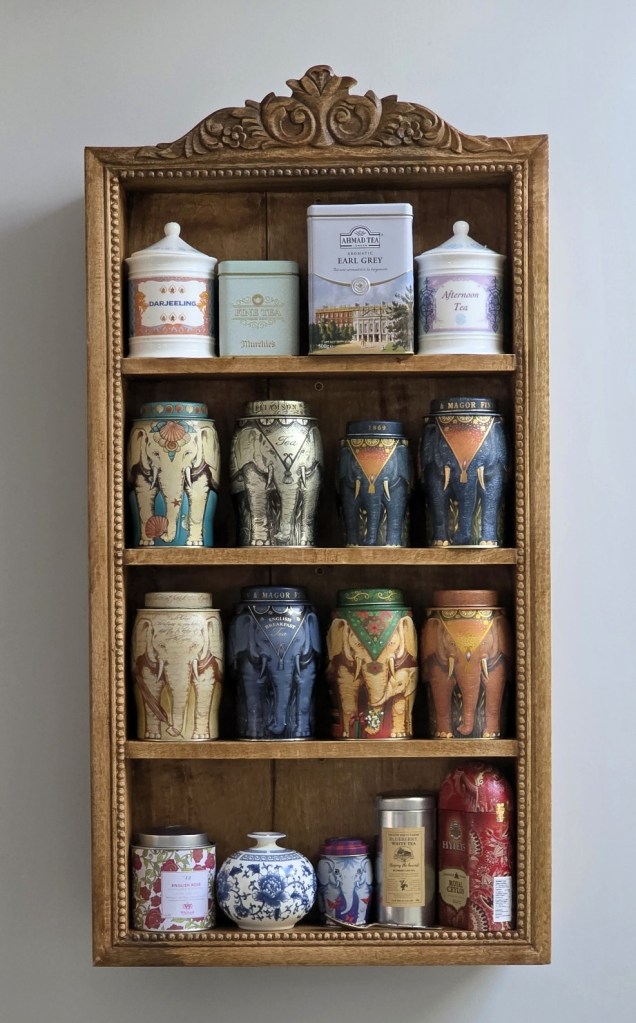
I have a couple of quiet corners in the house, but most still hold boxes of “bits” looking for a home. My tea shelf is organized. But my book shelves are overflowing and the yarn room… the less said the better. I have more yarn than I thought. Maybe I have more yarn than I wanted to think. That might be more accurate. It will take a little while to organize that area.
I am having fun working on the square and fancy for June. How you started a new square recently? I am really looking forward to seeing how everything comes together for us all.
Happy Knitting
Lynette
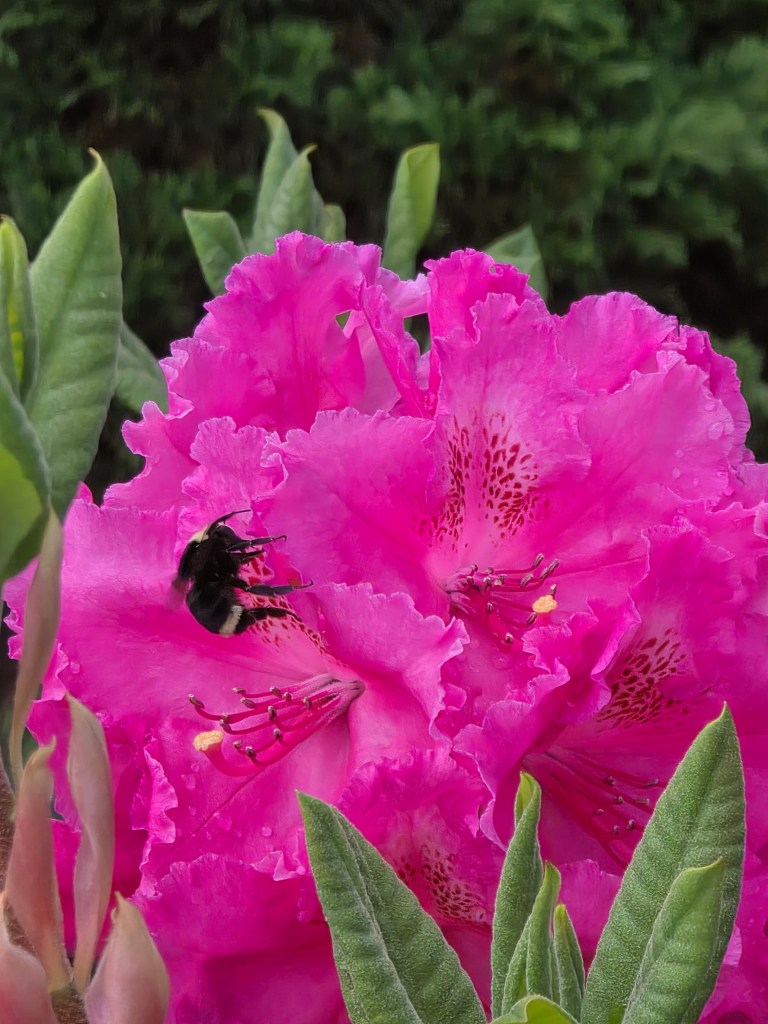
A very busy bee indeed. Look at the colour of that Rhododendron. I love watching my plants bloom. Especially now, in a new garden.